Is your office phone system holding your business back? While you’re focused on growing your company, closing deals, and serving customers, your outdated communication infrastructure might be quietly sabotaging your efforts. Every dropped call, every frustrated customer trying to reach the right department, and every spike in your phone bill is costing you money and reputation.
The good news? You don’t have to accept these problems as the cost of doing business. Modern IP PBX systems have revolutionized business communications, offering solutions that traditional phone systems simply can’t match. But how do you know when it’s time to make the switch?
Let’s explore the five critical warning signs that indicate your business is ready for an IP PBX upgrade—and what you stand to gain by making the move.
5 Signs Your Business Needs to Upgrade to an IP PBX System
Sign #1: Your Phone Bills Keep Climbing (And You Don’t Know Why)
Remember when your phone bill was predictable? Those days might be long gone. If you’ve noticed your telecommunications costs steadily creeping upward despite no major changes in your business operations, your traditional PBX system could be the culprit.
The Hidden Costs of Traditional Systems
Traditional EPABX systems come with expenses that extend far beyond the monthly service charges. Maintenance calls, replacement parts, and vendor lock-in can turn what seemed like a manageable expense into a budget drain. Every time you need to add a new phone line for a growing team, you’re looking at significant hardware costs and technician fees.
Long-distance and international calls are particularly expensive on traditional systems. If your business has expanded to serve clients across different regions or countries, you’ve probably watched your phone bills balloon. One Chennai-based export company reported spending over ₹45,000 monthly on international calls alone before switching to an IP PBX system.
How IP PBX Systems Cut Costs
IP PBX systems leverage your existing internet infrastructure to dramatically reduce communication costs. International calls become data packets traveling over the internet rather than expensive trunk lines. Many businesses report saving 40-60% on their monthly phone bills within the first year of switching.
Consider the setup costs of modern communication systems—while the initial investment might seem significant, the return on investment typically occurs within 12-18 months through reduced operational expenses and improved efficiency.
Sign #2: Adding New Users or Locations Feels Like a Major Project
Does adding a phone line for a new employee require scheduling a technician visit weeks in advance? Are you delaying opening a new branch office partly because of the communication system complexity? These are clear indicators that your phone system lacks the scalability modern businesses require.
The Traditional System Bottleneck
Traditional PBX systems are hardware-intensive. Every new extension needs physical wiring, additional ports on your PBX hardware, and often a complete system reconfiguration. This means:
- Waiting days or weeks for technician availability
- Disrupting office operations during installation
- Paying premium rates for emergency additions
- Physical limitations on the number of extensions you can add
One manufacturing company in Coimbatore shared their frustration: adding five new sales representatives meant a two-week wait for installation, during which new hires sat idle or shared phones—hardly an efficient onboarding process.
IP PBX Scalability Advantage
With an IP EPABX system, adding new users is as simple as configuring software settings. New employees can be set up in minutes rather than days. Remote workers can access the system from anywhere with internet connectivity. Opening a new office location? No problem—they can connect to the same phone system over the internet.
This flexibility is particularly valuable for businesses experiencing rapid growth or seasonal fluctuations in staffing needs. You can scale up during busy periods and scale down during slower times without incurring significant costs or technical headaches.
Sign #3: Your Customer Service Team Struggles with Call Management
Nothing damages your business reputation faster than poor customer service. If customers frequently complain about long wait times, being transferred to wrong departments, or having to repeat information multiple times, your phone system might be undermining your customer service efforts.
The Customer Experience Gap
Traditional phone systems offer limited call routing capabilities. Your receptionist manually transfers calls, customers wait on hold with no information about queue position, and calls get dropped during transfers. These problems multiply during high-volume periods.
Moreover, traditional systems provide minimal call analytics. You have no visibility into:
- Average wait times
- Call abandonment rates
- Peak calling hours
- Agent performance metrics
- Customer journey through your phone system
Without this data, you’re flying blind when it comes to understanding and improving customer experience.
Advanced Call Management Features
Modern IP PBX systems transform customer service through intelligent features. Understanding the difference between ACD vs IVR systems is crucial—Automatic Call Distribution ensures calls reach the right agent based on skills, availability, and priority, while Interactive Voice Response allows customers to self-service or route themselves to appropriate departments.
These systems provide real-time dashboards showing call volumes, wait times, and agent status. Managers can monitor quality, identify bottlenecks, and make data-driven decisions to improve service levels. One Chennai-based e-commerce company reduced average call handling time by 35% and improved customer satisfaction scores by 28% after implementing an IP PBX system with advanced ACD features.
Sign #4: Remote Work and Mobility Are Impossible with Your Current System
The business world has changed dramatically. Remote work, mobile workforce, and distributed teams are now standard practice. If your employees can’t access the company phone system when working from home or traveling, you’re operating with a serious competitive disadvantage.
The Office-Bound Limitation
Traditional PBX systems chain your business communications to physical office locations. Sales representatives miss important client calls when out of the office. Remote workers use personal phones, making it difficult to maintain professional boundaries and track business communications. Conference calls require everyone to be in the same room or use separate conferencing services.
This rigidity creates multiple problems:
- Lost business opportunities from missed calls
- Inconsistent customer experience
- Security concerns with business calls on personal devices
- Difficulty maintaining company-wide communication standards
- Reduced employee productivity and satisfaction
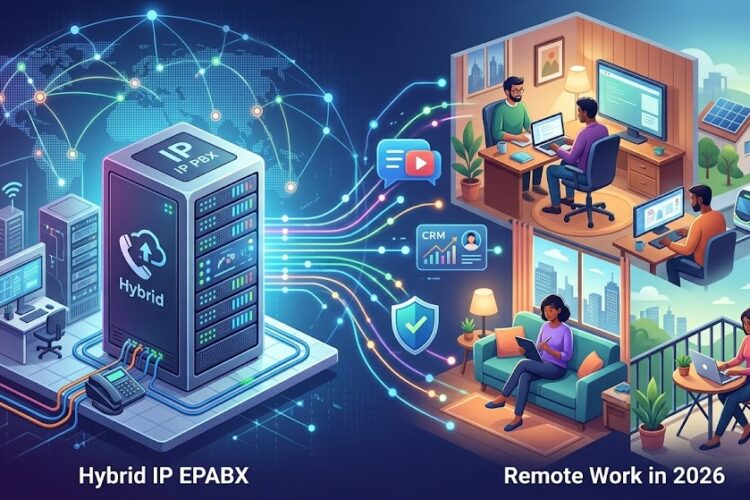
Mobility and Flexibility with IP PBX
Setting up an IP EPABX system enables true mobility. Employees can access the full phone system functionality from:
- Laptop softphones
- Mobile apps
- Web interfaces
- IP desk phones at any location
A salesperson in Delhi can use their Chennai office extension number. Support staff can work from home while maintaining the same call quality and features they have in the office. Video conferencing, instant messaging, and presence indicators integrate seamlessly with voice communications.
This flexibility has become essential, not optional. Businesses without mobile-ready communication systems struggle to attract top talent and maintain productivity in today’s work environment.
Sign #5: Security Concerns Keep You Up at Night
Have you heard about PBX toll fraud and hacking? Cybercriminals target outdated phone systems, potentially racking up thousands in fraudulent charges overnight. If your current system lacks modern security features, you’re vulnerable to these attacks.
The Growing Threat Landscape
Traditional phone systems were designed in an era when security threats were minimal. Today’s threat environment is vastly different:
- International toll fraud rings target vulnerable systems
- Hackers exploit outdated PBX software
- Eavesdropping on unencrypted calls compromises confidential information
- Denial of service attacks can shut down your entire communication system
One Chennai business discovered unauthorized international calls totaling ₹2.3 lakhs over a single weekend—all because their traditional system lacked proper security controls. The financial loss was significant, but the damage to their security reputation was worse.
Robust Security in Modern IP PBX Systems
Today’s IP PBX systems incorporate enterprise-grade security features:
- Encrypted voice communications (TLS/SRTP protocols)
- Multi-factor authentication for system access
- Regular security updates and patches
- Advanced firewall protection
- Real-time fraud detection and alerting
- Detailed audit logs for all system activities
Proper IP telephony security maintenance ensures your system remains protected against evolving threats. With regular updates and monitoring, you can communicate confidently knowing your business conversations remain private and secure.
Making the Transition: What to Expect
Recognizing the signs that you need an upgrade is just the first step. Understanding what the IP EPABX system lifecycle looks like helps you plan effectively.
Planning Phase
A successful transition begins with assessment. Work with experienced providers to:
- Evaluate your current communication needs
- Project future growth and requirements
- Design a system architecture that fits your business
- Plan migration timing to minimize disruption
- Train staff on new features and capabilities
Implementation Benefits
Businesses that make the switch typically experience:
- Immediate cost savings: Reduced phone bills from the first month
- Improved productivity: Better collaboration tools and mobility
- Enhanced customer satisfaction: Advanced call management features
- Future-proof infrastructure: Scalability for growth
- Better insights: Analytics and reporting capabilities
The Chennai Business Perspective
For businesses in Chennai and Coimbatore, choosing the right IP PBX dealers is crucial. Local support, understanding of regional business needs, and reliable maintenance ensure your investment delivers maximum value.
Chennai’s growing business ecosystem—from IT services to manufacturing to retail—demands communication systems that can keep pace with rapid growth and changing market conditions. The city’s position as a major business hub means companies here can’t afford to be held back by outdated technology.
Taking Action: Your Next Steps
If you’ve recognized two or more of these signs in your business, it’s time to seriously consider upgrading to an IP PBX system. Here’s how to move forward:
- Assess your current situation: Document the specific pain points your business experiences
- Research options: Explore different IP PBX systems available in Chennai
- Consult with experts: Get professional assessments and recommendations
- Plan the transition: Develop a migration strategy that minimizes disruption
- Invest in training: Ensure your team can leverage all available features
The telecommunications landscape has evolved dramatically, and businesses that don’t adapt risk falling behind competitors who have embraced modern communication technology. Your phone system should be an asset that drives growth, not a limitation that holds you back.
Frequently Asked Questions
What is the typical cost difference between traditional PBX and IP PBX systems?
While IP PBX systems often require higher initial investment for equipment and installation, they typically deliver 40-60% savings on monthly operational costs. Most businesses achieve return on investment within 12-18 months through reduced phone bills, lower maintenance costs, and improved efficiency. The total cost of ownership over five years is significantly lower for IP PBX systems.
How long does it take to implement an IP PBX system?
Implementation timelines vary based on business size and complexity. Small businesses with 10-20 users can often complete installation and migration within 1-2 weeks. Larger organizations with multiple locations might need 4-8 weeks for a phased rollout. The key is proper planning—a well-designed implementation minimizes downtime and ensures smooth transition.
Will we need to replace all our existing phones?
Not necessarily. Many modern IP PBX systems support both IP phones and traditional analog phones through gateway devices. This allows you to migrate gradually, replacing phones as budget permits rather than requiring complete replacement upfront. However, to access advanced features, you’ll eventually want to move to IP-enabled devices.
Can IP PBX systems integrate with our existing business software?
Yes, integration is one of the major advantages of IP PBX systems. They can connect with CRM platforms, help desk software, email systems, and other business applications. This integration streamlines workflows—for example, customer information can automatically pop up when they call, and call logs can sync with your CRM for complete communication tracking.
What happens if our internet connection goes down?
Quality IP PBX systems include failover mechanisms to maintain operations during internet outages. Options include automatic rerouting to mobile phones, backup internet connections, or hybrid configurations that can switch to traditional phone lines temporarily. Proper network infrastructure maintenance and redundancy planning ensure reliable communications even during connectivity issues.
How secure are IP PBX systems compared to traditional phone systems?
When properly configured and maintained, IP PBX systems are significantly more secure than traditional systems. They offer encrypted communications, regular security updates, advanced authentication, and real-time monitoring. Traditional systems were designed before modern security threats existed and lack these protective features. However, security requires active management—regular updates, monitoring, and following best practices are essential.
Your business communication system is too important to leave to chance. If you’re experiencing any of these five warning signs, delaying an upgrade only allows problems to compound. Modern IP PBX systems offer the reliability, flexibility, and features that today’s businesses need to compete effectively. The question isn’t whether to upgrade—it’s how soon you can make the transition to start realizing the benefits.