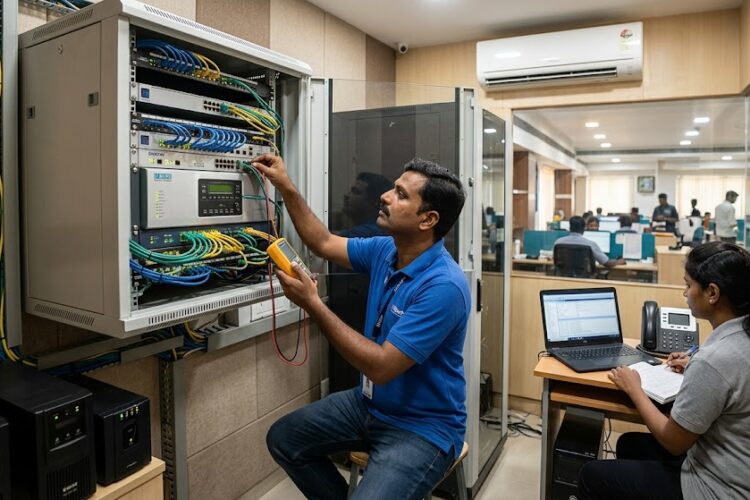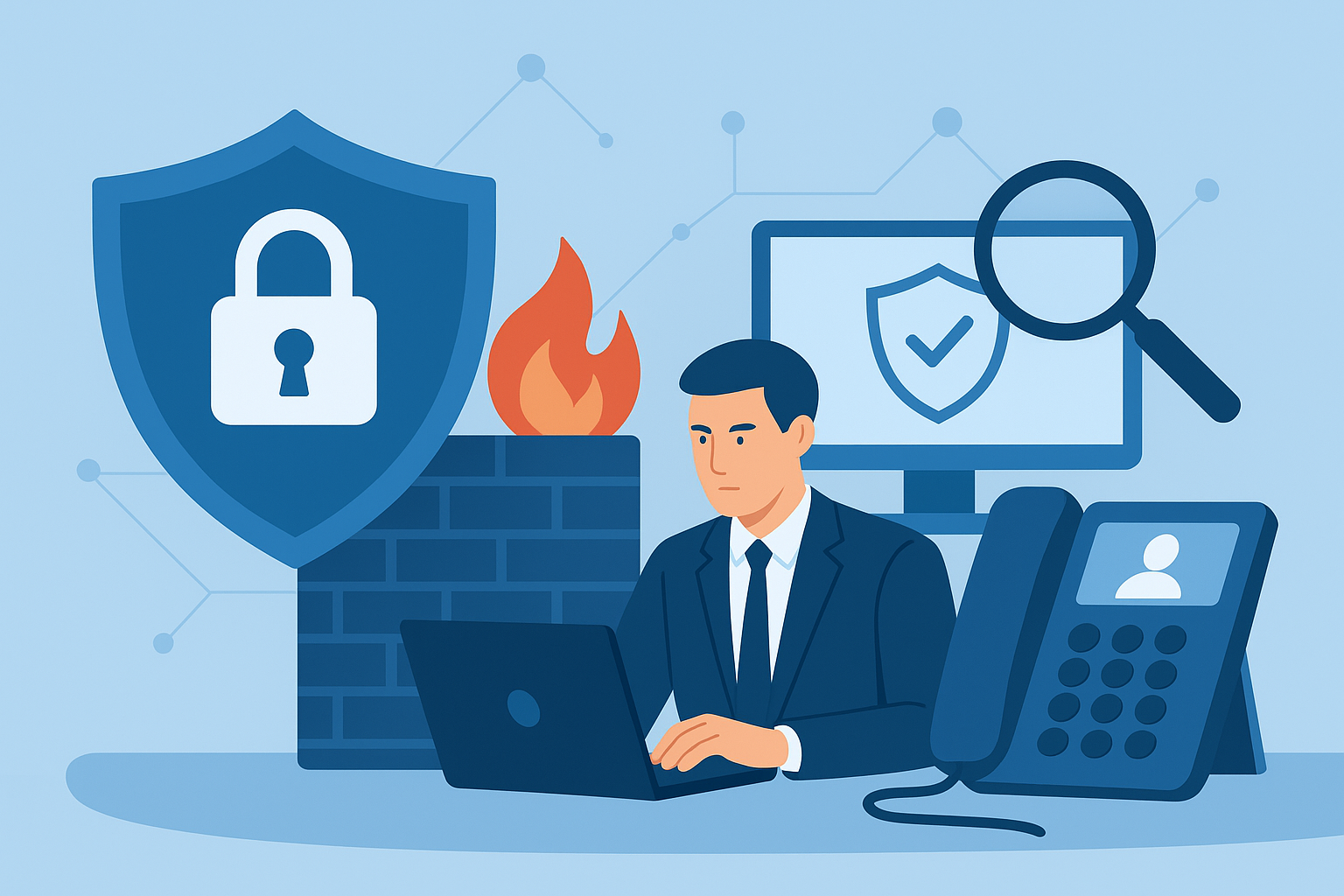
Your business communication system is a gateway—not just to seamless operations, but potentially to significant financial losses if left unprotected. As more organizations embrace IP-based telephony systems, the threat landscape has evolved dramatically. Toll fraud, unauthorized access, and cyber attacks targeting communication infrastructure have become increasingly sophisticated. If you’re running an IP EPABX system in Chennai or anywhere else, this is a critical concern that demands immediate attention.
The stakes are high. A single compromised phone system can cost your business thousands of rupees in fraudulent calls, expose sensitive client conversations, and damage your reputation irreparably. Yet many businesses remain dangerously exposed, unaware of the vulnerabilities lurking within their communication networks.
This guide walks you through the essential strategies to fortify your IP telephony infrastructure against toll fraud and unauthorized access—because your business communication shouldn’t be an open door for attackers.
Understanding the Threat: Why IP Telephony is a Target
Unlike traditional PBX systems, IP telephony operates over the internet, which makes it simultaneously more flexible and more vulnerable. Attackers don’t need physical access to your premises—they can target your system from anywhere in the world.
The most common attacks include:
Toll fraud remains one of the costliest threats. Attackers gain access to your system and make international or premium-rate calls, leaving you with astronomical bills. These fraudsters are often sophisticated, routing calls through multiple countries to obscure their tracks, making recovery nearly impossible.
Unauthorized access occurs when attackers infiltrate your system, eavesdrop on conversations, intercept sensitive business information, or launch further attacks. For businesses handling confidential client data or financial transactions, this represents a catastrophic risk.
Call hijacking enables attackers to intercept or redirect calls, potentially impersonating your organization or disrupting critical communications.
DDoS attacks can render your entire communication system unavailable, crippling your business’s ability to communicate with clients and partners.
These aren’t hypothetical scenarios—they’re happening to businesses right now, often without their knowledge until the damage is done.
Common Security Vulnerabilities in IP Telephony Systems
Before you can defend your system, you need to understand where the weaknesses lie.
Weak Authentication is perhaps the most prevalent vulnerability. Many organizations still use default credentials, simple passwords, or no authentication at all for their IP PBX systems. Attackers use automated tools to scan for these easy entry points, and they succeed more often than you’d think.
Unpatched Systems create dangerous security gaps. When vendors release security patches, they’re addressing known vulnerabilities. Systems that aren’t regularly updated are essentially advertising these vulnerabilities to anyone who cares to look.
Lack of Encryption means your voice traffic and signaling protocols travel across the network in plain text. Any attacker positioned on your network can intercept conversations and extract sensitive information.
Poorly Configured Firewalls leave your system exposed to direct attacks from the internet. Many businesses install firewalls but fail to configure them properly, essentially leaving windows open while thinking they’ve locked the doors.
Unrestricted Outbound Calling allows attackers who breach your system to make unlimited calls without restrictions, maximizing their fraudulent gains at your expense.
Inadequate Logging and Monitoring means you might not discover a breach until significant damage is done. Without visibility into system activity, you’re essentially flying blind.
When implementing solutions like IP EPABX systems in Chennai, these vulnerabilities become even more critical because your system handles your entire organization’s communications.
Firewall Configuration Best Practices
Your firewall is your first line of defense, but only if configured correctly.
Implement Proper SIP Firewall Rules for Voice over IP traffic. SIP (Session Initiation Protocol) is the backbone of modern IP telephony, and it needs specific firewall rules. Configure your firewall to inspect SIP traffic deeply, not just allow it through. This means validating SIP headers, detecting suspicious patterns, and blocking anomalies.
Create a Separate Network Segment for your IP telephony system. This architectural approach, known as voice VLAN, isolates your phone system from general data traffic. Even if an attacker compromises your regular network, they can’t easily pivot to your communication system. This segmentation is fundamental when setting up an IP EPABX system for your office.
Restrict Inbound Connections to only the ports and protocols your system actually needs. By default, deny all inbound traffic, then explicitly allow only what’s necessary. This significantly reduces your attack surface.
Enable Deep Packet Inspection for VoIP traffic. Rather than just checking port numbers, your firewall should examine the actual content of packets to detect malicious payloads or suspicious command sequences.
Implement Rate Limiting to prevent brute-force attacks against your system. Limit the number of authentication attempts from a single IP address, and temporarily block sources that exceed these limits.
Configure Stateful Inspection so your firewall maintains awareness of active connections. This prevents attackers from injecting malicious packets into established sessions.
Block Unnecessary Protocols at your perimeter. If you’re not using H.323, MGCP, or other older VoIP protocols, disable them entirely. Each protocol you disable is another potential attack vector eliminated.
Monitoring and Alert Systems: Your Security Eyes
You can configure perfect firewalls, but without proper monitoring, you’re still vulnerable. Alert systems are your early warning system for attacks.
Deploy Real-Time Call Monitoring that tracks unusual patterns. This includes monitoring for sudden spikes in call volume, calls to unusual destinations (particularly international premium-rate numbers), or calling patterns that deviate from normal business hours.
Set Up Detailed Logging for all authentication attempts, system configuration changes, and call attempts. Store these logs securely and separately from your main system—if attackers access your PBX, they shouldn’t be able to delete evidence of their intrusion.
Create Alerts for Suspicious Activities such as multiple failed login attempts, calls to known high-fraud destination countries, unusual data transfers, or system configuration changes made outside normal administrative windows.
Implement Threshold-Based Alerts for billing anomalies. An alert triggers when daily call costs exceed a threshold you define. This early warning can catch toll fraud in progress before catastrophic charges accumulate.
Monitor Remote Access Attempts separately. Track login attempts from unusual geographic locations or IP addresses. If your IT team is all located in Chennai but you see login attempts from three different countries in ten minutes, that’s a red flag.
Track Failed Authentication Events in real-time. A sudden surge in failed password attempts against your system administrator accounts typically precedes a successful breach.
When you’re working with complete IP EPABX system solutions, monitoring capabilities should be a non-negotiable requirement. Your service provider should offer comprehensive dashboards showing system health, security metrics, and traffic patterns.
Advanced Security Measures: Going Beyond the Basics
Once you’ve implemented the fundamentals, consider these advanced strategies.
Deploy SIP Proxies with Security Features between your system and the internet. These act as intermediaries, absorbing attacks and validating all traffic before it reaches your actual PBX. They can enforce policies, normalize messages, and detect attack patterns.
Implement Multi-Factor Authentication for all administrator accounts and remote access. A password alone isn’t sufficient—require something you have (security key) plus something you know (password) plus something you are (biometric).
Use VPN for Remote Access to your phone system. Never allow direct connections to your IP PBX from the internet. VPN encrypts all traffic and limits access to authenticated users only.
Enable Encryption End-to-End for all voice calls using SRTP (Secure Real-time Transport Protocol). This prevents eavesdropping even if attackers manage to intercept your traffic.
Implement Outbound Call Restrictions that limit which numbers can be called, particularly preventing calls to expensive international destinations. Whitelist legitimate destinations and block everything else.
Use Intrusion Detection Systems specifically designed for VoIP. These systems understand the nuances of VoIP protocols and can detect attacks that generic firewalls might miss.
Best Practices for Ongoing Security
Security isn’t a one-time project—it’s an ongoing process.
Establish a Regular Patch Management Schedule where system updates are applied promptly. Coordinate with your vendor to understand what each patch addresses and schedule updates during maintenance windows.
Conduct Quarterly Security Audits of your system configuration. Verify that all the security measures you’ve implemented are still active, properly configured, and functioning as intended.
Train Your Staff on security basics. Employees who understand the threats are less likely to fall for social engineering, share credentials, or use weak passwords. Make security awareness part of your organizational culture.
Change Default Credentials Immediately upon system installation. Use complex, unique passwords for all administrative accounts. Consider using a password manager to maintain security without memorization burden.
Document Your Configuration and maintain it in a secure location separate from your systems. This documentation enables rapid disaster recovery if your system is compromised.
Maintain Relationships with Your Vendor for security updates and incident response. When vendors discover vulnerabilities, they typically notify customers first.
The Real-World Impact: Why This Matters
Consider the experience of businesses that have fallen victim to toll fraud. A single compromised system can result in bills of lakhs of rupees for fraudulent international calls. Beyond the financial cost, there’s the reputation damage when clients discover their confidential conversations were intercepted.
When you’re managing communication systems that serve your entire organization—from handling client interactions to managing sensitive internal communications—security isn’t optional. It’s fundamental to business operations.
This is why organizations upgrading from traditional systems are so focused on security. When considering the upgrade from traditional PBX to IP EPABX, businesses should prioritize vendors who take security seriously from day one.
Moving Forward: Your Security Action Plan
Start immediately by auditing your current system. Do you know the answers to these questions?
- What are the default credentials on your IP PBX, and have they been changed?
- Is your firewall configured specifically for VoIP traffic?
- Do you have monitoring and alerting in place?
- How long would it take to detect a compromise?
- What’s your incident response plan?
If you’re uncertain about any of these, that’s your starting point.
Next, implement the firewall and monitoring strategies outlined here. Then move toward the advanced measures as resources permit. Security is a journey, not a destination, but every step forward significantly reduces your risk.
For organizations in Chennai and surrounding areas seeking comprehensive solutions, connecting with experienced IP telephony providers who prioritize security from the architecture level is crucial. They understand the local business context, compliance requirements, and regional threat landscape.
Conclusion
Your IP telephony system is a powerful business tool, but power without protection is vulnerability masquerading as capability. Toll fraud and unauthorized access aren’t distant possibilities—they’re clear and present dangers that cost businesses real money and real disruption every single day.
By understanding common vulnerabilities, implementing proper firewall configuration, deploying monitoring and alert systems, and maintaining ongoing security practices, you transform your communication system from a liability into a secure, trusted business asset.
The investment in security today pays dividends in prevented fraud, protected conversations, and preserved business continuity tomorrow. Don’t wait for an attack to discover gaps in your defenses. Start securing your IP telephony now.