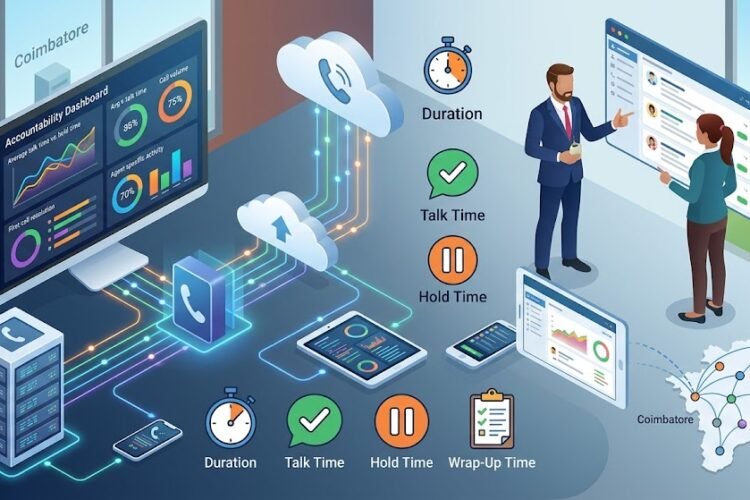
Picture this: You’ve just invested in a state-of-the-art IP EPABX system for your Chennai office. The installation team packs up, hands you a manual, and wishes you luck. Six months later, call quality deteriorates, extensions stop working mysteriously, and your IT team is scrambling. Sound familiar?
The truth is, purchasing an IP EPABX system is just the beginning of your journey. Like any critical business infrastructure, your communication system requires strategic lifecycle management—from the moment technicians mount that first hardware unit to the day you eventually upgrade to newer technology.
IP EPABX lifecycle management isn’t just technical jargon; it’s the systematic approach to ensuring your business communication system delivers consistent value throughout its operational life. Whether you’re running a bustling call center, managing a manufacturing facility, or operating a growing enterprise, understanding this lifecycle can save you thousands in downtime costs and dramatically improve your communication efficiency.
Understanding the IP EPABX Lifecycle: More Than Just Installation
Many businesses make a critical mistake: they view their IP EPABX system as a “set it and forget it” investment. This couldn’t be further from reality. Your communication infrastructure goes through distinct phases, each requiring different levels of attention, investment, and strategic planning.
The typical EPABX lifecycle spans 5-7 years, though modern IP systems often extend beyond this range with proper maintenance. During this period, your system moves through four critical stages:
Planning and Installation marks your entry point. This phase involves assessing your communication needs, selecting appropriate hardware and software, and deploying the system across your organization. Get this wrong, and you’ll face bottlenecks for years.
Optimization and Configuration follows immediately after. Your newly installed system requires fine-tuning—adjusting call routing rules, configuring IVR menus, setting up department-specific features, and training staff. This phase can take 2-3 months but sets the foundation for long-term success.
Maintenance and Operation represents the longest phase, typically spanning 4-6 years. During this period, consistent monitoring, regular updates, and proactive troubleshooting keep your system running smoothly. This is where lifecycle management truly proves its worth.
Upgrade and Migration concludes the cycle. Whether you’re expanding capacity, adopting new features, or completely replacing legacy components, this phase requires careful planning to minimize disruption.
The Installation Phase: Building a Strong Foundation
Your IP EPABX journey begins with installation—a critical phase that determines your system’s long-term performance. Poor installation practices create technical debt that haunts you for years, manifesting as dropped calls, poor voice quality, and security vulnerabilities.
Pre-Installation Planning: The Overlooked Game-Changer
Before a single cable is laid, thorough planning separates successful deployments from problematic ones. Start by conducting a comprehensive needs assessment. How many concurrent calls do you handle? What’s your growth projection for the next three years? Do specific departments require specialized features?
Network readiness assessment comes next. Your IP EPABX system relies on network infrastructure, making bandwidth availability, Quality of Service (QoS) configuration, and network segmentation critical considerations. Many Chennai businesses discover too late that their existing network can’t support VoIP traffic without degradation.
Power infrastructure planning prevents catastrophic failures. IP EPABX systems require uninterrupted power, making UPS systems with adequate capacity non-negotiable. Calculate power requirements for all components—servers, switches, phones, and gateways—then add 30% buffer capacity.
Installation Best Practices: Setting Up for Success
Professional installation goes beyond connecting cables. Setting up an IP EPABX system demands attention to detail across multiple dimensions.
Physical installation requires optimal server placement. Choose climate-controlled environments away from electromagnetic interference sources. Ensure proper ventilation, as IP EPABX servers generate significant heat. Cable management isn’t just aesthetic—organized cabling simplifies troubleshooting and maintenance.
Network configuration establishes communication pathways. Implement VLAN segmentation to separate voice traffic from data traffic. Configure QoS policies prioritizing voice packets over less time-sensitive data. Set up redundant network paths to prevent single points of failure.
Security hardening protects against toll fraud and unauthorized access. Change default passwords immediately. Disable unnecessary services. Implement firewall rules restricting access to management interfaces. Configure fail2ban or similar intrusion prevention systems.
Extension provisioning connects users to the system. Create logical numbering schemes reflecting organizational structure. Configure user profiles with appropriate permissions. Set up voicemail, call forwarding, and other personal features during initial deployment.
Documentation: Your Future Self Will Thank You
Create comprehensive documentation during installation. Record network configurations, IP address assignments, extension mappings, and custom configurations. Document integration points with external systems like biometric attendance systems or CRM platforms.
This documentation becomes invaluable during troubleshooting, staff transitions, and eventual upgrades. Many businesses spend hours reconstructing configurations that should have been documented initially.
Ongoing Maintenance: Keeping Your System Healthy
After installation excitement fades, maintenance reality sets in. This phase determines whether your IP EPABX system becomes a reliable asset or a constant headache. Effective maintenance from installation to upgrade follows structured, proactive approaches rather than reactive firefighting.
Daily and Weekly Monitoring: Catching Problems Early
Implement automated monitoring solutions tracking system health metrics. Monitor concurrent call capacity utilization—consistently hitting 80%+ capacity signals expansion needs. Track call quality metrics like jitter, latency, and packet loss. These indicators reveal network issues before users complain.
Review call detail records (CDR) regularly. Unusual patterns—unexpected international calls, after-hours activity, or extension-to-extension loops—often indicate security breaches or system misconfigurations.
Check system logs daily for error messages, authentication failures, and resource warnings. Modern IP EPABX systems generate detailed logs, but they’re only valuable if someone reviews them consistently.
Monthly Maintenance Rituals: Preventive Care
Schedule monthly maintenance windows for deeper system health checks. Review storage capacity—call recordings and voicemails consume space rapidly. Implement automated archival policies moving old recordings to long-term storage.
Backup verification deserves monthly attention. Many businesses maintain backups but never test restoration procedures. Schedule quarterly restore tests to alternate hardware, ensuring your backup strategy actually works when needed.
Update firmware and software patches monthly. Vendors regularly release security patches, bug fixes, and performance improvements. Delaying updates exposes systems to known vulnerabilities and missed optimization opportunities.
Audit user accounts and permissions. Remove terminated employees immediately—active accounts for former staff create security risks. Review extension usage patterns, identifying unused extensions or users requiring training.
Quarterly Deep Dives: Strategic Health Checks
Every quarter, conduct comprehensive system audits examining performance trends over time. Analyze call volume patterns identifying peak periods requiring capacity adjustments. Review call quality metrics, investigating degradation trends before they impact customer experience.
Assess integration points with other business systems. Biometric integration or CRM connections sometimes drift out of sync, requiring reconfiguration. Test failover mechanisms, ensuring redundant systems activate correctly during primary system failures.
Review and update disaster recovery plans. Business continuity requirements evolve—ensure your communication system recovery procedures reflect current business priorities.
Common Maintenance Pain Points and Solutions
Degraded Call Quality: Often stems from network congestion or insufficient QoS implementation. Solution: Review network traffic patterns, implement or adjust QoS policies, consider upgrading bandwidth.
Random Extension Failures: Usually indicates IP address conflicts or DHCP configuration issues. Solution: Implement IP address reservations for all VoIP devices, audit network for rogue DHCP servers.
Voicemail Storage Exhaustion: Results from users never deleting old messages. Solution: Implement automatic deletion policies for messages older than 90 days, increase storage capacity, or migrate to cloud telephony solutions offering virtually unlimited storage.
Authentication Failures: May signal attempted security breaches. Solution: Implement IP-based access restrictions, enable two-factor authentication for administrative access, review and strengthen password policies.
Performance Optimization: Getting More from Your Investment
Your IP EPABX system should evolve with your business needs. Performance optimization transforms adequate systems into exceptional ones, improving user experience while reducing operational costs.
Feature Utilization: Are You Leaving Money on the Table?
Most businesses utilize only 40-60% of their IP EPABX capabilities. Features like advanced call distribution (ACD) or unified communications remain configured but unused, representing wasted investment.
Conduct feature audits identifying underutilized capabilities. Train users on productivity-enhancing features like conference bridging, call parking, and mobile integration. The system you already own probably solves problems you’re currently addressing with separate tools.
Implement analytics and reporting tools extracting actionable insights from call data. Call center metrics like average handle time, first call resolution, and agent utilization drive operational improvements when properly tracked and analyzed.
Integration Opportunities: Creating Communication Ecosystems
Modern IP EPABX systems integrate with numerous business platforms, multiplying their value. CRM integration presents caller information during incoming calls, enabling personalized service. Sales teams close deals faster when customer history appears automatically.
Biometric system integration streamlines workforce management. Employees clock in via phone extensions, automatically logging attendance in your HR system. This eliminates redundant data entry and improves accuracy.
Consider integrating IP speakers for facility-wide announcements, especially valuable in manufacturing or warehousing environments. Your IP EPABX becomes a comprehensive communication platform rather than just a phone system.
Capacity Planning: Growing Without Growing Pains
Monitor utilization trends predicting capacity requirements before hitting limits. Track concurrent call peaks, extension growth rates, and trunk utilization. Most systems show warning signs 3-6 months before capacity becomes critical.
Plan expansions during business low seasons. Adding capacity during peak periods increases risk and stress. Schedule major changes during traditionally slower months, allowing time for testing and stabilization.
Consider cloud telephony options for elastic capacity. Hybrid deployments maintaining on-premises core systems while leveraging cloud services for overflow capacity offer flexibility without complete infrastructure replacement.
Security and Compliance: Protecting Your Communication Assets
IP EPABX systems face constant security threats. Toll fraud alone costs businesses globally over $28 billion annually. Lifecycle management must prioritize security throughout every phase.
Common Security Threats
Toll fraud occurs when attackers compromise systems to make unauthorized international calls, often racking up thousands in charges overnight. Weak passwords, exposed management interfaces, and unpatched vulnerabilities create entry points.
Denial of Service (DoS) attacks flood systems with traffic, preventing legitimate calls. Competitors or malicious actors use DoS attacks to disrupt business operations during critical periods.
Eavesdropping on unencrypted VoIP traffic exposes confidential conversations. Without proper encryption, anyone on your network can potentially intercept calls.
Security Best Practices Throughout the Lifecycle
During Installation: Change all default credentials immediately. Implement strong password policies requiring complex passwords changed quarterly. Disable unused features and services—each enabled feature represents potential attack surface.
During Operation: Enable encryption for all signaling and media traffic. Implement geographic call restrictions blocking countries you don’t conduct business with. Monitor for unusual calling patterns indicating compromised systems.
Regular Updates: Maintain current security patches. Subscribe to vendor security bulletins receiving notifications about critical vulnerabilities. Schedule emergency patch windows for critical security updates.
Access Control: Implement role-based access control (RBAC) limiting administrative privileges. Require VPN access for remote management. Log all administrative actions for security auditing.
Compliance Considerations
Certain industries face regulatory requirements affecting IP EPABX deployment and operation. Financial services, healthcare, and legal sectors often require call recording with specific retention periods. Implement compliant recording solutions during installation rather than retrofitting later.
Data protection regulations like GDPR affect how you store and process call data. Implement data retention policies automatically purging old records. Document how personal data flows through your communication systems.
Signs You Need an Upgrade: Recognizing the Right Time
Even well-maintained systems eventually require upgrades or replacement. Recognizing the right timing prevents emergency replacements and allows strategic planning. Common signs indicating upgrade needs include:
Capacity Limitations: Consistently hitting maximum concurrent call capacity despite optimization efforts signals outgrown infrastructure. Adding users or extensions becomes impossible without major architectural changes.
Unsupported Technology: Vendor end-of-life announcements mean no more security patches or technical support. Operating unsupported systems creates security risks and compliance issues.
Integration Limitations: Modern business requires communication platform integration with CRM, collaboration tools, and business intelligence systems. Legacy systems lacking API capabilities or modern integration options constrain business processes.
Reliability Issues: Increasing frequency of system crashes, unexplained failures, or call quality degradation despite maintenance efforts indicates aging infrastructure approaching end-of-life.
Feature Gaps: Business needs evolve. Requirements for unified communications, mobile integration, or advanced analytics may exceed current system capabilities.
Cost Escalation: Rising maintenance costs, expensive repairs for aging hardware, or difficulty finding qualified support technicians indicate systems past economic viability.
Planning Your Upgrade: Strategic Migration
When upgrade time arrives, strategic planning prevents disruption and maximizes return on investment. Rushed upgrades cause downtime, data loss, and user frustration. Allow 3-6 months for proper upgrade planning and execution.
Assessment Phase: Understanding Current and Future Needs
Document your existing system completely—configurations, integrations, custom features, and user workflows. This baseline ensures nothing gets lost during migration.
Gather stakeholder input identifying pain points with current systems and requirements for new solutions. Different departments have different needs—sales teams prioritize mobile integration while support teams need robust ACD and IVR capabilities.
Project future requirements. How will your business look in five years? Building capacity for anticipated growth costs less than emergency expansions later.
Vendor Selection and Solution Design
Evaluate multiple vendors considering your complete EPABX lifecycle requirements, not just initial purchase price. Total cost of ownership includes ongoing maintenance, licensing, training, and eventual upgrade costs.
Request demonstrations using real business scenarios. Generic demos showcase features you may never use while missing capabilities you need daily. Insist vendors demonstrate solutions to your specific challenges.
Design solutions allowing phased implementation. Complete “big bang” migrations create risk. Phased approaches—migrating department by department—enable learning and adjustment without enterprise-wide impact.
Implementation Strategy: Minimizing Disruption
Schedule implementation during business low periods. Avoid fiscal year-ends, peak sales seasons, or other high-stress periods. Provide adequate training before migration, not after.
Maintain parallel systems during migration when possible. Keep old systems operational until new systems prove stable. This fallback position provides insurance against unexpected issues.
Test extensively before cutover. Validate every critical workflow—inbound call routing, outbound dialing, voicemail, conference bridges, and integrations. Testing takes time but prevents catastrophic launch failures.
Post-Migration Optimization
Don’t consider upgrades complete at go-live. Monitor systems intensely during the first 30 days, quickly addressing issues before they become chronic problems. Gather user feedback identifying configuration adjustments improving day-to-day operations.
Update documentation reflecting new configurations, procedures, and support contacts. Schedule follow-up training sessions addressing questions arising from actual use.
Conduct post-implementation reviews identifying lessons learned. These insights improve future technology initiatives beyond just communication systems.
Cost Considerations Throughout the Lifecycle
Understanding lifecycle costs enables better budgeting and decision-making. Initial purchase price represents only 30-40% of total cost of ownership over a system’s operational life.
Installation Phase Costs
Hardware and software licensing forms the obvious initial expense. But don’t overlook professional installation services, network infrastructure upgrades, power management systems, and physical space preparation. For a 100-extension system, total installation costs typically range from ₹8-15 lakhs depending on feature requirements and infrastructure readiness.
Ongoing Operational Costs
Factor in annual maintenance contracts covering technical support, software updates, and hardware replacement. Budget approximately 15-20% of initial system cost annually for maintenance.
Compare these costs against cloud telephony options offering different financial models. Cloud solutions trade higher monthly operational expenses for lower upfront capital investment and reduced maintenance burden.
Hidden Costs and Cost Savers
Training investments pay dividends throughout the lifecycle. Properly trained users experience fewer issues, utilize more features, and require less support. Conversely, inadequate training creates support burden and user frustration.
Downtime costs often exceed obvious expenses. When communication systems fail, business stops. Calculate your downtime cost by estimating lost productivity, missed sales opportunities, and customer satisfaction impact. This calculation often justifies investment in redundancy and professional maintenance.
Proactive maintenance costs less than reactive repairs. Regular maintenance windows identifying and addressing minor issues prevent cascading failures requiring emergency intervention at premium rates.
Choosing the Right Support Partner
Lifecycle management success depends significantly on your support partner relationship. The cheapest vendor rarely provides the best lifecycle value.
Evaluating Support Capabilities
Look for partners offering comprehensive lifecycle support, not just installation services. Can they provide ongoing monitoring? Do they offer 24/7 support during critical issues? What’s their average response time?
Examine their technical depth. Do they employ certified technicians familiar with your specific equipment? Can they support not just your IP EPABX but also integrated systems like GSM gateways or security cameras?
Request customer references from businesses similar to yours. A vendor excelling with small offices may struggle supporting enterprise deployments or vice versa.
Building Productive Partnerships
Establish clear communication channels and escalation procedures. Know who to contact for different issue types and severity levels.
Schedule regular review meetings—quarterly at minimum—discussing system performance, upcoming changes, and optimization opportunities. These meetings prevent minor issues from becoming major problems.
Maintain detailed service level agreements (SLAs) defining response times, resolution expectations, and penalties for non-performance. SLAs align expectations and provide recourse during service failures.
Future-Proofing Your Investment
Technology evolves rapidly. Systems cutting-edge today become outdated within years. Future business telephony trends include AI-powered call routing, advanced analytics, and deeper unified communications integration.
Select systems with clear upgrade paths and backward compatibility. Open standards support—SIP protocol, standard codecs—provides flexibility when adding third-party components or eventually migrating to different platforms.
Consider hybrid architectures combining on-premises systems for core functionality with cloud services for specific features. This approach provides flexibility adapting to changing business needs without complete infrastructure replacement.
Conclusion: Lifecycle Management as Competitive Advantage
IP EPABX lifecycle management transforms communication infrastructure from cost center to strategic asset. Proper maintenance from installation to upgrade ensures reliable service, maximizes feature utilization, and extends system lifespan.
Businesses treating their IP EPABX as strategic infrastructure rather than commodity hardware gain competitive advantages through superior customer service, improved operational efficiency, and reduced communication costs.
Whether you’re just beginning your IP EPABX journey or maintaining mature systems, lifecycle management principles remain constant: plan thoroughly, maintain proactively, optimize continuously, and upgrade strategically.
Your communication system connects employees, serves customers, and enables business operations. Doesn’t it deserve the same strategic management as any other critical business asset? Start implementing structured lifecycle management today—your future self will appreciate the investment when systems hum along reliably while competitors struggle with communication chaos.
Ready to optimize your IP EPABX lifecycle management? Contact us to discuss how professional lifecycle management services can transform your communication infrastructure from burden to competitive advantage.