In today’s fast-paced business environment, clear and reliable communication isn’t just an advantage—it’s an absolute necessity. If you’re still using a decades-old phone system, you’re likely grappling with frequent breakdowns, sky-high maintenance costs, and missed opportunities for integration. The heart of this challenge often lies in understanding the core difference between PBX and EPABX systems. Many business owners and IT managers find themselves confused by these terms, leading to outdated infrastructure that hampers growth and frustrates both employees and customers.
This guide will demystify these critical communication systems. We’ll explore their fundamental differences, trace their evolution, and help you determine which solution is the right fit for your business’s future.
What is a PBX (Private Branch Exchange)?
Let’s start with the foundation. A Private Branch Exchange (PBX) is a private telephone network used within a company. Think of it as your own internal switchboard. It allows users to communicate internally (extension to extension) and externally (to the public switched telephone network – PSTN) using shared external phone lines. The primary goal of a traditional PBX is to reduce the number of physical phone lines a company needs to lease from a telephone provider.
The Inner Workings of Traditional PBX
Traditional PBX systems were hardware-intensive. They relied on:
-
Physical Switchboards: Initially operated by human operators manually connecting calls with patch cables.
-
Proprietary Hardware: Large cabinets filled with cards, switches, and wiring dedicated solely to call routing.
-
Analog or Digital Phones: Specialized desk phones that only worked with that specific PBX brand.
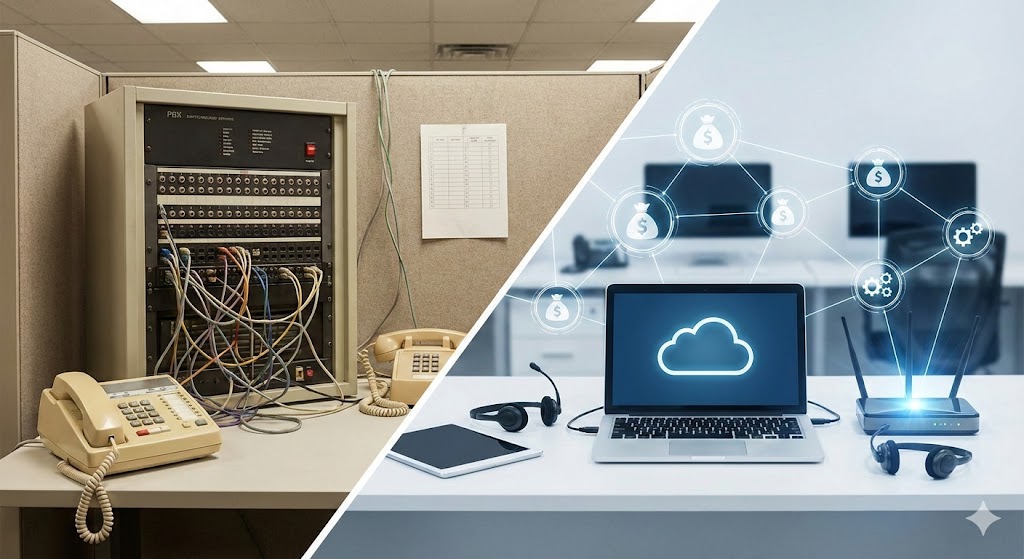
While revolutionary for their time, these systems were expensive to install, inflexible to scale, and required dedicated physical space and climate control.
The Advent of EPABX: The Electronic Revolution
This is where the first major evolution occurred. EPABX stands for Electronic Private Automatic Branch Exchange. The key term here is “Electronic.” An EPABX system replaced the electromechanical components and manual operations of a traditional PBX with solid-state electronics and computerization.
Key Advancements with EPABX
The move from PBX to EPABX was a giant leap, introducing features we now consider standard:
-
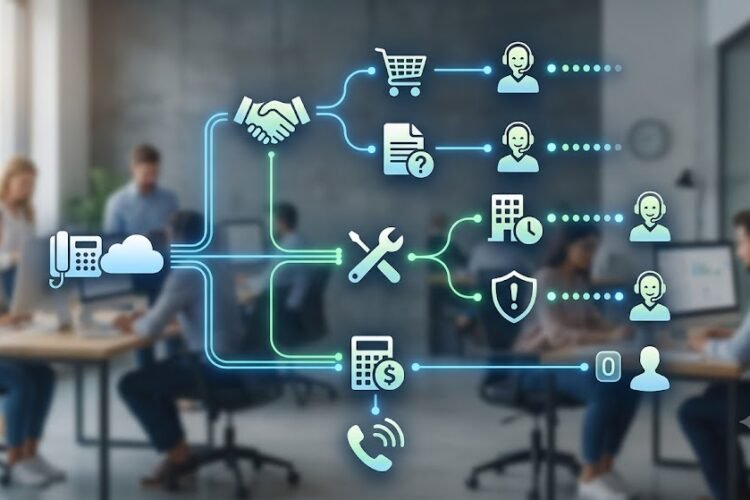
Automated Attendants (IVR): “Press 1 for Sales, press 2 for Support…” This automated call routing saved countless hours.
-
Call Forwarding & Transfer: The ability to seamlessly move calls between extensions or to external numbers.
-
Voicemail: Digital voicemail systems, a vast improvement over physical answering machines.
-
Call Conferencing: Hosting multi-party calls became significantly easier.
-
Greater Reliability: With fewer moving parts, electronic systems were more reliable and required less maintenance.
However, it’s crucial to understand that while EPABX is electronic, many systems still relied on traditional copper wiring (like ISDN PRI lines) for external calls and were largely confined to a single physical location. For a deeper look at modern installations, you can explore our guide on EPABX system installation in Coimbatore.
The Core Difference Between PBX and EPABX Systems
Now, let’s crystallize the distinction. The journey from PBX to EPABX is a story of technological progression.
Think of it this way: All EPABX systems are PBX systems, but not all PBX systems are EPABX.
The primary difference between PBX and EPABX systems lies in their core technology and capability:
| Feature | Traditional PBX | EPABX (Electronic PBX) |
|---|---|---|
| Core Technology | Electromechanical switches & manual operation | Electronic, solid-state components & computer control |
| Automation | Minimal, often required a human operator | Highly automated (auto-attendant, voicemail, etc.) |
| Call Features | Basic internal/external calling | Advanced features (call forwarding, conferencing, hold, park) |
| Reliability | Lower; prone to wear and tear of physical parts | Higher; fewer mechanical failures |
| Scalability | Difficult and expensive to add lines/extensions | Easier to scale by adding hardware cards |
| Maintenance | Required specialized technicians for physical repairs | Often included software-based diagnostics |
In essence, EPABX made business telephony smarter, more feature-rich, and more automated. It was the definitive step into the digital age for office phones.
The Modern Frontier: IP-PBX and the Shift to VoIP
Understanding the difference between PBX and EPABX systems is historical context. Today, the most relevant evolution is the move to IP-PBX (Internet Protocol PBX). This shifts the entire system from circuit-switched networks to data networks using Voice over Internet Protocol (VoIP).
An IP-PBX can be:
-
On-Premise: Hardware installed at your office, but it uses your local area network (LAN) and internet connection.
-
Hosted/Cloud: No on-site hardware; the phone system is delivered as a service (UCaaS – Unified Communications as a Service) over the internet.
This leap forward brings monumental changes that address modern business pain points. To understand which modern system might suit you, read our comparison on IP PBX vs traditional PBX.
Why the Shift to IP is Critical for Your Business
If you’re running an older EPABX, you might be experiencing these pain points:
-
Sky-High Call Costs: Especially for international or inter-branch calls.
-
Inflexible & Expensive Scaling: Needing to run new cables and buy expensive proprietary hardware for new hires.
-
Location Lock-In: Employees must be in the office to use their extension.
-
Missed Integrations: Your phone system doesn’t talk to your CRM, helpdesk software, or email.
-
Security Vulnerabilities: Older systems are targets for PBX hacking and toll fraud.
An IP-PBX solves these by using your data network, enabling features like:
-
Radically Lower Costs: Calls over the internet are cheap, especially for long-distance.
-
True Mobility: Use a softphone app on your laptop or smartphone to make/receive calls from anywhere as if you’re at your desk.
-
Seamless CRM Integration: Screen pops with customer info when they call.
-
Easier Scalability: Add a user with a few clicks in a web interface, often without new hardware.
-
Unified Communications: Video conferencing, instant messaging, and file sharing integrated with calling.
Choosing the Right System: PBX, EPABX, or IP-PBX?
So, which one is right for you? The decision hinges on your business needs, budget, and growth trajectory.
When a Traditional EPABX Might Suffice (Temporarily)
-
Micro-businesses with 2-5 employees, no remote work, and very basic call needs.
-
Extremely limited budget for initial investment, with low call volume.
-
Areas with persistently poor or unreliable internet connectivity.
However, this is becoming a rarer scenario. The long-term savings and capabilities of an IP system often outweigh the initial cost of an old EPABX.
When You Should Seriously Consider an IP-PBX
-
Your business is growing or you plan to hire remote/hybrid staff.
-
You have multiple locations (even internationally) that need to connect seamlessly.
-
Call costs are a significant expense.
-
You use business software (like Salesforce, Zoho, Zendesk) and want to integrate it.
-
You desire modern features like video meetings, mobile apps, and advanced call analytics.
-
You are concerned about system security and modern maintenance.
Upgrading isn’t as daunting as it seems. Our professional EPABX solutions include seamless migration paths to modern IP systems.
Navigating the Transition: What to Consider
Moving from an older EPABX to a modern IP-PBX is a strategic project. Here’s what to focus on:
1. Network Assessment
Your existing data network is now the backbone of your phone system. Ensure your router, switches, and Wi-Fi can handle the additional voice traffic with Quality of Service (QoS) configured.
2. Choosing Between On-Premise and Hosted
-
On-Premise IP-PBX: You own and manage the server. Higher upfront cost, more control, and lower long-term operational cost. Ideal for businesses with IT staff and specific compliance needs.
-
Hosted/Cloud PBX: Lower startup cost, predictable monthly fee, and the provider handles all maintenance, updates, and security. Perfect for businesses wanting simplicity, scalability, and automatic updates. Explore the benefits in our guide to cloud-based IP-PBX.
3. Phones and Devices
You can use traditional IP desk phones, wireless DECT phones, or simply install a softphone application on computers and smartphones. The choice depends on user roles and mobility needs.
4. Implementation Partner
This is crucial. Choose a provider with experience in migrations, not just new installations. They should offer ongoing comprehensive IP-PBX maintenance and support.
Frequently Asked Questions (FAQs)
What does EPABX stand for?
EPABX stands for Electronic Private Automatic Branch Exchange. It signifies the evolution from manual, electromechanical PBX systems to automated, electronic ones.
Can I upgrade my traditional PBX or EPABX to an IP system?
Absolutely. Most businesses migrate gradually. You can often integrate an IP-PBX with your existing system initially, using gateways to connect old analog/digital lines and phones, then phase them out over time. We specialize in these transitions for businesses in Chennai and Coimbatore.
Is VoIP call quality reliable?
Yes, modern VoIP quality is often superior to traditional calls, thanks to high-definition (HD) voice codecs. The key is a stable, well-managed internet connection with proper bandwidth and QoS settings.
Are IP-PBX systems secure from hacking?
Any internet-connected system requires security focus. A properly configured IP-PBX with strong passwords, encrypted calls (SRTP), regular firmware updates, and a secured network is very secure. In fact, it’s often more secure than outdated, unpatched EPABX systems that are vulnerable to toll fraud. Learn about securing your telephony.
What happens to my phone system if the internet goes down?
This is a common concern. Mitigation strategies include:
-
Choosing a provider with built-in failover to mobile networks.
-
Having a backup internet connection (like a 4G/5G failover router).
-
For on-premise systems, configuring failover to a basic PSTN line.
-
Forwarding calls to mobile phones automatically during an outage.
How much does a modern IP-PBX system cost?
Costs vary widely based on size, features, and choice of hosted vs. on-premise. Typically, hosted solutions start with a low per-user monthly fee. On-premise solutions have a higher initial hardware cost but lower ongoing costs. The return on investment from reduced call charges, increased productivity, and fewer maintenance headaches is usually significant.
Conclusion: The Future is IP
Understanding the difference between PBX and EPABX systems is a lesson in business communication history. While the electronic leap of EPABX was vital, today’s imperative is the network leap to IP-PBX.
Sticking with an aging EPABX means accepting higher operational costs, limited functionality, and strategic rigidity. Embracing an IP-PBX isn’t just about upgrading your phones—it’s about future-proofing your business communications, unlocking powerful integrations, and empowering your team to collaborate from anywhere.
If you’re re-evaluating your business phone system in the Chennai or Coimbatore region, the team at IPPBX Chennai is ready to help. From assessing your current EPABX to designing and implementing a modern, scalable IP solution that grows with you, we ensure your communication system is a catalyst for growth, not a constraint. Contact us today for a consultation.