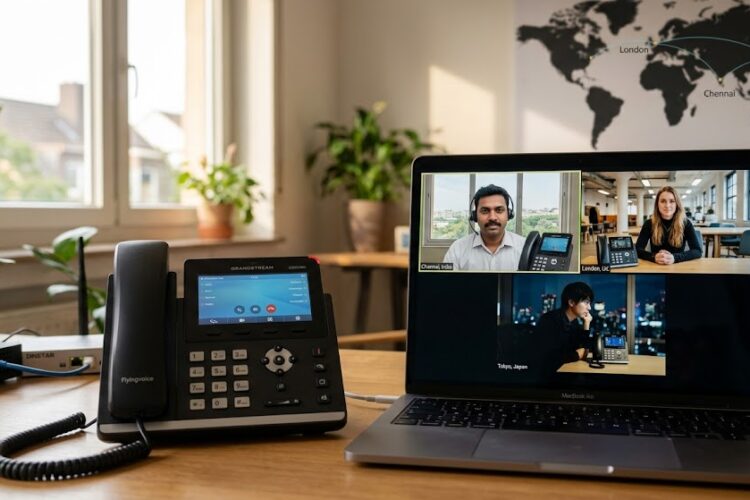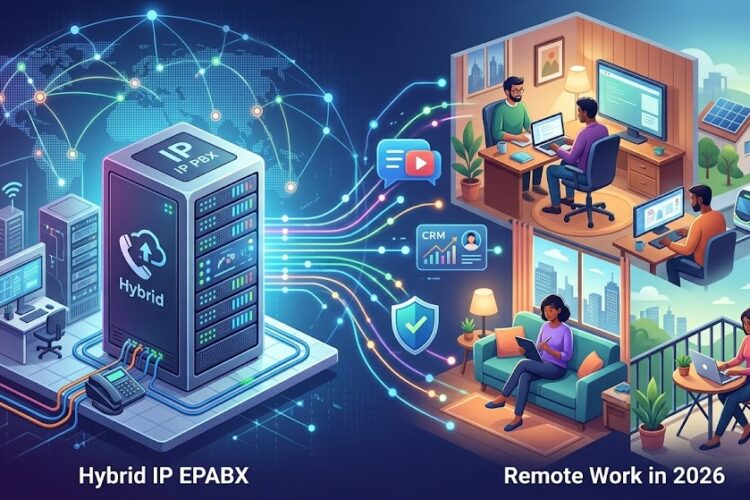
When your office phone rings at 3 AM with a customer emergency, or when you’re juggling five calls during peak business hours, you realize that your communication system isn’t just another piece of office equipment—it’s the lifeline of your business. If you’re searching for a business IP phone system near me Coimbatore, you’re likely facing frustrations that thousands of local businesses have experienced: missed calls, poor voice quality, expensive maintenance, or a system that simply can’t keep up with your growing team.
Let me share something I’ve learned from working with over 200 businesses across Coimbatore: the right phone system doesn’t just solve communication problems—it transforms how your team works, how customers perceive you, and ultimately, how your business grows.
Why Traditional Phone Systems Are Holding Coimbatore Businesses Back
Walk into any established business in RS Puram or Gandhipuram, and you’ll often find a bulky phone system tucked away in a corner, its blinking lights a reminder of technology from a different era. These traditional EPABX systems served us well for decades, but they’re showing their age in today’s fast-paced business environment.
The average business in Coimbatore loses approximately 15-20% of potential customers due to poor phone handling. That’s not because employees aren’t trying—it’s because the technology is fighting against them. When a customer calls during lunch hour and reaches a busy signal, they’re not thinking “I’ll call back later.” They’re opening Google and finding your competitor.
Traditional systems chain you to your desk. They require expensive hardware upgrades every few years. They can’t tell you which marketing campaigns are driving calls. And when something breaks? You’re looking at service calls that cost anywhere from ₹5,000 to ₹25,000, plus the productivity lost while waiting for repairs.
Understanding What Makes IP Phone Systems Different (And Better)
Internet Protocol (IP) phone systems represent a fundamental shift in how businesses communicate. Instead of running through traditional copper telephone lines, these systems use your existing internet connection to handle voice calls, video conferences, and even text messages—all through a single, integrated platform.
Think of it this way: traditional phones are like having separate remote controls for your TV, sound system, and streaming device. An IP phone system is like having a universal remote that controls everything seamlessly. The technology converts your voice into data packets that travel across the internet, arriving crystal-clear at their destination whether that’s the desk next to you or a client in Mumbai.
The real magic happens in the flexibility. Your receptionist can answer calls from home during a bandh. Your sales team can make calls from client sites using their mobile phones, with customers seeing your office number on caller ID. Your manager can check voicemails from anywhere in the world. This isn’t futuristic technology—it’s what modern businesses in Coimbatore are using right now to stay competitive.
The Real Costs: What You’ll Actually Pay in Coimbatore
Let’s talk numbers, because this is often where business owners get confused by conflicting information. When searching for a business IP phone system near me Coimbatore, understanding the true investment is crucial.
For a small business with 5-10 employees, you’re looking at an initial investment between ₹75,000 to ₹1,50,000. This includes IP phones, the main system (which might be hardware-based or cloud-based), installation, and basic training. Before you close this page thinking that’s too expensive, consider this: a traditional EPABX system of comparable quality costs roughly the same upfront, but here’s where IP systems pull ahead dramatically.
Your monthly costs with an IP system typically range from ₹2,000 to ₹8,000 depending on your call volume and features. Compare that to traditional phone bills that often exceed ₹15,000 monthly for the same number of users. The detailed call center cost comparison shows how businesses save an average of 40-60% on communication costs within the first year.
Medium-sized businesses (20-50 employees) should budget ₹2,50,000 to ₹5,00,000 for a comprehensive setup. This investment includes advanced features like call analytics, CRM integration, and redundancy systems that ensure your phones keep working even during power outages or internet disruptions.
Essential Features That Actually Matter for Your Business
The feature lists from phone system vendors can be overwhelming—auto-attendant, call parking, hunt groups, SIP trunking. Let me cut through the jargon and tell you what actually makes a difference in day-to-day operations.
Call routing intelligence is perhaps the most underrated feature. Imagine this scenario: A customer calls about a billing issue. Instead of being transferred three times and explaining their problem repeatedly, the system recognizes the caller (from your CRM integration), sees they have an open billing ticket, and routes them directly to the accounts team member handling their case. This single feature can transform customer satisfaction.
Mobile integration has become non-negotiable, especially in Coimbatore where traffic conditions often mean employees work remotely. Your team should be able to make and receive calls using their office number from anywhere, seamlessly transferring calls between their desk phone and mobile device as they move around.
Call analytics and reporting separate good phone systems from great ones. Which advertisements are driving calls? What times see the highest call volume? How many calls does each department handle? This data helps you make staffing decisions, measure marketing ROI, and identify training opportunities. Understanding how to properly set up your IP EPABX system ensures these features work optimally from day one.
Voicemail-to-email transcription might sound like a luxury, but talk to any business owner who’s used it, and they’ll tell you it’s transformed how they handle after-hours messages. Instead of calling into voicemail (which most people forget to do), messages arrive in your email with a text transcription. You can read and prioritize them in seconds.
Finding Reliable Providers in Coimbatore: What to Look For
The Coimbatore market has exploded with IP phone system providers over the past three years. Some are excellent. Others will take your money, install a system, and disappear when you need support. Here’s how to separate the professionals from the pretenders.
First, demand local presence and references. Any provider worth considering should have at least three current clients in Coimbatore willing to speak with you about their experience. Don’t just ask if they’re happy—ask specific questions: How quickly do they respond to support tickets? Have they ever had extended downtime? What happened during the last power outage?
Technical expertise matters enormously. Ask potential providers about their IP PBX maintenance procedures. A good provider will have scheduled maintenance plans, monitoring systems that catch problems before they affect your business, and 24/7 support availability. The difference between a system that works 99% of the time and 99.9% of the time might sound small, but that 0.9% could represent dozens of lost customer calls.
Scalability is often overlooked during the buying process. You’re not just buying for today—you’re investing in a system that should grow with your business. Can you easily add users? What happens when you open a second location? How does pricing change as you scale? These questions might not seem urgent now, but they become critical six months after installation.
Security Concerns You Can’t Afford to Ignore
Here’s a sobering fact: IP phone systems can be hacked, and toll fraud (where attackers make expensive international calls through your system) costs Indian businesses crores of rupees annually. This isn’t meant to scare you away from IP systems—it’s meant to ensure you protect yourself properly.
The most common vulnerability? Default passwords that never get changed. When your system is installed, immediately change all default passwords to strong, unique alternatives. This simple step prevents the majority of attacks. Your provider should insist on this as part of the installation process. Understanding the difference between PBX and EPABX systems helps you appreciate why modern systems need enhanced security measures.
Network segmentation is another critical protection. Your phone system shouldn’t share the same network as your general office internet. If an employee accidentally downloads malware on their computer, it shouldn’t be able to spread to your phone system. A good provider will set up a separate VLAN (Virtual Local Area Network) for your phones.
Regular security audits should be non-negotiable. At minimum, quarterly reviews of call logs can identify suspicious activity—like calls to premium international numbers you’ve never contacted before. Detailed guidance on securing your IP telephony system and preventing toll fraud provides comprehensive protection strategies.
The Installation Process: What to Expect Week by Week
Once you’ve chosen a provider, understanding the installation timeline helps you plan business operations and set realistic expectations.
Week 1: Planning and Assessment Your provider should conduct a thorough site survey. They’ll assess your internet bandwidth (a critical factor many businesses overlook), examine your current network infrastructure, identify where phones will be placed, and discuss your specific workflow requirements. They should also test your internet connection’s quality—not just speed, but jitter, latency, and packet loss, which significantly impact call quality.
Week 2: Preparation This is when the technical groundwork happens. Your network might need upgrades. Power over Ethernet (PoE) switches might need to be installed so phones can receive power and data through a single cable. The system configuration begins, with call routing rules programmed according to your business needs.
Week 3: Installation The physical installation typically takes 2-4 days for a small to medium business. Phones are mounted, cables are run, and the system is connected. A professional installation is methodical and clean—cables should be properly managed, phones should be securely mounted, and everything should be labeled for future reference.
Week 4: Testing and Training This is where quality providers distinguish themselves. Every feature should be tested thoroughly. Call quality should be verified. Emergency procedures should be confirmed. And most importantly, your team needs proper training. Not a rushed hour-long session, but comprehensive training that ensures everyone understands how to use key features.
Integration Capabilities That Multiply Your Investment
The true power of modern IP phone systems reveals itself when they’re integrated with your other business tools. This is where the technology stops being just a phone system and becomes a business intelligence platform.
CRM Integration transforms customer interactions. When a client calls, their complete history pops up on your screen automatically—past purchases, support tickets, preferences, notes from previous conversations. Your team can personalize every interaction without asking customers to repeat information. For businesses using platforms like Zoho CRM (popular in Coimbatore), this integration is seamless and powerful.
Email and Calendar Integration means your phone system knows when you’re in meetings and can route calls accordingly. It can automatically schedule callbacks. It can send meeting reminders via phone calls. These small automations save hours of administrative time weekly.
Accounting Software Integration is particularly valuable for service businesses. Calls can automatically generate billable time entries. Customer calls can trigger invoice reminders. The financial tracking becomes effortless.
Common Mistakes Coimbatore Businesses Make (And How to Avoid Them)
After helping dozens of businesses transition to IP phone systems, I’ve seen the same mistakes repeated. Learning from others’ errors saves you time, money, and frustration.
The biggest mistake? Underestimating bandwidth requirements. Your internet connection needs to handle both your data needs and phone calls simultaneously. Each call requires approximately 100 kbps of bandwidth. With 10 simultaneous calls, that’s 1 Mbps just for phones. If your business operates on a barely-adequate internet connection, phone quality will suffer during busy periods. Plan for at least 50% more bandwidth than your calculated minimum.
Another common error is neglecting redundancy. What happens when your internet goes down? Quality systems include failover options—automatic switching to 4G backup connections, or call forwarding to mobile phones. These features cost extra, but the first time your internet fails during business hours, you’ll consider them priceless.
Many businesses also skip the comprehensive guide to IP EPABX systems and rush into purchases without understanding their specific needs. Manufacturing businesses have different requirements than retail stores. Educational institutions need different features than healthcare clinics. Your system should be customized for your industry and workflow.
Real-World Performance: What Success Looks Like
Let me share a specific example that illustrates what’s possible. A medium-sized educational consultancy in Race Course contacted me last year, frustrated with their traditional phone system. They were missing about 30 calls daily during peak admission season, their telephone bills exceeded ₹18,000 monthly, and they had no way to track which advertising campaigns generated calls.
Within three months of installing a modern IP phone system, the transformation was remarkable. Missed calls dropped to less than 5 daily through smart call routing and mobile integration. Their monthly communication costs fell to ₹6,500. And most importantly, call tracking revealed that their expensive newspaper advertisements generated almost no calls, while their Google Ads campaigns drove 60% of inquiries. This single insight allowed them to reallocate their marketing budget and increase admissions by 23%.
Maintenance and Long-Term Ownership
Understanding what happens after installation is crucial for long-term satisfaction. Quality IP phone systems require minimal maintenance compared to traditional systems, but they’re not completely hands-off.
Software updates happen regularly—typically monthly for security patches and quarterly for feature updates. With cloud-based systems, these happen automatically. For on-premise systems, your provider should handle updates remotely during non-business hours. These updates are critical for security and shouldn’t be postponed.
Hardware maintenance is minimal but important. IP phones are remarkably reliable, with quality models lasting 7-10 years. However, they should be cleaned regularly (dusty phones have degraded microphones), and backup devices should be kept on hand for critical positions.
The detailed IP PBX maintenance guide provides monthly, quarterly, and annual maintenance checklists that keep systems running optimally.
Making the Decision: Cloud vs. On-Premise Systems
This is often the first major decision point, and there’s no universally correct answer. Your choice depends on specific business circumstances, preferences, and priorities.
Cloud-based systems (also called hosted PBX) mean the actual phone system hardware lives in a data center somewhere, and you access it via the internet. Your upfront costs are lower (₹50,000-₹1,00,000 for small businesses), you pay a monthly subscription per user (typically ₹500-₹1,500), and the provider handles all maintenance and updates. This is increasingly popular in Coimbatore, especially among businesses that value predictable monthly costs and minimal IT management.
On-premise systems mean you own the hardware, which sits in your office. Higher upfront investment (₹1,50,000-₹4,00,000 for small businesses), but lower ongoing costs. You have complete control over the system, which appeals to businesses handling sensitive information or those with specific customization needs. Over 5-7 years, on-premise systems often cost less overall, but they require more technical knowledge and local IT support.
For most Coimbatore businesses with fewer than 50 employees, cloud systems offer the best balance of features, cost, and convenience. Larger organizations or those with specific security requirements often prefer on-premise solutions.
The Role of Internet Quality in System Performance
This deserves special attention because it’s the foundation of everything. Your IP phone system is only as reliable as your internet connection. I’ve seen businesses invest ₹3,00,000 in a premium phone system, then wonder why call quality is poor—only to discover their internet connection is the bottleneck.
Test your internet connection thoroughly before committing to a system. Tools like DSLReports.com provide comprehensive tests measuring not just speed, but quality metrics that matter for voice calls. You want ping times under 50ms, jitter under 20ms, and zero packet loss.
Consider dedicated internet connections for larger deployments. A business internet connection with Service Level Agreements (SLAs) guaranteeing uptime costs more than residential internet, but the reliability difference is substantial. For critical businesses, having two internet connections from different providers (one as backup) provides peace of mind.
Understanding Your Workforce Needs
The best phone system means nothing if your team can’t or won’t use it effectively. Implementation success depends heavily on understanding how your specific workforce operates and making strategic decisions that build confidence and competence.
For businesses with older employees who’ve used traditional phones for decades, change management becomes crucial. Don’t just install new technology and expect immediate adoption. Schedule hands-on training sessions where employees can practice in low-pressure environments. Create simple quick-reference guides for common tasks. Assign “phone champions” who can help colleagues with questions.
The hiring importance solvability matrix approach helps you systematically evaluate which features matter most for different team roles and prioritize training accordingly.
For businesses with younger, tech-savvy teams, the challenge is different—preventing them from enabling every available feature without understanding business implications. Advanced features should be rolled out strategically, not all at once.
Future-Proofing Your Investment
Technology evolves rapidly, but quality IP phone systems remain relevant for 7-10 years with proper planning. Future-proofing requires thinking beyond current needs.
AI Integration is already transforming business phone systems. Features like automatic call transcription, sentiment analysis that flags frustrated customers, and virtual assistants that handle routine calls are becoming mainstream. When evaluating systems, ask about their AI roadmap and upgrade path.
Video Integration has become standard rather than optional. The pandemic permanently changed how businesses communicate, and modern systems should seamlessly handle video calls alongside voice calls. This isn’t just for virtual meetings—video calls with customers are increasingly common in sectors like real estate, education consulting, and healthcare.
API Availability might sound technical, but it’s crucial for businesses that want to customize or integrate with future tools. Open APIs mean you’re not locked into a vendor’s ecosystem and can add capabilities as your business evolves.
What to Ask During Provider Demonstrations
When you’re ready to evaluate specific systems and providers, the quality of questions you ask directly impacts the quality of system you’ll end up with. Move beyond the glossy brochures and ask pointed questions that reveal real capabilities.
“Can I speak with three current clients in Coimbatore who’ve had your system for at least one year?” This question separates confident providers from those with poor track records. Contact these references and ask about problems they’ve encountered and how quickly they were resolved.
“What happens during internet outages?” The answer should be detailed and specific, covering automatic failover to backup connections, call forwarding to mobile devices, and estimated downtime. Vague answers like “we have backup systems” aren’t sufficient.
“Walk me through exactly what happens when I need support at 11 PM on Sunday.” You want to hear about ticketing systems, guaranteed response times, remote access procedures, and escalation processes. Support quality matters more than any feature list.
“What does the upgrade path look like when I need to add 10 more users next year?” Pricing should be transparent and reasonable. Beware of systems where adding users becomes prohibitively expensive or technically complicated.
The Mobile Workforce Revolution
For many Coimbatore businesses, the most transformative aspect of modern IP phone systems is how they empower mobile workers. Your sales team visiting clients in Peelamedu, your manager working from home in Saibaba Colony, your service technician at a customer site in Singanallur—all of them can function as though they’re sitting at their office desk.
Mobile applications provided by quality systems aren’t just softphones that make calls over data connections (though that’s included). They’re full-featured communication hubs. Employees can check company directories, access voicemail, transfer calls to colleagues, initiate conference calls, and view real-time call analytics—all from their smartphones.
This mobility extends your business hours without requiring anyone to actually stay late at the office. Customer calls can follow employees wherever they are, yet customers always see your main business number and experience professional call handling.
Measuring ROI: Beyond the Obvious Savings
When justifying an IP phone system investment to stakeholders or yourself, the calculation extends far beyond monthly bill reductions. The complete ROI picture includes several less-obvious factors.
Productivity gains from features like call screening, voicemail transcription, and mobile integration save employees roughly 20-30 minutes daily. For a 10-person team, that’s over 50 hours monthly—equivalent to adding a part-time employee without increasing payroll.
Reduced customer churn from improved call handling is harder to quantify but enormously valuable. If better phone service retains even 5% more customers annually, for many businesses that represents tens of thousands of rupees in preserved revenue.
Better marketing decisions from call tracking and analytics prevent wasted advertising spend. The educational consultancy mentioned earlier saved over ₹2,00,000 annually by eliminating ineffective campaigns identified through call analytics.
Special Considerations for Different Industries
Different business types have unique requirements that should influence system selection and configuration.
Manufacturing and Industrial Businesses need rugged phones for factory floors that can withstand dust, vibration, and temperature variations. They benefit enormously from integration with inventory management systems, where a call about a rush order can automatically check stock availability and trigger production scheduling.
Healthcare and Medical Practices require HIPAA-compliant systems with encrypted calls, secure voicemail, and integration with patient management software. Features like call recording (with proper consents) protect against disputes and aid in staff training.
Retail Businesses need systems that can handle high call volumes during peak seasons, with sophisticated queuing that doesn’t frustrate customers. Integration with point-of-sale systems allows staff to check inventory during calls and even process orders over the phone.
Educational Institutions benefit from features like scheduled routing (different call handling during class hours vs. holidays), mass notification capabilities for emergencies, and integration with student information systems.
Environmental and Power Considerations in Coimbatore
Coimbatore’s climate and infrastructure present specific challenges that should inform your implementation strategy.
Power backup is non-negotiable. While IP phones can receive power through Ethernet cables (PoE), your network switches and main system still need electricity. A UPS (Uninterruptised Power Supply) rated for at least 2 hours of runtime ensures phone service continues during the brief power interruptions common in many areas. For longer outages, cellular failover becomes critical.
Temperature and dust control matter more than many businesses realize. IP phone systems should be installed in climate-controlled environments when possible. Factory environments might require industrial-grade equipment with higher temperature tolerances and better dust protection.
Monsoon preparations include ensuring all network cables are properly sealed where they enter buildings, backup systems are tested before the rainy season, and staff know emergency procedures for weather-related connectivity issues.
The Complete Timeline: From Research to Full Operation
Understanding the entire journey from initial research to full operational system helps set realistic expectations and plan accordingly.
Month 1: Research and Requirements Definition – You’re evaluating needs, researching providers, and defining requirements. This shouldn’t be rushed. Involve stakeholders from different departments to ensure all needs are captured.
Month 2: Vendor Selection and Contract Negotiation – Narrow to 2-3 finalists, conduct thorough demonstrations, check references, and negotiate contracts. Don’t just accept the first quote—negotiate on price, but also on support terms, training provisions, and upgrade paths.
Month 3: Design and Planning – Your chosen provider creates detailed implementation plans, assesses your infrastructure, orders equipment, and schedules installation. You prepare your team for the upcoming changes.
Month 4: Installation and Initial Training – The physical installation occurs, followed by comprehensive testing and initial training sessions.
Months 5-6: Optimization and Advanced Training – Fine-tune call routing based on actual usage patterns, provide advanced training on features teams are ready to adopt, and address any issues that emerged during real-world use.
Frequently Asked Questions
What’s the minimum internet speed needed for a reliable business IP phone system?
You need at least 100 kbps upload and download speed per simultaneous call, plus headroom for data usage. For a small business expecting up to 5 simultaneous calls, a connection with 10 Mbps upload and 10 Mbps download is the minimum. However, I strongly recommend at least 25 Mbps symmetrical connections for better reliability and room for growth. Remember that upload speed matters as much as download speed for phone calls.
How long does it take to get a new IP phone system fully operational in Coimbatore?
From initial contact to full operation, expect 4-8 weeks for small businesses and 8-12 weeks for medium to large organizations. This includes time for assessment, ordering equipment, installation, testing, and training. Rush installations are possible but often result in configuration issues that cause problems later. The step-by-step setup guide provides realistic timelines for each phase.
Can I keep my existing phone numbers when switching to an IP phone system?
Yes, number portability is standard in India. Your provider will handle the porting process, which typically takes 7-10 business days. During the transition, you can configure temporary call forwarding to ensure zero downtime. It’s crucial to start the porting process early in your implementation timeline to avoid delays.
What happens if my internet connection fails?
Quality IP phone systems include failover mechanisms. The most common is automatic call forwarding to designated mobile phones when the system detects internet connectivity loss. More advanced setups include 4G/5G backup connections that activate automatically. Some businesses maintain a small traditional phone line as emergency backup. Your provider should detail exactly what happens during internet outages and test the failover system during installation.
How much training do employees need to use the system effectively?
Plan for 2-4 hours of training per employee, split across multiple sessions. Basic users (those who primarily answer and make calls) need 1-2 hours covering essential features. Power users (receptionists, managers) need 3-4 hours including advanced features like call analytics, queue management, and system configuration. Ongoing “lunch and learn” sessions covering specific features boost adoption significantly.
Is an IP phone system secure enough for confidential business conversations?
When properly configured, IP phone systems are highly secure—often more secure than traditional phone systems. All calls should be encrypted using protocols like SRTP (Secure Real-Time Transport Protocol). However, security depends heavily on proper configuration, including strong passwords, network segmentation, regular security audits, and restricting international calling. The comprehensive security guide for IP telephony covers essential protection measures.
What’s the realistic lifespan of an IP phone system investment?
Quality IP phone systems typically last 7-10 years before requiring major upgrades or replacement. Phones themselves often last even longer—12-15 years isn’t uncommon for quality models. Cloud-based systems have indefinite lifespans since the core technology is continuously updated by the provider. On-premise systems may need hardware upgrades after 7-8 years, though software updates can extend functionality significantly.
Can I start with a small system and expand later?
Absolutely, and this is one of IP systems’ greatest advantages over traditional phone systems. You can start with 5-10 users and add more as needed without replacing core infrastructure (assuming you chose a properly scalable system initially). Cloud systems make this especially easy—adding users often takes just minutes and requires no on-site work. Ensure your initial internet connection and network infrastructure are sized for your anticipated growth to avoid bottlenecks.
How do I handle the transition from my current system without disrupting business?
Professional providers use parallel running or phased migration approaches. Your old system continues operating while the new system is installed and tested. You might run both systems simultaneously for several days or weeks, gradually moving departments to the new system. Final cutover often happens during off-hours or weekends. The key is thorough testing before any cutover and having fallback plans if issues arise.
What ongoing costs should I budget for beyond the initial investment?
For cloud systems, expect monthly fees of ₹500-₹1,500 per user covering calls, features, and support. On-premise systems have lower monthly costs (₹200-₹600 per user for calls and support) but require budgeting for occasional hardware replacements and major upgrades every 5-7 years. Also budget annually for training refreshers, minor equipment additions (headsets, adapters), and potential internet connection upgrades as your usage grows.
Taking the Next Step
If you’ve read this far, you’re serious about finding the right business IP phone system for your Coimbatore operation. The technology has matured to the point where the question isn’t whether to adopt IP telephony, but rather which system best fits your specific needs and how to implement it successfully.
The businesses that gain the most from these systems share common characteristics: they view the phone system as a strategic business tool rather than just overhead, they invest time in proper planning and implementation, they provide thorough training to their teams, and they work with providers who offer genuine ongoing support rather than just selling boxes.
Your next steps should include mapping your specific requirements using the frameworks discussed here, requesting demonstrations from at least three qualified providers in Coimbatore, checking references thoroughly, and ensuring your internet infrastructure can support the system you’re considering.
The investment in a quality business IP phone system near me Coimbatore isn’t just about making and receiving calls more efficiently—it’s about positioning your business to compete effectively in an increasingly connected economy, providing the level of service modern customers expect, and giving your team the tools they need to work productively whether they’re at their desks, working from home, or meeting with clients across the city.
The technology is ready. The question is: is your business ready to take advantage of it?