Picture this: It’s Monday morning at your office. Your receptionist is juggling three phone calls simultaneously, customers are on hold for what feels like eternity, and your sales team just missed an important client call because the lines were busy. Sound familiar? This chaos is exactly what happens when businesses outgrow their basic phone systems without realizing there’s a better solution waiting.
Welcome to the world of modern business communication, where EPABX system sales & services have transformed from luxury investments into absolute necessities. Whether you’re running a bustling call center in Chennai, managing a growing startup in Coimbatore, or operating a manufacturing unit that needs seamless internal communication, understanding EPABX systems isn’t just about buying hardware—it’s about investing in your business’s growth trajectory.
Understanding EPABX Systems: More Than Just Phone Lines
Before we dive deep into sales and services, let’s address the elephant in the room: What exactly is an EPABX system, and why should you care?
EPABX stands for Electronic Private Automatic Branch Exchange. Think of it as your office’s private telephone network that connects all internal extensions while managing external calls intelligently. But here’s where it gets interesting—modern EPABX systems are nothing like the clunky, complicated boxes your parents might remember from the 1990s.
Today’s EPABX systems are sophisticated communication hubs that integrate voice, video, messaging, and even customer relationship management tools. They’re the silent workhorses that ensure your business never misses an opportunity.
The Pain Point Nobody Talks About
Here’s something most EPABX dealers won’t tell you upfront: buying the system is just the beginning. The real value—or nightmare—comes from the ongoing service and support. I’ve seen businesses invest lakhs in state-of-the-art EPABX equipment only to face constant downtime because they chose the cheapest installation service or ignored maintenance contracts.
This is precisely why understanding both the sales and service aspects of EPABX systems is crucial before you sign that purchase order.
The Evolution: From Traditional EPABX to IP-Based Systems
Let’s take a brief journey through time. Traditional EPABX systems relied on physical copper wiring, required separate lines for each extension, and needed significant infrastructure investment. They worked, sure, but they were rigid, expensive to scale, and limited in features.
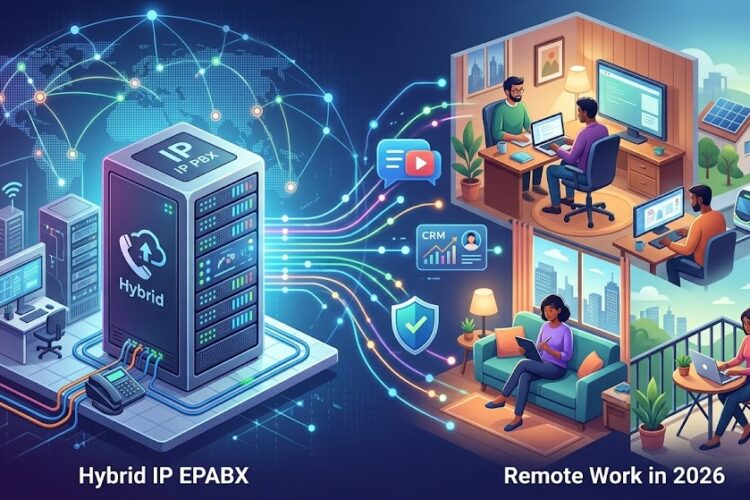
Enter IP EPABX systems—the game-changers. These modern marvels use your existing internet infrastructure to handle calls, making them incredibly flexible and cost-effective. Want to add 50 new extensions? No problem. Need to set up remote working capabilities? Done. Integrate with your CRM so your team sees customer information before picking up calls? Absolutely possible.
The transition from traditional PBX to IP EPABX isn’t just a technology upgrade—it’s a fundamental shift in how your business communicates. And this is where quality sales and service partnerships become invaluable.
Choosing the Right EPABX System: What Chennai Businesses Need to Consider
Business Size and Scalability Requirements
A 10-person startup has vastly different needs than a 500-employee manufacturing plant. When exploring EPABX system sales & services, your first consideration should be current capacity and future growth.
Small Offices (5-20 extensions): You might think a basic system suffices, but consider this—will you need call recording for quality assurance? Do you want auto-attendant features to project a professional image? These features, when not planned initially, become expensive to add later.
Medium Enterprises (20-100 extensions): This is where IP EPABX systems truly shine. You’ll need advanced features like call routing, departmental grouping, voicemail-to-email, and possibly integration with existing software systems.
Large Organizations (100+ extensions): You’re looking at complex requirements including multiple locations, disaster recovery planning, advanced analytics, and possibly ACD (Automatic Call Distribution) and IVR (Interactive Voice Response) systems.
Industry-Specific Considerations
Different industries have unique communication challenges:
Call Centers: Need robust ACD and IVR capabilities, comprehensive call recording, real-time monitoring, and detailed analytics. Your EPABX system sales partner should understand call center metrics and compliance requirements.
Hospitality: Hotels require features like wake-up calls, room-to-room calling, and integration with property management systems. Audio systems for announcements might also be necessary.
Healthcare: HIPAA compliance, emergency paging, and integration with patient management systems are non-negotiable.
Manufacturing: Need rugged systems that can handle industrial environments, with IP speakers for announcements across large facilities.
The EPABX Sales Process: What to Expect and Demand
Initial Consultation and Site Survey
Any reputable EPABX system sales & services provider should start with a thorough site survey. This isn’t just about counting desks—it’s about understanding your communication workflow, identifying bottlenecks, and planning infrastructure requirements.
Red flag warning: If a dealer gives you a quote without visiting your premises or asking detailed questions about your operations, run. They’re not planning a solution; they’re just trying to make a sale.
System Design and Proposal
A proper proposal should include:
- Detailed equipment list: Every phone, gateway, and cable should be itemized
- Network infrastructure requirements: What upgrades might your LAN need?
- Installation timeline: Realistic schedules with contingencies
- Training plan: How will your team learn the system?
- Ongoing support structure: What happens when something breaks at 2 AM?
- Total cost of ownership: Not just purchase price, but 3-5 year operational costs
The Installation Phase: Where Many Projects Go Wrong
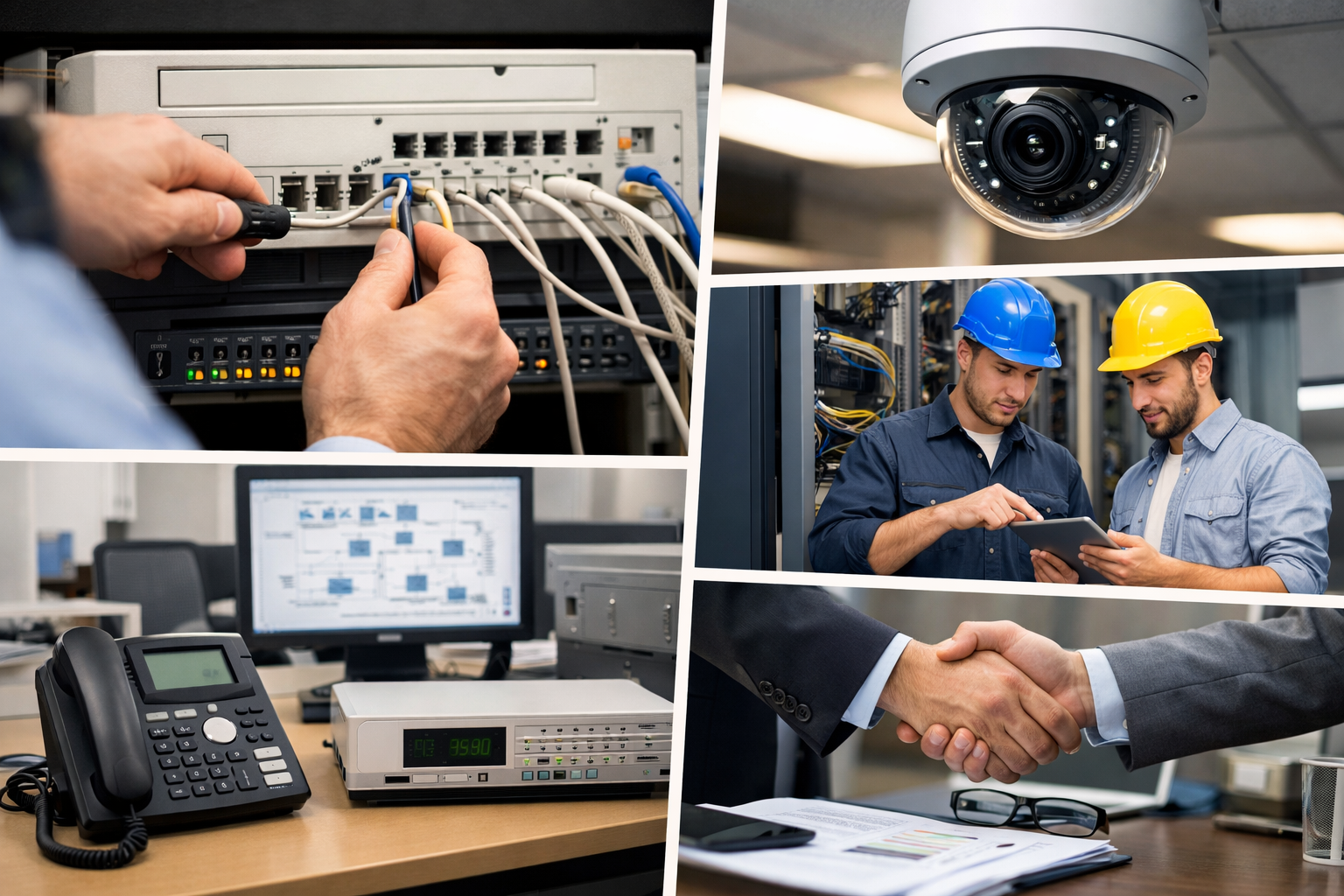
EPABX system installation is a multi-phase process that requires coordination between your IT team, facilities management, and the installation crew. The best service providers follow a structured approach:
Phase 1 – Site Preparation: Infrastructure assessment, network readiness verification, and physical space preparation.
Phase 2 – Hardware Installation: Mounting equipment, running cables, and setting up the network backbone.
Phase 3 – Configuration: Programming extensions, setting up call routing rules, and configuring advanced features.
Phase 4 – Testing: Rigorous testing of all features, call quality verification, and load testing.
Phase 5 – Training and Handover: Comprehensive user training and documentation handover.
Each phase has specific deliverables, and rushing through any phase creates problems later. I’ve seen businesses suffer months of communication issues because installers skipped proper cable labeling or documentation during installation.
The Service Component: Why Ongoing Support Matters More Than You Think
Here’s the harsh truth: your EPABX system will need service. Not might need—will need. Equipment fails, configurations need updates, security patches must be applied, and users need support. The question isn’t whether you need service, but how good that service will be when you need it.
Types of Service Agreements
Basic AMC (Annual Maintenance Contract): Typically covers quarterly preventive maintenance and emergency repair during business hours. Adequate for businesses with in-house IT support and standard requirements.
Comprehensive AMC: 24/7 support, including spare parts, remote monitoring, and priority response times. Essential for businesses where communication downtime equals revenue loss.
Pay-Per-Incident: Sounds economical but usually costs more in the long run. Like car insurance—you hope you won’t need it, but when you do, you’re glad you have it.
What Good EPABX Services Include
Preventive Maintenance: Regular IP PBX maintenance prevents 70-80% of potential issues. This includes firmware updates, security patches, database optimization, and hardware health checks.
Security Management: Toll fraud and PBX hacking are real threats that can cost businesses thousands overnight. Professional service providers implement security best practices, monitor for suspicious activity, and respond to threats proactively.
Performance Optimization: As your business evolves, your EPABX system needs tuning. Call routing rules might need adjustment, new features might improve efficiency, and capacity planning prevents outages.
Backup and Disaster Recovery: When did you last test your EPABX backup? Professional services include backup strategies and recovery planning so a hardware failure doesn’t paralyze your business.
The Hidden Costs of Poor Service
Consider this real scenario: A Chennai-based e-commerce company saved ₹50,000 annually by choosing a cheaper service provider. Sounds smart, right? Six months later, their system crashed during peak season. The service provider took 48 hours to respond and another 72 hours to fix the issue. The result? Five days of disrupted operations costing an estimated ₹15 lakhs in lost sales and angry customers.
Quality EPABX system sales & services aren’t about the lowest price—they’re about value, reliability, and peace of mind.
Choosing Your EPABX Sales & Service Partner: The Checklist
Experience and Expertise
Look for providers who:
- Have been in business for at least 5 years (longevity indicates stability)
- Are authorized dealers for reputable brands like Matrix EPABX, NEC, or other established manufacturers
- Can show case studies from your industry
- Have certified technicians (ask for certification proof)
Local Presence and Response Time
When your system goes down, you need boots on the ground, not promises over the phone. Choose providers with:
- Physical office and service center in your city
- Adequate technical staff (one technician can’t support 50 clients effectively)
- Clear escalation procedures
- Guaranteed response times in writing
Comprehensive Offerings
The best partners offer complete lifecycle support:
- Initial installation to system upgrades
- Network infrastructure guidance
- Integration with other systems (CRM, biometric systems, etc.)
- Gateway systems for connecting to mobile networks
- Training and ongoing consultation
Popular EPABX Brands and Their Service Ecosystems
Matrix EPABX Systems
Matrix has become synonymous with reliability in the Indian market. Their systems are known for robust build quality and extensive feature sets. What makes Matrix particularly appealing is their strong dealer network and readily available spare parts. Matrix EPABX authorized dealers in Chennai and Coimbatore ensure you’re never far from expert support.
NEC Solutions
NEC brings decades of telecommunication expertise with enterprise-grade systems suitable for large organizations. Their systems integrate beautifully with unified communication platforms and offer excellent scalability.
Dinstar Gateways
While not a complete EPABX system, Dinstar GSM gateways and FXS/FXO gateways are crucial components that enable IP EPABX systems to connect with traditional telephone networks and mobile networks cost-effectively.
Future-Proofing Your Investment
Technology evolves rapidly, and what’s cutting-edge today might be obsolete in five years. Smart businesses consider future trends in business telephony when making EPABX investments:
Cloud Integration: Modern systems should support hybrid deployments where some functionality moves to the cloud for flexibility.
Unified Communications: Voice is just one channel. Look for systems that integrate with video conferencing, instant messaging, and collaboration tools.
AI and Analytics: Advanced analytics and AI-driven features like sentiment analysis, call transcription, and predictive routing are becoming standard.
Mobile Integration: Your EPABX system should seamlessly extend to mobile devices, supporting remote work and field operations.
Real-World Success Stories
Case Study: Manufacturing Plant Transformation
A 200-employee manufacturing unit in Coimbatore struggled with internal communication across their sprawling facility. Installing an IP EPABX system with IP speakers throughout the plant reduced emergency response times by 40% and improved coordination between production floors.
Case Study: Call Center Efficiency
A Chennai-based call center handling customer support for e-commerce clients implemented an advanced EPABX system with integrated ACD and IVR. The result? Average handling time dropped by 25%, customer satisfaction scores improved, and the business could track meaningful metrics that drove continuous improvement.
The Service Relationship: Building Long-Term Partnerships
Think of your EPABX service provider as an extension of your team, not just a vendor. The best relationships are built on:
Transparency: Clear communication about issues, costs, and timelines Proactivity: Identifying potential problems before they cause downtime Education: Helping your team use the system more effectively Flexibility: Adapting to your changing needs without forcing unnecessary upgrades
Making the Investment Decision
Let’s talk money because that’s often the deciding factor. EPABX system sales & services represent a significant investment, but breaking it down helps:
Initial Investment Components
- Hardware costs: Servers, phones, gateways, switches
- Software licensing: Many systems require annual licenses
- Installation charges: Professional installation isn’t free but prevents costly mistakes
- Infrastructure upgrades: Your network might need enhancement
- Training: Proper training maximizes ROI
Ongoing Costs
- AMC charges: Typically 8-12% of system value annually
- Electricity and internet: IP systems use your network bandwidth
- Periodic upgrades: Plan for technology refresh every 5-7 years
- Additional extensions: As you grow, costs scale
ROI Considerations
Good EPABX systems pay for themselves through:
- Reduced missed calls (each missed call is a potential lost opportunity)
- Improved customer experience (faster resolution, professional image)
- Enhanced productivity (easier internal collaboration)
- Lower telecommunication costs (especially for multi-location businesses)
- Better resource utilization (smart call routing means efficient staffing)
Frequently Asked Questions
What’s the difference between EPABX and IP PBX systems?
Traditional EPABX systems use dedicated telephone lines and circuit-switched technology, while IP PBX systems use your internet network to transmit calls as data packets. IP PBX systems are more flexible, easier to scale, and offer advanced features like mobile integration and unified communications. Most modern installations favor IP-based systems unless specific legacy requirements exist.
How long does EPABX system installation take?
For small offices (under 20 extensions), installation typically takes 2-3 days. Medium-sized businesses (20-50 extensions) might need 1-2 weeks, while large enterprises with complex requirements could take 3-4 weeks. The timeline depends on infrastructure readiness, system complexity, and customization requirements. Proper planning during the installation phase ensures smoother deployment.
Can I expand my EPABX system later as my business grows?
Absolutely! This is one of the key advantages of modern IP EPABX systems. Unlike traditional systems that had hardware limitations, IP-based systems can scale easily. You can add extensions, integrate new locations, or incorporate advanced features without replacing your entire infrastructure. Discuss scalability during the sales process to ensure your chosen system supports future growth.
What security risks should I worry about with IP EPABX systems?
The main threats include toll fraud (where hackers make expensive international calls through your system), unauthorized access, eavesdropping, and denial-of-service attacks. Professional service providers implement multiple security layers including strong passwords, firewall rules, regular updates, and monitoring. Security best practices are essential—some businesses have lost thousands overnight to toll fraud.
How much does professional EPABX service cost?
Basic AMC typically ranges from ₹15,000-₹50,000 annually for small businesses, depending on system size and complexity. Comprehensive 24/7 support with parts included can cost ₹50,000-₹2,00,000+ annually for larger systems. While this seems expensive, compare it to the cost of a single day’s downtime—most businesses find professional service incredibly cost-effective. The key is matching service level to business criticality.
What happens if my EPABX service provider goes out of business?
This is a legitimate concern that highlights the importance of choosing established providers with track record. Ensure your system uses standard protocols (SIP is ideal) rather than proprietary technology. Request complete system documentation and configuration backups. Many businesses maintain relationships with multiple certified technicians who can provide emergency support if needed.
Do I need to upgrade my internet connection for an IP EPABX system?
Probably, but not always. Voice calls require relatively modest bandwidth (about 100 kbps per simultaneous call), but you need reliable, consistent connectivity with low latency. If you’re making 20 simultaneous calls, that’s about 2 Mbps dedicated to voice. Most modern business internet connections handle this easily. Your service provider should conduct a network infrastructure assessment during installation planning.
Can I integrate my EPABX system with other business software?
Yes! Modern EPABX systems offer extensive integration capabilities. Common integrations include CRM systems (so you see customer info when they call), biometric attendance systems, helpdesk software, and unified communication platforms. Discuss integration requirements during the sales process—some integrations need specific system features or additional licensing.
What’s included in preventive maintenance for EPABX systems?
Regular preventive maintenance typically includes firmware updates, security patches, database optimization, call quality monitoring, hardware health checks, backup verification, and performance tuning. Good service providers also provide usage reports helping you optimize your system and identify training opportunities. This maintenance prevents most issues before they cause downtime.
How do I know if it’s time to upgrade from my traditional EPABX to IP-based system?
Watch for these signs: frequent system failures, inability to add features your business needs, difficulty finding service support for aging equipment, high maintenance costs, or integration limitations with modern tools. If you’re planning office expansion or adding remote workers, that’s an ideal time to upgrade. Most businesses find modern IP EPABX systems pay for themselves within 2-3 years through improved efficiency and reduced costs.
Taking the Next Step
Choosing the right EPABX system sales & services partner is a decision that impacts your business daily. Don’t rush it. Take time to evaluate options, check references, and ensure you’re comfortable with both the technical solution and the people supporting it.
Remember, you’re not just buying a phone system—you’re investing in your business’s communication infrastructure, customer experience, and operational efficiency. Choose partners who understand this and demonstrate genuine commitment to your success.
Whether you’re a small business in Chennai taking your first step into professional communication systems, or a large enterprise in Coimbatore looking to upgrade aging infrastructure, the right EPABX system with quality ongoing service transforms how your business connects with customers and operates internally.
For more insights on modern business communication solutions and expert guidance on EPABX systems, explore our comprehensive resources or reach out for personalized consultation. Your business deserves communication systems that work as hard as you do.