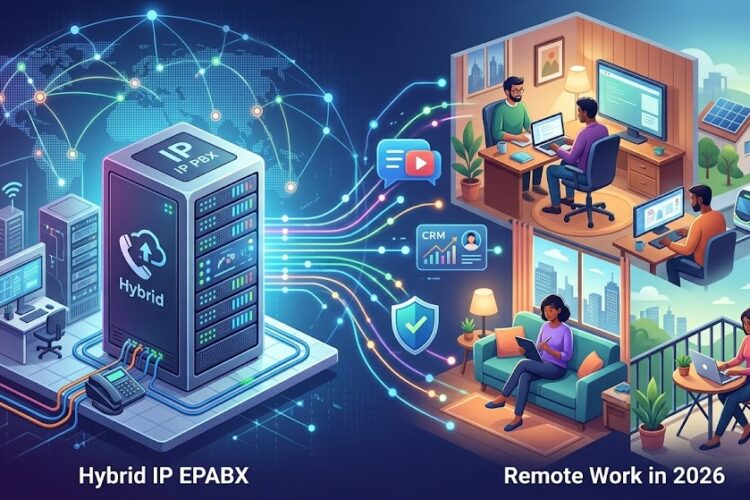
The digital transformation of business communications has reached a pivotal moment. As organizations across Chennai, Coimbatore, and beyond seek more efficient ways to connect teams, serve customers, and streamline operations, Internet Protocol Electronic Private Automatic Branch Exchange (IP EPABX) systems have emerged as the cornerstone of modern unified communications infrastructure.
Traditional telephony systems, once the backbone of business communications, are rapidly becoming obsolete in our interconnected world. Today’s businesses demand seamless integration between voice, video, messaging, and data services—a requirement that legacy systems simply cannot fulfill. This is where IP EPABX technology steps in, offering a comprehensive solution that not only meets current communication needs but also provides the scalability and flexibility required for future growth.
Understanding IP EPABX: The Foundation of Modern Business Communications
IP EPABX represents a fundamental shift from circuit-switched telephony to packet-switched communications. Unlike traditional PBX systems that rely on dedicated copper lines and proprietary hardware, IP EPABX leverages existing internet infrastructure to deliver voice, video, and data services through a single, unified platform.
This technology transforms how businesses handle internal and external communications by converting analog voice signals into digital data packets that travel over IP networks. The result is a more efficient, cost-effective, and feature-rich communication system that can adapt to the evolving needs of modern enterprises.
The core architecture of IP EPABX systems consists of several key components working in harmony. The central processing unit manages call routing, user authentication, and system administration functions. SIP (Session Initiation Protocol) trunks handle external connectivity, while IP phones and software clients serve as endpoints for users. This integrated approach eliminates the need for separate systems for different communication methods, creating a truly unified experience.
The Evolution from Traditional PBX to IP-Based Solutions
The journey from traditional PBX systems to IP EPABX reflects broader technological evolution in business infrastructure. Traditional systems required substantial hardware investments, dedicated maintenance staff, and complex wiring schemes that made expansion costly and time-consuming. These limitations became increasingly problematic as businesses grew and remote work became more prevalent.
IP EPABX systems address these challenges by leveraging software-defined networking principles. Installation complexity is significantly reduced since the system utilizes existing network infrastructure. Maintenance becomes more straightforward through remote management capabilities and automatic software updates. Most importantly, scaling operations no longer requires physical hardware additions—new users can be added through simple software configurations.
The transition to IP-based systems also enables integration with modern business applications. Customer relationship management (CRM) systems, enterprise resource planning (ERP) software, and collaboration platforms can now seamlessly connect with telephony functions, creating workflow efficiencies that were impossible with traditional systems.
Key Features That Define Superior IP EPABX Systems
Advanced call routing capabilities form the foundation of effective IP EPABX systems. Intelligent call distribution ensures that incoming calls reach the most appropriate recipient based on predefined criteria such as time of day, caller identification, or agent availability. This feature proves particularly valuable for businesses operating call centers or customer service departments where efficient call handling directly impacts customer satisfaction.
Auto-attendant functionality provides professional call handling even outside business hours. Callers receive automated greetings and can navigate to appropriate departments through intuitive menu systems. This feature not only improves customer experience but also reduces the workload on reception staff, allowing them to focus on more complex tasks.
Conference calling capabilities have become increasingly important as remote work and distributed teams become the norm. Modern IP EPABX systems support high-quality audio and video conferencing for multiple participants, eliminating the need for separate conferencing solutions. Integration with popular collaboration platforms ensures that teams can seamlessly transition between different communication modes as needed.
Call recording and monitoring features provide valuable insights for quality assurance and training purposes. Supervisors can review customer interactions to identify improvement opportunities and ensure compliance with industry regulations. Advanced systems offer real-time monitoring capabilities that enable immediate intervention when necessary.
Cost-Effectiveness: The Financial Advantage of IP EPABX
The economic benefits of IP EPABX systems extend far beyond initial purchase price considerations. Total cost of ownership analysis reveals significant savings across multiple operational areas. Maintenance costs decrease substantially since software-based systems require less physical intervention and can often be serviced remotely by technical support teams.
Long-distance and international calling costs are dramatically reduced through SIP trunking technology. Traditional phone systems charge premium rates for external calls, while IP EPABX systems can route these calls through internet connections at much lower costs. For businesses with multiple locations or international operations, these savings can be substantial.
Energy consumption represents another area of cost reduction. Traditional PBX systems require dedicated power supplies and cooling systems, while IP EPABX solutions often operate on standard network equipment that consumes significantly less power. This environmental benefit also translates to reduced utility costs over time.
The scalability advantage of IP EPABX systems provides long-term financial benefits. Adding new users or features to traditional systems often requires hardware purchases and professional installation services. IP-based systems allow for software-based scaling that can be accomplished quickly and cost-effectively, ensuring that communication infrastructure grows efficiently with business needs.
Scalability and Flexibility: Growing with Your Business
Modern businesses operate in dynamic environments where communication requirements can change rapidly. IP EPABX systems excel in providing the flexibility needed to adapt to these changing conditions. User accounts can be added or modified through web-based administration interfaces, eliminating the need for technical service calls or hardware modifications.
Geographic flexibility represents another significant advantage. Employees working from different locations can access the same communication features as office-based staff through softphone applications or IP desk phones connected to remote networks. This capability proved invaluable during recent global events that required rapid transitions to remote work arrangements.
Feature customization allows businesses to tailor their communication systems to specific operational requirements. Different departments can have unique call routing rules, voicemail configurations, and access permissions. This flexibility ensures that the communication system supports business processes rather than constraining them.
Integration capabilities with third-party applications create opportunities for workflow optimization. Customer calls can automatically populate CRM records with caller information, enabling more personalized service. Sales teams can initiate calls directly from customer databases, improving efficiency and reducing manual data entry requirements.
Enhanced Security Measures in IP EPABX Systems
Security concerns often arise when discussing IP-based communication systems, but modern IP EPABX solutions incorporate comprehensive security measures that often exceed those found in traditional systems. Encryption protocols protect voice and data transmissions from interception, ensuring that sensitive business communications remain confidential.
Access control mechanisms provide granular security management. Administrative functions can be restricted to authorized personnel, while user accounts can be configured with appropriate permissions based on job responsibilities. Multi-factor authentication adds an additional security layer that protects against unauthorized access attempts.
Network security features include intrusion detection and prevention capabilities that monitor for suspicious activities. Firewall integration ensures that communication traffic flows through appropriate security controls. Regular security updates maintain protection against emerging threats, often through automated update mechanisms that minimize administrative overhead.
Disaster recovery capabilities built into IP EPABX systems provide business continuity advantages that traditional systems cannot match. Call routing can be automatically redirected to alternative locations or mobile devices during network outages, ensuring that customer communications continue even during infrastructure disruptions.
Integration Capabilities: Connecting Your Digital Ecosystem
The power of IP EPABX systems becomes most apparent through their integration capabilities with existing business applications. Customer relationship management integration enables automatic call logging, contact record population, and call history tracking. Sales teams benefit from click-to-dial functionality that eliminates manual number entry and reduces connection time.
Email integration allows voicemail messages to be delivered to email inboxes as audio attachments. This feature ensures that important messages are not missed and can be reviewed using familiar email applications. Advanced systems can even provide transcription services that convert voicemail content to text for quick scanning.
Collaboration platform integration creates seamless communication experiences. Users can escalate instant message conversations to voice calls or video conferences without leaving their preferred applications. Presence information shows colleague availability across different communication channels, improving connection success rates.
Enterprise resource planning integration enables communication functions to be triggered by business events. For example, new customer orders can automatically generate notification calls to relevant sales representatives. Service requests can initiate conference calls between technical support teams and customers, reducing response times and improving service quality.
Real-World Success Stories: IP EPABX Implementation Results
Organizations that have implemented IP EPABX systems consistently report significant improvements in operational efficiency and cost management. A Chennai-based manufacturing company reduced their telecommunication costs by 40% within the first year of implementation while improving call quality and reducing system downtime.
Customer service improvements are frequently cited benefits of IP EPABX adoption. A retail chain operating across Tamil Nadu implemented unified communications features that enabled their customer service team to handle 30% more inquiries with the same staffing levels. Advanced call routing and queue management features reduced customer wait times and improved satisfaction scores.
Remote work enablement has become an increasingly important benefit of IP EPABX systems. Companies that previously struggled to maintain communication quality during remote work periods found that IP-based solutions provided consistent performance regardless of employee location. This capability has become essential for business continuity planning and talent acquisition strategies.
Technical support efficiency improvements demonstrate the operational advantages of IP EPABX systems. Organizations report reduced resolution times for communication system issues due to remote diagnostic capabilities and centralized management interfaces. System administrators can often resolve problems without visiting physical locations, reducing operational disruption.
Choosing the Right IP EPABX Solution for Your Business
Selecting an appropriate IP EPABX system requires careful consideration of current needs and future growth plans. Organizations should evaluate their existing network infrastructure to ensure adequate bandwidth and quality of service capabilities. Voice communications require consistent network performance, and insufficient infrastructure can compromise call quality and user experience.
Feature requirements vary significantly between different business types and sizes. Call center operations require advanced queue management and reporting capabilities, while small professional services firms may prioritize ease of use and basic call handling features. Understanding specific operational needs helps ensure that selected systems provide appropriate functionality without unnecessary complexity.
Vendor evaluation should include consideration of local support availability and technical expertise. Communication systems are critical business infrastructure, and reliable support services are essential for maintaining operational continuity. Organizations should verify that their chosen vendor provides adequate training resources and responsive technical assistance.
Integration requirements must be thoroughly assessed to ensure that IP EPABX systems can connect effectively with existing business applications. Compatibility testing and proof-of-concept implementations can help identify potential issues before full deployment. This evaluation process helps prevent costly integration problems and ensures smooth operational transitions.
Implementation Best Practices for Successful Deployment
Successful IP EPABX implementation requires careful planning and phased deployment strategies. Organizations should begin with comprehensive network assessment to identify potential performance bottlenecks or security vulnerabilities. Addressing these issues before system deployment prevents problems that could compromise communication quality or security.
User training programs are essential for maximizing system benefits and ensuring smooth adoption. Employees need to understand new features and procedures to take advantage of enhanced capabilities. Comprehensive training reduces help desk requests and improves overall user satisfaction with the new system.
Change management processes help organizations navigate the transition from traditional telephony systems to IP-based solutions. Clear communication about implementation timelines, feature changes, and support resources reduces anxiety and resistance to new technology. Involving key stakeholders in planning processes ensures that implementation addresses actual business needs.
Performance monitoring during and after implementation provides valuable feedback for system optimization. Call quality metrics, usage statistics, and user feedback help identify areas for improvement. Regular monitoring ensures that systems continue to meet performance expectations as usage patterns evolve.
Future Trends: What’s Next for IP EPABX Technology
Artificial intelligence integration represents the next frontier in IP EPABX development. Smart call routing based on caller history and preferences will improve connection success rates and customer satisfaction. Voice analytics will provide insights into customer sentiment and conversation patterns that can inform business strategy decisions.
Cloud-based deployment models are becoming increasingly popular as organizations seek to reduce infrastructure management overhead. Hosted IP EPABX solutions provide enterprise-grade features without requiring significant capital investments or technical expertise. This model particularly benefits smaller organizations that need advanced communication capabilities but lack extensive IT resources.
Mobile integration continues to evolve as smartphones become primary communication devices for many users. Future IP EPABX systems will provide seamless integration between desk phones, mobile devices, and software applications. This convergence will enable truly location-independent communication that supports modern work patterns.
Internet of Things (IoT) integration will create new opportunities for automated communication based on environmental conditions or equipment status. Manufacturing facilities could automatically initiate emergency calls when safety systems detect problems. Office buildings could adjust communication routing based on occupancy patterns and meeting schedules.
Making the Strategic Decision: Is IP EPABX Right for Your Organization?
The decision to implement IP EPABX technology should align with broader organizational goals and strategic initiatives. Companies focused on digital transformation will find that unified communications provide foundation capabilities for other technology improvements. Organizations prioritizing cost control will benefit from the operational savings that IP-based systems deliver.
Evaluation criteria should include both quantitative and qualitative factors. Financial analysis should compare total cost of ownership between existing systems and proposed IP EPABX solutions over multiple years. Operational benefits such as improved productivity, enhanced customer service, and simplified administration should also be considered in decision-making processes.
Risk assessment must address potential implementation challenges and mitigation strategies. Network dependency means that communication quality relies on internet connectivity and internal network performance. Organizations should evaluate their network infrastructure and consider redundancy options to ensure communication reliability.
Timeline considerations affect implementation planning and budget allocation. Organizations should allow adequate time for planning, testing, and user training to ensure successful deployment. Rushed implementations often result in user dissatisfaction and suboptimal system performance that can undermine long-term success.
Conclusion: Embracing the Future of Business Communications
IP EPABX technology represents more than just an upgrade to traditional telephony systems—it provides the foundation for comprehensive unified communications that can transform how organizations operate and serve their customers. The convergence of voice, video, messaging, and data services through a single platform creates efficiency opportunities that were impossible with legacy systems.
The financial benefits of IP EPABX implementation extend beyond simple cost reduction to include improved productivity, enhanced customer service capabilities, and greater operational flexibility. Organizations that embrace this technology position themselves to adapt more effectively to changing business conditions and competitive pressures.
Success with IP EPABX systems requires thoughtful planning, appropriate vendor selection, and commitment to proper implementation practices. Organizations that approach this transition strategically will realize significant benefits that justify their investment and provide competitive advantages in their markets.
As communication technologies continue to evolve, IP EPABX systems provide the flexibility and integration capabilities needed to adapt to future innovations. By implementing these solutions today, organizations create communication infrastructures that can grow and evolve with their business needs.
The future of business telephony is already here, and IP EPABX systems are leading this transformation. Organizations that recognize this opportunity and act on it will find themselves better positioned to thrive in an increasingly connected and competitive business environment.
For businesses in Chennai, Coimbatore, and across Tamil Nadu looking to modernize their communication infrastructure, Hitech Solutions provides expert guidance and implementation services that ensure successful transitions to IP EPABX technology. Our experienced team understands the unique challenges that local businesses face and can design solutions that deliver maximum value and operational efficiency.
Ready to transform your business communications? Contact our experts today to learn how IP EPABX technology can enhance your organization’s productivity, reduce costs, and provide the foundation for future growth. Don’t let outdated communication systems hold your business back—embrace the future of unified communications and discover the competitive advantages that IP EPABX technology can provide.
About Hitech Solutions: Trusted by businesses across Chennai & Coimbatore for cutting-edge telephony systems, call center solutions, and seamless CRM integrations. Contact us at +91 83004 48684 or info@ippbxchennai.in to schedule your consultation.