Remember when business phones meant bulky desk units, expensive international calls, and IT nightmares every time you needed to add a new extension? Those days are fading fast. In 2025, companies across Chennai, Coimbatore, and beyond are discovering that modern communication doesn’t have to be complicated—or costly.
The shift to IP PBX systems isn’t just another technology upgrade. It’s fundamentally changing how businesses connect with customers, empower remote teams, and slash communication costs. If you’re still relying on traditional phone systems, you’re not just missing out on features—you’re actively handicapping your business in an increasingly digital marketplace.
The Evolution Nobody Saw Coming
Five years ago, most business owners viewed IP telephony as “nice to have.” Today, it’s the backbone of competitive business operations. The transformation has been dramatic, driven by three converging forces: the work-from-home revolution, artificial intelligence integration, and the desperate need for cost efficiency in uncertain economic times.
Traditional PBX systems served us well for decades. They were reliable, familiar, and… that’s about where the advantages end. The limitations have become glaringly obvious: astronomical installation costs, inflexible scaling, maintenance headaches, and zero integration with modern business tools. When your sales team can’t click-to-call from their CRM, or your support staff can’t access call recordings for training, you’re fighting with one hand tied behind your back.
Modern IP EPABX systems have shattered these limitations. Instead of proprietary copper wiring and expensive hardware, they leverage your existing internet connection. Instead of vendor lock-in, they offer flexibility and choice. The question isn’t whether to upgrade anymore—it’s how quickly you can make the transition before your competitors leave you behind.
What Makes 2025 Different?
The IP PBX landscape has matured dramatically. Early adopters faced integration challenges, reliability concerns, and steep learning curves. Those growing pains are largely resolved. Today’s systems are turnkey solutions that often work better out of the box than traditional systems ever did.
Artificial Intelligence Integration: This is the game-changer nobody predicted would arrive so quickly. AI-powered features now handle routine inquiries, transcribe calls in real-time, analyze customer sentiment, and even coach agents during live conversations. Your phone system has evolved from a dumb pipe for voice to an intelligent business tool that actively helps your team perform better.
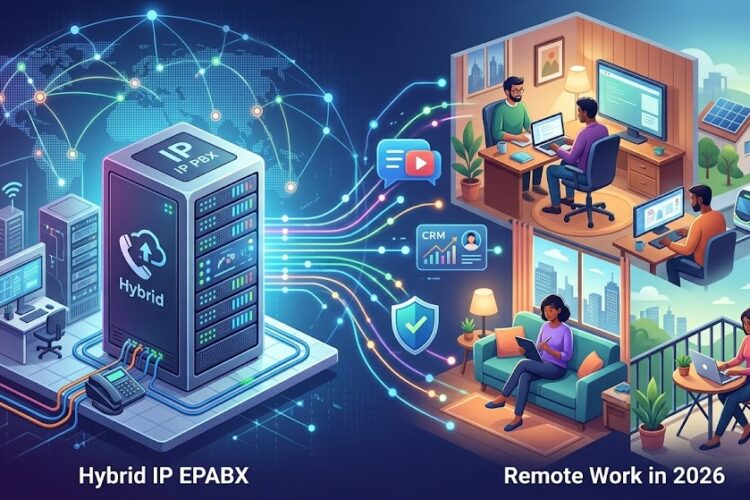
Hybrid Work Enablement: With cloud telephony trends accelerating, location has become irrelevant. Your receptionist could be in Chennai, your sales team scattered across Tamil Nadu, and your support staff working from home—all appearing as one seamless organization to callers. Hot-desking, mobile apps, and browser-based softphones mean your “office phone” follows you anywhere.
Security That Actually Works: Early VoIP systems were vulnerable to toll fraud and hacking. Modern IP PBX platforms have learned these lessons the hard way. Enterprise-grade encryption, sophisticated toll fraud prevention, and network segmentation are now standard features, not expensive add-ons.
The Real-World Business Impact
Let’s talk numbers, because features don’t matter if they don’t affect your bottom line.
Cost Reduction: Businesses upgrading from traditional PBX to IP systems report 40-60% reductions in telecom costs within the first year. International calls that once hemorrhaged budgets now cost pennies per minute. Adding new extensions doesn’t require electricians and expensive line cards—just plug in an IP phone or download an app. Setting up an IP EPABX system takes hours instead of weeks, slashing implementation costs.
Productivity Gains: Integration with business tools eliminates the friction that wastes hours daily. Click-to-dial from your CRM. Screen-pop customer information when calls arrive. Automatically log call details. Transfer calls to mobile apps when leaving the office. These aren’t luxuries—they’re baseline expectations that dramatically reduce time wasted on communication logistics.
Scalability Without Stress: Seasonal businesses that need 50 agents during peak season and 10 during slow months can now scale effortlessly. Opening a new branch doesn’t mean weeks of installation—just ship some IP phones and configure them remotely. Growing from 20 employees to 200 doesn’t require forklift upgrades to your entire phone infrastructure.
The Technology Behind the Transformation
Understanding how IP PBX systems work helps appreciate why they’re so superior. Unlike traditional systems that convert voice to analog signals traveling over dedicated phone lines, IP systems digitize voice and send it as data packets over your network—just like email or web browsing.
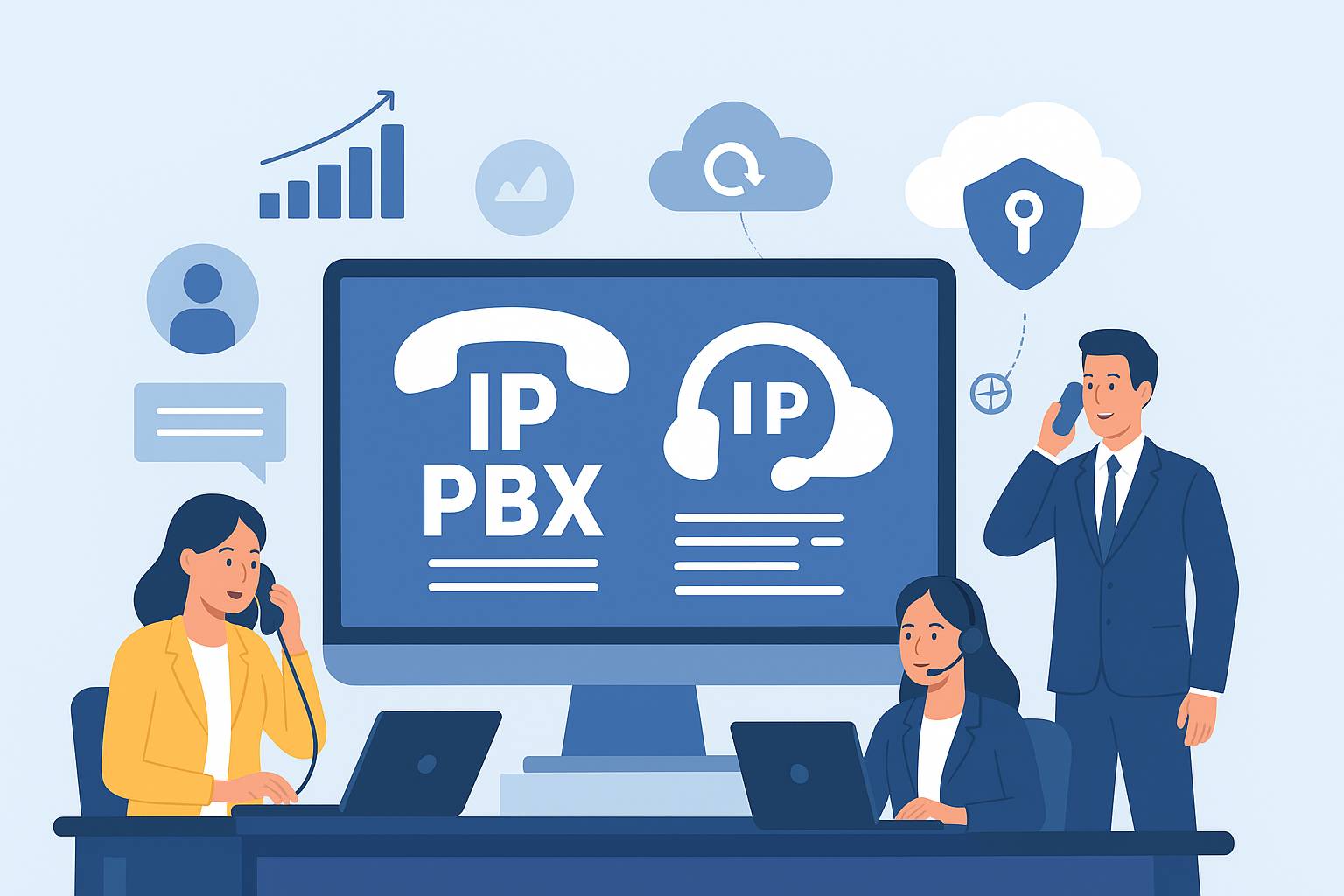
This fundamental difference unlocks enormous flexibility. Understanding what an IP PBX system is reveals why adding features like call recording, IVR menus, or conference bridges requires simple software updates rather than expensive hardware modules.
The infrastructure requirements are surprisingly minimal. Most businesses already have the necessary foundation: a quality internet connection and a standard network. While some optimization helps—Quality of Service (QoS) settings, sufficient bandwidth, maybe a separate VLAN for voice traffic—you’re not starting from scratch.
Advanced Features That Define Modern Communication
Interactive Voice Response (IVR) and Automatic Call Distribution (ACD): These technologies, once exclusive to large call centers, are now accessible to small businesses. ACD vs IVR systems work together to route calls intelligently, reduce wait times, and ensure customers reach the right department first time. The result? Better customer experience and more efficient use of staff time.
Unified Communications: Your phone system shouldn’t exist in isolation. Modern IP PBX platforms integrate voice, video, messaging, presence, and collaboration into single platforms. See who’s available before calling. Switch from voice to video mid-conversation. Share screens during support calls. This convergence eliminates tool-switching that fragments workflows and frustrates users.
Advanced Analytics: What gets measured gets managed. Today’s systems provide granular insights into call patterns, agent performance, peak times, and customer behavior. This data drives better staffing decisions, identifies training needs, and reveals operational inefficiencies you never knew existed.
Mobile Extension: Your desk phone is increasingly irrelevant. Mobile apps turn smartphones into full-featured extensions with the same number, voicemail, and features. For businesses embracing remote work, this capability alone justifies the upgrade.
Choosing the Right System for Chennai Businesses
Not all IP PBX systems are created equal. The market offers everything from bare-bones open-source platforms to feature-rich commercial systems. Chennai businesses have unique considerations: local support availability, compatibility with Indian telecom infrastructure, and vendors who understand regional business practices.
Hardware vs. Cloud-Hosted: On-premises systems give you complete control and potentially lower long-term costs for larger deployments. Cloud-hosted solutions eliminate upfront investment and maintenance responsibilities while offering easier scaling. Many businesses find hybrid approaches—understanding IP EPABX lifecycle management—work best, keeping critical infrastructure on-site while leveraging cloud features.
Integration Capabilities: Your phone system should play nicely with existing tools. CRM integration, helpdesk platforms, accounting software—the more seamlessly your communications integrate with workflows, the more value you extract. Before committing, verify integration options with tools you actually use.
Vendor Support: Technology is only valuable when it works. Local support matters enormously. When systems go down, you need technicians who can arrive quickly, understand your setup, and fix problems fast. Professional EPABX solutions in Chennai and Coimbatore ensure you’re not left stranded when issues arise.
Security Considerations You Cannot Ignore
VoIP systems are computers on your network, which means they face the same security threats. PBX hacking and toll fraud can result in massive unauthorized charges—sometimes tens of thousands of rupees racked up in hours by attackers routing international calls through compromised systems.
Protection requires multiple layers: strong passwords (no defaults), firewail rules restricting SIP traffic, regular security updates, call pattern monitoring, and geographic restrictions on calling. The good news? Modern systems include these protections. The bad news? They only work if properly configured and maintained.
Regular IP PBX maintenance isn’t optional—it’s essential insurance against both security breaches and system failures. Scheduled updates, backup verification, security audits, and performance monitoring prevent small issues from becoming business-disrupting disasters.
Future-Proofing Your Investment
Technology investments should last years, not months. The IP PBX market is evolving rapidly, driven by 5G deployment, WebRTC standards, and AI advancement. Choosing systems built on open standards and supporting modern protocols ensures your investment remains relevant as technology evolves.
Look for systems supporting SIP (Session Initiation Protocol), WebRTC for browser-based calling, API access for custom integrations, and active development communities. Proprietary systems might offer slick interfaces today but trap you into vendor ecosystems that become expensive prisons tomorrow.
The future of business telephony points toward deeper AI integration, enhanced video capabilities, and further convergence with collaboration platforms. Systems that accommodate these directions through updates rather than replacements protect your investment.
Making the Transition Smooth
Migrating from traditional to IP telephony doesn’t require business disruption. Phased approaches work well: start with new locations on IP systems, gradually migrate departments, run parallel systems during transition periods. Most organizations complete migrations within weeks with minimal downtime.
Setting up IP EPABX systems involves planning network infrastructure, selecting and configuring hardware, programming call flows, training staff, and establishing backup procedures. Working with experienced vendors streamlines this process dramatically, avoiding rookie mistakes that plague DIY installations.
Training matters more than most realize. The best system in the world fails if staff don’t know how to use it. Invest time teaching employees features that help their specific roles—call transfer for receptionists, call recording for support, mobile apps for field staff. User adoption determines ROI more than feature lists.
The Competitive Advantage You Can’t Afford to Miss
Your phone system might seem like mundane infrastructure, but it’s actually a competitive differentiator. Professional IVR systems make tiny companies sound enterprise-grade. Mobile extensions enable responsiveness that delights customers. Call analytics reveal improvement opportunities competitors miss. Integration with CRM systems personalizes service in ways that build loyalty.
Businesses still using traditional systems increasingly seem dated to customers expecting modern service. When competitors offer callback options, intelligent routing, and seamless transfers while you’re fumbling with manual processes, you’re losing deals to perception before product quality ever enters the conversation.
The question isn’t whether IP PBX systems are worth the investment—it’s whether you can afford to delay while competitors pull ahead. In 2025’s hypercompetitive business environment, communication infrastructure is too important to ignore.
Getting Started
If you’re reading this thinking “this sounds great but overwhelming,” you’re not alone. The good news? You don’t need to become a telecom expert. Partner with vendors who understand your business needs, not just technical specifications.
Start with an honest assessment of your current pain points. Excessive costs? Difficulty scaling? Poor integration? Remote work challenges? Understanding your specific problems ensures solutions actually solve them rather than creating expensive new ones.
Contact experienced IP PBX providers who can assess your needs, recommend appropriate systems, and handle implementation professionally. The right partner makes the difference between smooth transitions and frustrating experiences that leave you wishing you’d never upgraded.
Frequently Asked Questions
How much does an IP PBX system cost for a small business?
Costs vary widely based on features and deployment model. Small businesses (10-25 users) can expect cloud-hosted solutions starting around ₹500-800 per user monthly, while on-premises systems require ₹75,000-2,00,000 upfront investment plus phones. Factor in reduced telecom costs—many businesses achieve ROI within 12-18 months through savings alone.
Can we keep our existing phone numbers when switching to IP PBX?
Absolutely. Number porting is standard practice and typically takes 7-14 days. You maintain all existing numbers while gaining the flexibility to add new local numbers in different cities without physical presence—great for businesses expanding across regions.
What internet speed do we need for reliable IP phone calls?
Budget roughly 100 kbps per simultaneous call. A 10-person office making 5 concurrent calls needs only 500 kbps dedicated to voice—minimal by today’s broadband standards. Quality of Service (QoS) configuration matters more than raw speed, ensuring voice packets get priority over less time-sensitive traffic.
Are IP PBX systems reliable during power outages?
Yes, with proper planning. Battery backup (UPS) for network equipment and phones provides several hours of operation during outages. Cloud-hosted systems offer additional resilience since the PBX itself runs in data centers with redundant power. Mobile extensions work even when office power is down.
How difficult is it to manage an IP PBX system?
Modern systems feature intuitive web interfaces that make basic changes—adding extensions, updating voicemail, adjusting call routing—simple enough for non-technical staff. Complex configurations benefit from professional support, but day-to-day management is straightforward, especially compared to traditional PBX systems requiring specialized knowledge.
Can IP PBX systems integrate with our existing CRM software?
Most IP PBX platforms offer integration with popular CRM systems like Salesforce, Zoho, and HubSpot through native plugins or APIs. This enables click-to-dial, screen pops showing customer information, and automatic call logging—features that dramatically improve sales and support efficiency.
What happens if our internet connection goes down?
Quality IP PBX deployments include failover strategies: automatic routing to mobile phones, backup internet connections, or integration with GSM gateways that can route calls over cellular networks. Cloud systems offer geographic redundancy where calls automatically reroute through alternate data centers during outages.
How long does it take to install and configure an IP PBX system?
Simple deployments (under 25 users) can be operational within days. Larger or more complex installations with custom integrations might require 2-4 weeks. Cloud-hosted solutions deploy faster than on-premises systems since there’s no hardware installation, though proper planning and configuration still requires time regardless of deployment model.