Picture this: You’re in the middle of closing a crucial deal with a potential client when suddenly, your phone system crashes. Calls drop, customers can’t reach you, and your team is scrambling to communicate. Sound familiar? If you’ve experienced this nightmare scenario, you’re not alone. The good news? Modern phone systems have evolved far beyond the limitations of traditional setups, but choosing between hybrid and pure VoIP solutions can feel overwhelming.
Let’s cut through the confusion and help you make the right choice for your business.
Understanding the Basics: What Are We Really Talking About?
Before we dive into the pros and cons, let’s clarify what these terms actually mean—without the technical jargon that makes your eyes glaze over.
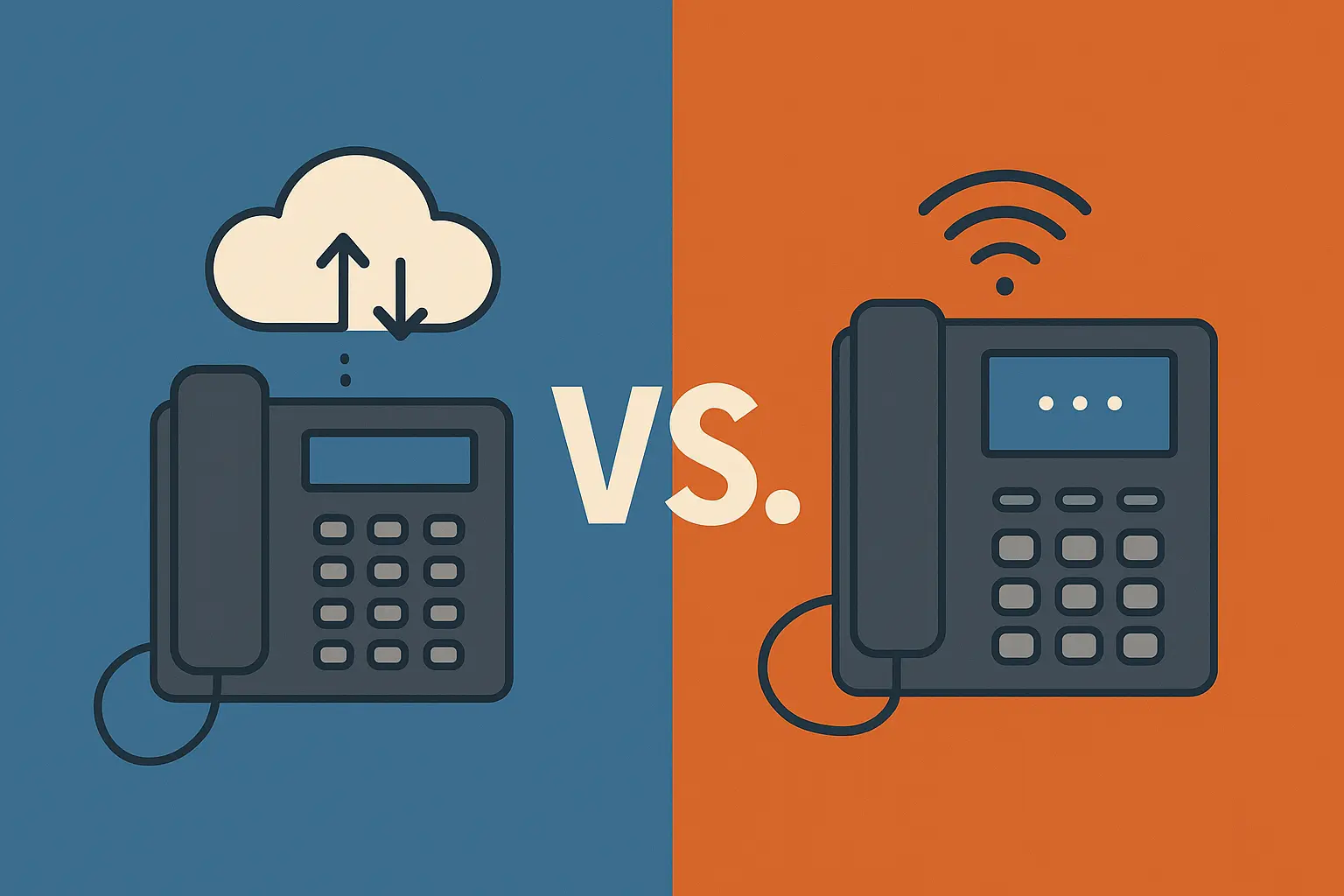
Pure VoIP Systems operate entirely over the internet. Think of them as the digital natives of the phone world. Every call, every message, every piece of data travels through your internet connection. No physical phone lines, no traditional hardware cluttering your office. It’s communication that lives in the cloud, accessible from anywhere with an internet connection.
Hybrid Systems are the bridge between old and new. They combine traditional phone lines (those copper wires that have been around forever) with modern VoIP technology. It’s like having a backup parachute—you get the innovation of IP technology while maintaining the reliability of conventional telephony. Many businesses upgrading from traditional PBX systems find hybrid solutions to be the perfect middle ground.
The Pure VoIP Advantage: Why Businesses Are Making the Switch
The Upsides That Matter
Cost Efficiency That Transforms Your Bottom Line
Let’s talk money—because that’s what keeps you up at night, right? Pure VoIP systems can slash your communication costs by up to 40%. How? You’re eliminating expensive phone line rentals, reducing maintenance costs, and paying significantly less for long-distance and international calls. One manufacturing company in Chennai discovered they could reduce communication costs dramatically after switching to a pure IP solution.
Scalability Without the Headaches
Remember when adding new phone lines meant calling a technician, scheduling an appointment, and dealing with physical installations? Those days are gone. With pure VoIP, scaling is as simple as adding a user account. Opening a new branch? No problem. Hiring remote workers? They’re connected instantly. This flexibility is invaluable in today’s fast-paced business environment.
Features That Actually Enhance Productivity
Pure VoIP isn’t just about making calls. We’re talking video conferencing, call recording, advanced analytics, CRM integration, auto-attendants, and mobile apps that turn your smartphone into a fully-functional office extension. These aren’t just fancy add-ons—they’re tools that help your team work smarter, not harder.
Remote Work Ready
In a world where remote work has become the norm rather than the exception, pure VoIP shines. Your employees can answer their office line from home, a coffee shop, or halfway around the world. The customer calling your business number has no idea where your team member is actually located—and that’s exactly how it should be.
The Challenges You Need to Consider
Internet Dependency: Your Achilles’ Heel
Here’s the uncomfortable truth: Pure VoIP lives and dies by your internet connection. When your internet goes down, so does your phone system. Period. This isn’t a minor inconvenience—it’s a potential business-stopper. If you’re in an area with unreliable internet, or if your business absolutely cannot afford any downtime, this is a serious concern.
Quality Can Be Inconsistent
Ever been on a video call where someone sounds like a robot, freezes mid-sentence, or suddenly drops off? That’s what happens when your internet bandwidth is insufficient. VoIP calls require consistent bandwidth, and if multiple employees are on calls simultaneously while others are downloading large files or streaming videos, call quality suffers. It’s not just annoying—it’s unprofessional.
Power Outages Mean Communication Blackouts
Traditional phone lines keep working even when the power goes out. Pure VoIP? Not so much. When your power fails, unless you have robust backup power systems, your phones go silent. For businesses that need to maintain communication during emergencies, this is a critical vulnerability.
The Learning Curve
While modern VoIP systems are increasingly user-friendly, there’s still a transition period. Your team needs training, your IT infrastructure might need upgrading, and someone needs to manage the system. For smaller businesses without dedicated IT staff, this can be challenging.
Hybrid Systems: The Best of Both Worlds?
Why Hybrid Solutions Make Sense
Reliability When It Counts
The primary advantage of hybrid systems is redundancy. When your internet hiccups, your traditional phone lines keep working. It’s like having a safety net. For businesses where communication is absolutely critical—think healthcare facilities, emergency services, or financial institutions—this backup capability isn’t just nice to have; it’s essential.
Gradual Transition, Minimal Disruption
Not ready to completely abandon your existing phone infrastructure? A hybrid system lets you migrate gradually. You can start using VoIP features for some functions while maintaining traditional lines for others. It’s a test-drive approach that reduces risk and allows your team to adapt at a comfortable pace.
Optimal Performance in Challenging Locations
If your business is in an area where internet connectivity is unreliable or you have multiple locations with varying infrastructure quality, hybrid systems offer flexibility. Strong internet at headquarters? Use VoIP. Spotty connection at the warehouse? Traditional lines keep you connected.
Compliance and Emergency Requirements
Some industries have regulatory requirements for maintaining traditional phone lines, particularly for emergency services (think 911 calls). Hybrid systems ensure you meet these requirements while still enjoying modern VoIP benefits.
The Drawbacks to Watch Out For
Higher Initial Investment
Maintaining both systems means paying for both. You’re installing VoIP infrastructure while keeping traditional phone line costs. The hardware requirements are more complex, and installation typically costs more upfront. For budget-conscious small businesses, this can be prohibitive.
Increased Complexity
Managing two systems simultaneously is inherently more complicated. Your IT team (or outsourced provider) needs expertise in both traditional telephony and modern VoIP technology. Troubleshooting issues becomes more complex when problems could originate from either system.
Ongoing Maintenance Costs
You’re essentially maintaining two infrastructures. Traditional phone lines require ongoing rental fees, while VoIP systems need internet bandwidth and server maintenance. These costs add up over time, potentially negating some of the cost savings VoIP provides.
Eventual Obsolescence
Here’s an uncomfortable reality: Traditional phone networks are gradually being phased out worldwide. Telecom companies are shifting resources toward digital infrastructure. By investing heavily in hybrid systems today, you might find yourself needing to upgrade again sooner than expected.
Industry-Specific Recommendations: What Works for Your Business?
Small Businesses and Startups (1-25 Employees)
Recommendation: Pure VoIP
Why? You need to be lean, agile, and cost-conscious. Pure VoIP systems offer the lowest entry costs, easiest scalability, and minimal hardware requirements. Unless you’re in an area with notoriously poor internet, the benefits far outweigh the risks. Plus, cloud-based systems mean you can start small and scale seamlessly as you grow.
Key Consideration: Invest in a reliable internet connection with sufficient bandwidth. Consider a backup internet connection (4G/5G hotspot) for redundancy.
Medium-Sized Enterprises (25-250 Employees)
Recommendation: Hybrid Systems (Transitioning to Pure VoIP)
Why? You likely have existing infrastructure investments you’re not ready to abandon completely. A hybrid approach lets you modernize gradually while maintaining operational continuity. Start by moving non-critical departments to VoIP, test thoroughly, then expand.
Key Consideration: Develop a clear migration timeline. Don’t let hybrid become permanent—use it as a strategic transition phase. Understanding modern IP EPABX systems will help you plan this transition effectively.
Healthcare Facilities
Recommendation: Hybrid Systems (With Traditional Line Backup)
Why? Patient care cannot be interrupted. Emergency calls require absolute reliability. Regulatory compliance often mandates traditional line availability. However, VoIP features like call recording, integration with patient management systems, and remote consultation capabilities are invaluable.
Key Consideration: Ensure traditional lines support all critical functions including emergency paging systems, nurse call systems, and emergency services access.
Call Centers and Customer Service Operations
Recommendation: Pure VoIP with Robust Redundancy
Why? Call centers thrive on VoIP features: call routing, recording, analytics, CRM integration, and workforce management. The cost savings on high call volumes are substantial. Complete call center solutions built on IP EPABX systems offer unmatched flexibility and functionality.
Key Consideration: Invest heavily in network infrastructure. Redundant internet connections, quality of service (QoS) configurations, and robust disaster recovery plans are non-negotiable.
Manufacturing and Industrial Facilities
Recommendation: Hybrid Systems
Why? Manufacturing environments present unique challenges. Some areas may have limited network infrastructure, noisy environments require specialized phones, and emergency communication systems need guaranteed reliability. However, modern facilities benefit enormously from IP-based features like integration with facility management systems and IP speaker systems for announcements.
Key Consideration: Zone-based deployment works well. Administrative areas can use pure VoIP, while production floors maintain traditional or ruggedized IP phones with backup connectivity.
Retail Businesses (Multi-Location)
Recommendation: Pure VoIP
Why? Retail thrives on centralized management. Pure VoIP systems let headquarters manage all locations from a single interface, standardize customer service across locations, and easily open new stores without complex installations. The cost savings across multiple locations are significant.
Key Consideration: Ensure each location has adequate internet bandwidth and backup internet connectivity during peak shopping seasons.
Financial Services and Professional Services
Recommendation: Pure VoIP (With Enhanced Security)
Why? These industries need advanced features like call recording for compliance, integration with business applications, mobile flexibility for client meetings, and professional presence regardless of physical location. The future of business telephony increasingly points toward unified communications platforms.
Key Consideration: Implement enterprise-grade security measures, encrypted communications, and compliance-focused features. Choose providers with strong security track records.
Implementation Timeline: What to Expect
Pure VoIP Implementation
Planning Phase (2-4 Weeks)
- Assess current infrastructure and internet capacity
- Choose vendor and service plan
- Design system architecture
- Plan employee training
Installation Phase (1-3 Weeks)
- Network infrastructure preparation
- Hardware installation (if any)
- System configuration
- Initial testing
Deployment Phase (1-2 Weeks)
- Soft launch with select users
- Staff training sessions
- Address early issues
- Full rollout
Total Timeline: 4-9 Weeks
Hybrid System Implementation
Planning Phase (3-6 Weeks)
- Comprehensive infrastructure audit
- Integration planning (VoIP with existing systems)
- Vendor selection and coordination
- Detailed migration strategy
Installation Phase (2-4 Weeks)
- VoIP infrastructure installation
- Integration with existing phone lines
- Complex testing scenarios
- Failover system configuration
Deployment Phase (2-4 Weeks)
- Phased rollout by department
- Extensive staff training (dual systems)
- Monitor performance across both systems
- Fine-tuning and optimization
Total Timeline: 7-14 Weeks
Cost Breakdown: What You’ll Actually Pay
Pure VoIP Systems
Initial Costs:
- VoIP Phones: ₹5,000 – ₹15,000 per unit (or use softphones for free)
- Network Infrastructure Upgrades: ₹50,000 – ₹2,00,000
- Installation & Configuration: ₹25,000 – ₹1,00,000
- Training: ₹15,000 – ₹50,000
Total Initial Investment for 25-User System: ₹1,50,000 – ₹5,00,000
Monthly Costs:
- Service Subscription: ₹500 – ₹1,500 per user
- Internet Bandwidth (dedicated): ₹10,000 – ₹30,000
- Maintenance & Support: ₹5,000 – ₹20,000
Total Monthly Cost for 25 Users: ₹30,000 – ₹75,000
Hybrid Systems
Initial Costs:
- VoIP & Traditional Phones: ₹8,000 – ₹20,000 per unit
- Gateway Equipment: ₹1,00,000 – ₹3,00,000
- Network Infrastructure: ₹75,000 – ₹2,50,000
- Installation & Integration: ₹50,000 – ₹1,50,000
- Training: ₹25,000 – ₹75,000
Total Initial Investment for 25-User System: ₹3,50,000 – ₹10,00,000
Monthly Costs:
- VoIP Service Subscription: ₹500 – ₹1,500 per user
- Traditional Phone Line Rentals: ₹500 – ₹1,000 per line
- Internet Bandwidth: ₹10,000 – ₹30,000
- Maintenance (Both Systems): ₹10,000 – ₹35,000
Total Monthly Cost for 25 Users: ₹45,000 – ₹1,10,000
Making Your Decision: A Practical Framework
Ask yourself these critical questions:
1. How critical is uninterrupted communication to your business? If a phone outage means lost revenue, angry customers, or safety risks, lean toward hybrid systems or pure VoIP with extensive redundancy measures.
2. What’s your internet infrastructure like? Reliable, high-speed internet with redundancy options? Pure VoIP is feasible. Spotty or limited connectivity? Hybrid systems provide essential backup.
3. What’s your budget reality? Tight budget with limited capital for infrastructure? Pure VoIP offers lower entry costs. Comfortable budget with emphasis on reliability? Hybrid systems provide peace of mind.
4. How tech-savvy is your team? Younger, tech-comfortable workforce? They’ll embrace pure VoIP quickly. Mixed age group with varying tech comfort? Allow more time for hybrid system training.
5. What’s your growth trajectory? Rapid growth planned? Pure VoIP scales effortlessly. Stable, steady operation? Either system works, but consider long-term industry trends.
6. Do you have remote or mobile workers? Significant remote workforce? Pure VoIP is purpose-built for this. Everyone in-office? Either system works, though VoIP still offers more features.
Future-Proofing Your Investment
Regardless of which system you choose, consider these future-proofing strategies:
Invest in Quality Network Infrastructure: Whether pure VoIP or hybrid, your network is the foundation. Don’t skimp on routers, switches, and bandwidth. Quality of Service (QoS) configuration ensures voice traffic gets priority.
Choose Scalable Solutions: Select systems that grow with you. Cloud-based platforms offer the most flexibility, but even on-premise systems should support easy expansion.
Prioritize Integration Capabilities: Your phone system shouldn’t exist in isolation. Ensure it integrates with your CRM, help desk software, and other business tools. Setting up an IP EPABX system with integration in mind saves headaches later.
Plan for Security: Implement strong security measures from day one. VoIP systems face unique security challenges including toll fraud, eavesdropping, and denial-of-service attacks. Firewalls, encryption, and regular security audits aren’t optional.
Build in Redundancy: Whether it’s backup internet connections, uninterruptible power supplies, or failover systems, redundancy protects your business. The cost is worth it compared to communication outages.
The Verdict: Which System Wins?
Here’s the honest truth: There’s no universal “best” choice. The right system depends entirely on your specific circumstances. However, the trend is clear—the future belongs to VoIP. Traditional phone networks are being decommissioned globally, and investment in pure digital infrastructure is accelerating.
For most businesses, especially those with reliable internet and growth ambitions, pure VoIP represents the best long-term investment. The cost savings, scalability, and feature richness are compelling. With proper planning and infrastructure investment, the reliability concerns can be adequately addressed.
That said, businesses with mission-critical communication needs, challenging infrastructure environments, or specific regulatory requirements may find hybrid systems provide necessary peace of mind during the transition period. Just remember—hybrid should be a bridge, not a destination.
Taking the Next Step
Ready to modernize your business communication? Here’s your action plan:
- Audit Your Current Setup: Document your existing phone system, costs, pain points, and infrastructure.
- Assess Your Needs: List must-have features, nice-to-have capabilities, and deal-breakers.
- Evaluate Your Infrastructure: Test your internet speed, check bandwidth availability, and identify upgrade requirements.
- Get Expert Consultation: Work with experienced providers who understand your industry’s unique needs. Best IP EPABX systems vary by business requirements.
- Request Demos: Don’t commit without testing. Reputable providers offer trial periods or demos.
- Plan Your Migration: Develop a detailed timeline, budget, and contingency plan.
- Train Your Team: Success depends on user adoption. Invest in comprehensive training.
The communication landscape is evolving rapidly. Businesses that embrace modern phone systems gain competitive advantages through improved efficiency, enhanced customer service, and reduced costs. Whether you choose pure VoIP or hybrid systems, the key is making an informed decision aligned with your business goals, infrastructure reality, and budget constraints.
Don’t let outdated phone systems hold your business back. The technology exists to transform your communication—you just need to take the first step. Learn more about transforming business communication with modern IP EPABX systems.
Your future customers, employees, and bottom line will thank you for making the right choice today.