In today’s fast-paced business world, a dropped call, a poor connection, or a complex phone menu can mean a lost customer. Your business phone system isn’t just a utility; it’s the central nervous system of your customer interactions and internal collaboration. If you’ve been grappling with outdated telephony, sky-high maintenance bills, or missed calls, you’re not alone. This pain point is precisely why thousands of businesses are turning to modern EPABX systems.
And if you’ve already started your research, you’ve likely encountered a powerhouse brand: Matrix. But finding genuine, expert support is half the battle. This guide isn’t just about understanding EPABX technology; it’s your roadmap to navigating the market, understanding what you truly need, and ensuring you partner with the right authorized [Matrix EPABX distributors] for a seamless, future-proof communication upgrade. Let’s dive in.
What is an EPABX System? Demystifying the Jargon
First things first, let’s decode the acronym. EPABX stands for Electronic Private Automatic Branch Exchange. Think of it as your own private, intelligent telephone network installed within your office or business premises.
-
Private: It’s your system, for your use.
-
Automatic: It switches calls automatically between internal users (extensions) and the public telephone network without needing a human operator.
-
Branch Exchange: It’s a “branch” of the larger public network, managing multiple lines and extensions.
In essence, an EPABX allows a company to have far more telephone extensions (for desks, departments, meeting rooms) than it has physical external phone lines. It routes calls efficiently, manages voicemail, enables conference calls, and provides a professional image.
Confused about how it differs from other terms? You might find our detailed breakdown on the difference between PBX and EPABX systems incredibly helpful.
The Evolution: From Analog Clunkers to Digital Powerhouses
The journey of business phone systems is fascinating. Older, analog systems were bulky, required physical wiring for every function, and adding features was a costly, hardware-intensive nightmare. The digital revolution transformed EPABX into a software-driven platform, enabling features like call forwarding, auto-attendants (IVR), and call logging with ease.
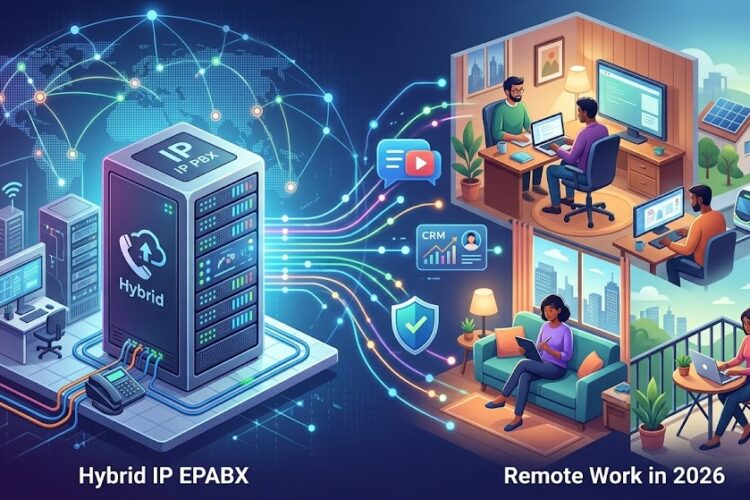
Today, we are in the IP (Internet Protocol) era. An IP-EPABX or IP-Based EPABX System uses your data network to transmit voice, converging telephony and IT. This means greater flexibility, scalability, and a host of advanced features. For a beginner-friendly explanation of this modern standard, explore our guide on what is an IP EPABX system.
Key Benefits of Upgrading to a Modern EPABX System
Why should your business care? The benefits move far beyond just making and receiving calls.
1. Dramatic Cost Savings
Consolidate multiple phone lines, leverage cheaper VoIP calls, and reduce maintenance costs associated with antique systems. Internal calls (even between geographically separate offices via the network) are free.
2. Enhanced Professionalism & Customer Experience
Impress clients with features like Auto-Attendant (press 1 for sales, 2 for support), call queuing, and music-on-hold. Never miss a lead with call forwarding to mobile devices.
3. Boosted Productivity and Mobility
Features like conference bridging, call transfer, and voicemail-to-email keep teams connected. With an IP system, employees can use softphones on their laptops or apps on their smartphones to function as their office extension from anywhere.
4. Scalability and Future-Proofing
Adding a new extension to an IP-based system can often be as simple as connecting a phone to the network. It grows effortlessly with your business and integrates with modern CRM and collaboration tools. Understand the lifecycle management of an IP EPABX to plan better.
5. Centralized Control and Insights
Gain valuable insights from call detail records (CDRs), monitor call traffic, and manage the entire system from a unified web-based interface.
Introducing a Market Leader: Why Matrix EPABX Stands Out
When researching, you’ll find several brands, but Matrix consistently rises to the top for reliability and innovation. Matrix Telecom Solutions is a global leader in security and telecom products, and their EPABX range is renowned for:
-
Robustness and Reliability: Built for the demanding Indian environment, known for minimal downtime.
-
Feature-Rich Solutions: From compact systems for small offices to large, scalable solutions for enterprises.
-
Ease of Use: Intuitive interfaces for both administrators and end-users.
-
Strong After-Sales Support: A wide network of service engineers, contingent on partnering with the right distributor.
However, the true Matrix experience—proper installation, configuration, warranty, and long-term support—is delivered through its authorized partners. This brings us to the most critical part of your purchasing journey.
The Critical Role of Authorized [Matrix EPABX Distributors]
Buying a sophisticated communication system isn’t like buying a off-the-shelf router. The partner you choose is as important as the product itself.
Why Authorization Matters: More Than Just a Seller
Authorized [Matrix EPABX distributors] are trained, certified, and directly supported by the manufacturer. This means:
-
Genuine Products: You are guaranteed original equipment with full manufacturer’s warranty.
-
Expert Installation: A botched installation can lead to endless glitches. Certified engineers ensure optimal performance from day one.
-
Access to Latest Software & Firmware: They can provide legitimate updates that enhance security and features.
-
Reliable Technical Support: When you have an issue, they have the direct channel and knowledge to resolve it swiftly, unlike a generic vendor.
The Risks of Choosing an Unauthorized Reseller
You might find a cheaper quote from a non-authorized seller. The risks include:
-
Counterfeit or refurbished units sold as new.
-
No valid warranty; any “warranty” is at the seller’s discretion.
-
Lack of technical expertise, leading to poor setup and recurring problems.
-
Inability to get critical software updates or genuine spare parts.
Finding the right local, authorized partner is key. For instance, businesses in South India often look for trusted Matrix EPABX authorized dealers in Chennai & Coimbatore to ensure proximate, reliable service.
What to Look For When Choosing Your EPABX Distributor
Ask these questions before you sign the deal:
-
“Can you provide proof of authorization from Matrix for this region?”
-
“Do you have in-house, Matrix-certified installation engineers?”
-
“What does your after-sales support package include? (Response time, onsite support, remote troubleshooting)”
-
“Can you provide references from recent installations of a similar scale?”
-
“Do you offer demonstrations and detailed solution proposals tailored to my needs?”
A good distributor will act as a consultant, not just a salesman. They will assess your current infrastructure, understand your business flow, and recommend the perfect model from the Matrix portfolio. They should also guide you on aspects like network infrastructure maintenance which is crucial for IP systems.
Planning Your EPABX Installation: A Smooth Transition
A successful deployment hinges on planning.
-
Needs Assessment: How many users? What key features are needed (video conferencing, CRM integration)?
-
Infrastructure Audit: Is your cabling and network switch capable of handling IP phones? This is a step many miss.
-
Phased Rollout: Consider piloting the system with one department first.
-
User Training: Ensure your team knows how to use the new features to justify the investment.
For a deeper dive, our step-by-step guide to setting up an IP EPABX walks you through the entire process.
Beyond the Box: The Future is Unified Communications
Modern EPABX, especially IP-based systems, are the foundation for Unified Communications (UC). UC seamlessly integrates voice, video, instant messaging, presence (seeing if a colleague is available), and file sharing into a single platform. Your Matrix EPABX can evolve into the heart of such a system, breaking down communication silos. Explore the concepts behind this in our article on the future of business telephony.
Frequently Asked Questions (FAQs)
1. What’s the main difference between a traditional EPABX and an IP-EPABX?
Traditional EPABX uses dedicated copper wiring for voice only. An IP-EPABX uses your existing data network (LAN/WAN/Internet) to transmit voice as data packets. This allows for easier management, lower cabling costs, and advanced features like remote extensions.
2. How much does a new EPABX system cost?
Costs vary significantly based on capacity (number of extensions/lines), brand (like Matrix, Panasonic, NEC), and features. It includes the cost of the main system unit, telephone handsets (IP or digital), installation, and configuration. An authorized distributor can provide a transparent, tailored quote.
3. Can I keep my existing phone numbers when I switch?
Yes, in almost all cases. The process is called “number portability,” and your service provider or EPABX distributor can facilitate it.
4. Is an EPABX system suitable for a very small office or home office?
Absolutely. Manufacturers like Matrix offer compact systems designed for 5-10 users. The benefits of professionalism and features are valuable even at a small scale. Check our guide for small office solutions.
5. What ongoing maintenance is required?
Modern systems require minimal physical maintenance. Most ongoing tasks are software-based: monitoring system health, applying security updates, adjusting user settings, and reviewing call logs. Regular checks by your vendor are recommended.
6. How do I find genuine [Matrix EPABX distributors] near me?
Start by visiting the official Matrix Telecom website’s “Where to Buy” section. You can also search for “Matrix authorized dealer [your city]” and verify their authorization directly with the distributor. For regions like Tamil Nadu, looking for established providers in major hubs like Chennai or Coimbatore is a common strategy.
7. What are the signs that I need to upgrade my old PBX/EPABX?
Frequent breakdowns, exorbitant maintenance costs, inability to add features or extensions, poor voice quality, and lack of mobility support are clear signs. We’ve detailed the 10 key signs it’s time to upgrade.
Conclusion
Investing in a new EPABX system is a strategic decision that impacts your daily operations, customer satisfaction, and bottom line. By understanding the technology, recognizing the value of a premium brand like Matrix, and most importantly, partnering with the right authorized [Matrix EPABX distributors], you secure not just a product, but a partnership for seamless business communication.
Don’t let communication hurdles hold your business back. Take the first step by consulting with an expert, authorized distributor to audit your needs and explore the right Matrix solution tailored for you. Your team—and your customers—will thank you for it.