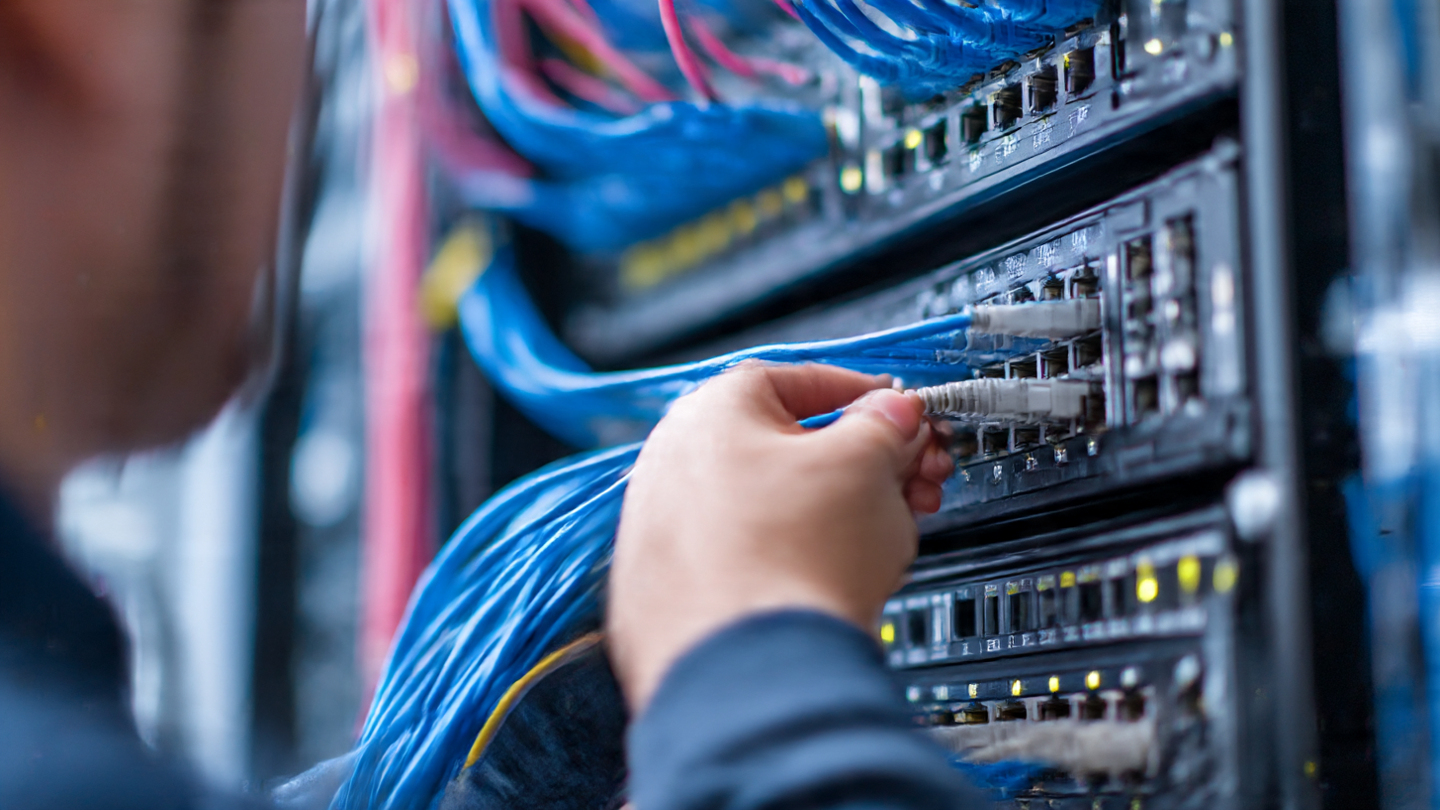
Running a business without a reliable communication system is like navigating a ship without a compass. Your IP EPABX system might be working fine today, but without proper network infrastructure maintenance for IP PBX, you could face costly downtime tomorrow.
I’ve seen countless businesses scramble when their phone systems crash during peak hours—lost sales, frustrated customers, and stressed employees. The good news? Most of these disasters are completely preventable with the right maintenance approach.
Why Network Infrastructure Maintenance for IP PBX Matters More Than Ever
Remember when phone systems just worked? You’d pick up the handset, hear a dial tone, and make your call. Those days are gone. Modern IP EPABX systems in Chennai and worldwide rely on complex network infrastructure that demands constant attention.
Here’s what happens when you neglect maintenance:
Call quality deteriorates gradually—so slowly you might not notice until clients start complaining about choppy audio during important conversations. One manufacturing company I consulted for lost a ₹50 lakh contract because their executive’s voice kept breaking up during a crucial negotiation call. The culprit? Network congestion they hadn’t addressed for months.
Security vulnerabilities pile up like dust in corners you forget to clean. Without regular updates and monitoring, your system becomes an easy target for toll fraud and unauthorized access. One business discovered ₹3 lakh in fraudulent international calls only after their monthly bill arrived.
System crashes happen at the worst moments—usually Monday mornings or during product launches when call volumes spike. Murphy’s Law isn’t just a saying; it’s a network reality.
Understanding Your IP PBX Network Infrastructure Components
Before diving into maintenance, let’s clarify what we’re actually maintaining. Your IP PBX network infrastructure isn’t just one thing—it’s an ecosystem of interconnected components.
The Core Network Elements
Network Switches: These are the highways your voice data travels on. Quality of Service (QoS) configured switches ensure your voice packets get priority over that massive file someone’s downloading. Without proper QoS settings, your calls suffer while data traffic cruises along smoothly.
Routers and Firewalls: Your first line of defense and the gateways managing traffic flow. They need firmware updates, rule optimizations, and constant monitoring. When setting up an IP EPABX system, many businesses configure these once and forget them—a critical mistake.
Cabling Infrastructure: Cat5e or Cat6 cables might seem simple, but damaged cables cause intermittent issues that drive IT teams crazy. One loose connection in a wall socket can create jitter that affects dozens of calls.
Power over Ethernet (PoE) Switches: These power your IP phones while carrying data. Overloaded PoE switches can cause phones to reboot randomly—imagine your receptionist’s phone dying mid-transfer of an important call.
The Communication Components
SIP Trunks and Gateways: Your connection to the outside world. Dinstar GSM gateways and similar devices need regular monitoring to ensure optimal routing and cost-efficiency. Poor gateway maintenance means paying premium rates for calls that could route through cheaper channels.
VoIP Endpoints: Your IP phones, softphones, and conferencing devices. Each one needs firmware updates, configuration backups, and occasional reboots to clear memory leaks.
Bandwidth Management: Voice data needs consistent, low-latency bandwidth. Video calls demand even more. Without proper bandwidth allocation and monitoring, your communication quality suffers during peak usage times.
Creating Your Network Infrastructure Maintenance Schedule
Random, reactive maintenance is expensive maintenance. A structured approach to network infrastructure maintenance for IP PBX systems saves money and prevents emergencies.
Daily Monitoring Tasks (Automated)
Set up automated monitoring tools that check these metrics continuously:
Network latency and jitter: Voice quality degrades noticeably when latency exceeds 150ms or jitter surpasses 30ms. Your monitoring system should alert you before users notice problems.
Packet loss rates: Even 1% packet loss can cause noticeable audio gaps. Aim for less than 0.5% under normal conditions.
Bandwidth utilization: Track patterns to identify congestion before it impacts calls. One company I worked with discovered their backup systems were running during business hours, consuming bandwidth needed for calls.
Concurrent call volumes: Understanding your usage patterns helps you plan capacity and identify unusual spikes that might indicate problems or security issues.
System resource usage: CPU and memory consumption on your IP PBX server. Performance degrades gradually as systems fill with logs and cached data.
Weekly Maintenance Checklist
Every week, dedicate time for these tasks:
Review monitoring logs and alerts: Don’t just collect data—analyze it. Look for patterns indicating emerging problems. Increasing jitter on Tuesday afternoons might correlate with a specific application update or user behavior.
Check system backups: Your IP EPABX system configuration represents hundreds of hours of setup and customization. Verify backups are completing successfully and occasionally test restoration procedures.
Verify QoS policies: Network changes happen—someone adds a new application, updates a switch, or reconfigures VLANs. Confirm your voice traffic still receives priority treatment.
Review security logs: Check for failed login attempts, unusual call patterns, or suspicious network traffic. Toll fraud attacks often start with subtle probing that appears in logs days before major theft occurs.
Test call quality: Make test calls to various destinations, including international numbers if applicable. Don’t rely solely on metrics—human perception matters too.
Monthly Deep-Dive Maintenance
Once monthly, schedule deeper maintenance activities:
Firmware and software updates: Apply patches to IP PBX software, phone firmware, and network device operating systems. Test updates in a non-production environment first when possible.
Configuration audits: Compare current configurations against documented baselines. Undocumented changes often cause mysterious issues weeks later.
Capacity planning review: Analyze trends in call volumes, bandwidth usage, and system resources. Plan upgrades before you hit capacity limits.
Physical infrastructure inspection: Check equipment rooms for proper cooling, clean air filters on network equipment, and verify physical security measures. Overheating kills network gear faster than almost anything else.
Disaster recovery testing: Annually test your full disaster recovery procedures, but monthly verify specific components like backup restoration or failover systems.
Troubleshooting Common IP PBX Network Issues
Even with perfect maintenance, issues arise. Knowing how to diagnose and fix common problems quickly minimizes disruption.
Poor Call Quality Problems
When users complain about choppy audio or dropped words, start here:
Check network statistics first: High jitter or packet loss usually causes these symptoms. Use tools like ping with large packet sizes and traceroute to identify where problems occur.
Verify QoS settings: Misconfigured QoS is a leading cause of voice quality issues. Ensure voice packets are marked correctly (typically DSCP EF or AF41) and that every network device honors these markings.
Examine bandwidth competition: Run bandwidth monitoring during problem times. Large file transfers, video streaming, or system backups often compete with voice traffic.
Test codec performance: Some codecs handle network imperfections better than others. G.711 provides best quality but uses more bandwidth, while G.729 conserves bandwidth but is less forgiving of packet loss.
Connection and Registration Failures
Phones not registering or frequent disconnections point to different issues:
DNS and DHCP problems: IP phones rely heavily on properly functioning DNS and DHCP services. Verify these services are responding quickly and correctly.
Network connectivity issues: Check physical connections, PoE power levels, and switch port configurations. A failing PoE port might provide just enough power for the phone to boot but not maintain stable operation.
Firewall and NAT traversal: SIP protocols are notoriously finicky with firewalls and NAT. Ensure ALG (Application Layer Gateway) settings are correct and that required ports remain open.
License limitations: Sometimes phones fail to register because you’ve exceeded licensed extensions on your IP PBX. Check your licensing status regularly.
Integration and Interoperability Challenges
Modern businesses integrate multiple systems—biometric systems, CRM software, ACD systems, and more. Integration issues require systematic approaches:
API and protocol compatibility: Verify all integrated systems use compatible API versions. Vendors update APIs regularly, sometimes breaking existing integrations.
Authentication and security: Integration failures often stem from expired certificates, changed passwords, or updated security policies. Maintain documentation of all integration credentials and certificates.
Data synchronization: When systems share data (like contact lists or presence information), synchronization delays or failures cause confusion. Monitor sync processes regularly.
Advanced Network Infrastructure Maintenance Strategies
Once you’ve mastered basic maintenance, these advanced strategies optimize your infrastructure further.
Implementing Redundancy and High Availability
Single points of failure are maintenance nightmares waiting to happen. Build redundancy into critical components:
Dual internet connections: ISP outages happen. Having failover internet from a different provider keeps your business connected. Configure automatic failover with proper load balancing during normal operations.
Redundant IP PBX servers: Clustering or hot-standby configurations ensure one server failure doesn’t stop all communications. Modern IP EPABX systems support various redundancy models—choose what fits your budget and availability requirements.
Multiple network paths: Configure network equipment to provide redundant paths for voice traffic. Use protocols like RSTP (Rapid Spanning Tree Protocol) to enable fast convergence during failures.
Geographically distributed components: For larger organizations, consider distributing IP PBX components across multiple locations. This protects against site-level disasters.
Network Segmentation and VLAN Strategy
Proper network segmentation improves both security and performance:
Voice VLANs: Separating voice traffic onto dedicated VLANs simplifies QoS implementation and improves security. Configure switches to automatically assign IP phones to voice VLANs using LLDP-MED or CDP.
Security zones: Place IP PBX servers in protected network zones with strictly controlled access. Limit communication between voice networks and general data networks to only what’s necessary.
Guest and public networks: Keep guest WiFi and public-facing services completely separated from your voice infrastructure. Guest network compromises shouldn’t threaten your communication systems.
Capacity Planning and Scalability
Reactive infrastructure expansion is expensive and risky. Plan growth proactively:
Traffic analysis and forecasting: Use historical data to predict future needs. Consider business growth plans, seasonal variations, and changing work patterns (like increased remote work).
Bandwidth dimensioning: Calculate required bandwidth based on expected concurrent calls, codec choice, and overhead. Add 20-30% headroom for growth and unexpected spikes.
Licensing and expansion costs: Factor in future licensing costs when choosing IP PBX systems. Some systems charge per user, others per concurrent call. Understand your growth costs upfront.
Security Hardening and Compliance
Network infrastructure maintenance for IP PBX must include robust security measures:
Regular vulnerability scanning: Use tools to identify security weaknesses in your infrastructure. Patch vulnerabilities promptly, prioritizing those affecting internet-facing components.
Access control policies: Implement strong authentication, use complex passwords, enable multi-factor authentication where possible, and regularly audit user access rights.
Encryption everywhere: Encrypt SIP signaling (SRTP/TLS) and voice media (SRTP) to prevent eavesdropping. Use VPNs for remote phones when possible.
Intrusion detection and prevention: Deploy systems that detect and block suspicious activities like brute force attacks, unauthorized access attempts, and abnormal call patterns.
Integrating Modern Technologies Into Your Maintenance Strategy
The future of business telephony includes emerging technologies that affect maintenance approaches:
Cloud and Hybrid Systems
Many organizations are moving toward cloud or hybrid telephony solutions. Maintenance responsibilities shift but don’t disappear:
Local infrastructure focus: In hybrid setups, you maintain local network connectivity, internet circuits, and on-premises components while the provider handles cloud infrastructure.
SLA monitoring: Track whether your provider meets promised service levels. Don’t assume cloud services always work—monitor performance and hold providers accountable.
Bandwidth management becomes critical: Cloud systems depend entirely on internet connectivity. Your local bandwidth management and QoS implementation determine call quality.
Unified Communications Integration
Modern unified communications platforms combine voice, video, messaging, and collaboration. Maintenance complexity increases:
Diverse endpoint management: Supporting various devices (desk phones, softphones, mobile apps, video conferencing systems) requires comprehensive endpoint management strategies.
Application performance monitoring: UC applications involve complex interactions between multiple services. Traditional network monitoring isn’t enough—you need application-aware monitoring.
User experience monitoring: Technical metrics don’t always correlate with user experience. Implement tools that measure actual user-perceived quality.
AI and Automation in Maintenance
Artificial intelligence is transforming network infrastructure maintenance:
Predictive maintenance: AI systems analyze patterns to predict equipment failures before they occur. Replace that switch showing early failure indicators before it crashes during your busy season.
Automated remediation: Configure systems to automatically fix common problems—reboot unresponsive devices, adjust QoS policies based on traffic patterns, or throttle non-essential services during congestion.
Intelligent alerting: AI reduces alert fatigue by learning what’s normal for your environment and only alerting on genuinely unusual events. No more midnight wake-up calls for routine fluctuations.
Documentation: Your Maintenance Secret Weapon
The most overlooked aspect of network infrastructure maintenance for IP PBX is documentation. When emergencies strike, complete documentation is invaluable:
Network topology diagrams: Maintain current diagrams showing all devices, connections, IP addressing, and VLAN assignments. Update these whenever you make changes.
Configuration backups: Store configurations for all network devices, not just the IP PBX. Version control helps track changes and rollback problems.
Maintenance logs: Document all maintenance activities, changes, and issues encountered. Patterns emerge when you review comprehensive logs.
Vendor contacts and support information: During outages, don’t waste time searching for support phone numbers. Keep updated contact information readily accessible.
Escalation procedures: Define clear escalation paths for various problem types. Everyone should know who to contact and when.
Cost-Benefit Analysis of Proper Maintenance
Is comprehensive network infrastructure maintenance for IP PBX worth the investment? Absolutely. Let me show you the math:
Downtime costs: Calculate your hourly revenue, then multiply by the length of a typical outage. One hour of downtime might cost a call center ₹50,000 to ₹5,00,000 depending on size and business type.
Maintenance costs: Proper maintenance might cost ₹20,000-₹50,000 monthly for a medium-sized deployment, including tools, staff time, and occasional consultant help.
Prevention value: Good maintenance prevents 80-90% of potential problems. If it stops just two major outages yearly, it’s paid for itself many times over.
Performance improvements: Well-maintained systems perform better, improving employee productivity and customer satisfaction—benefits that are hard to quantify but very real.
Extended equipment life: Proper maintenance extends the useful life of networking equipment by years, delaying expensive replacement projects.
Building Your Maintenance Team and Skills
Whether you’re managing a small office system or a large enterprise deployment, having the right skills matters:
Core competencies needed: Understanding TCP/IP networking, VoIP protocols (SIP, RTP), QoS implementation, Linux/Unix administration (most IP PBX systems run on Linux), and basic security principles.
Training and certification: Invest in training for your team. Vendor-specific certifications for your IP PBX platform, networking certifications (CCNA or equivalent), and VoIP-specific training all provide value.
Outsourcing considerations: Some organizations handle basic maintenance internally but partner with specialists for complex issues, capacity planning, and major upgrades. Find the right balance for your resources and requirements.
Staying current: Technology evolves rapidly. Budget time for your team to learn about emerging technologies, attend webinars, and participate in user communities.
Taking Action: Your Next Steps
You’ve reached the end of this guide, but your maintenance journey is just beginning. Here’s how to start:
Assess your current state: Audit your existing maintenance practices honestly. What are you doing well? What’s neglected? Where are your vulnerabilities?
Prioritize improvements: You can’t fix everything immediately. Identify critical gaps—security vulnerabilities, lack of backups, or complete absence of monitoring—and address these first.
Develop your maintenance schedule: Adapt the schedules outlined in this guide to your specific environment. Start with basics and add sophistication over time.
Invest in tools: Good monitoring and management tools pay for themselves quickly. Don’t try to maintain modern infrastructure with inadequate tools.
Document everything: Start building your documentation library today. It’s never too late to begin, and every piece of documentation adds value.
Conclusion: Maintenance as Business Investment
Network infrastructure maintenance for IP PBX isn’t just an IT task—it’s a business investment that protects your communication infrastructure, prevents costly downtime, and ensures your customers receive excellent service every time they call.
The businesses thriving today treat their communication infrastructure as the critical asset it is. They understand that an hour spent on preventive maintenance saves days dealing with emergencies. They know that a well-maintained system supports business growth while a neglected one becomes a growth bottleneck.
Your IP PBX system is too important to leave to chance. Whether you’re running a small office system or managing a large enterprise deployment in Chennai or anywhere else, proper maintenance ensures your communication infrastructure supports your business rather than hindering it.
Start today. Your future self—and your customers—will thank you.
Need expert help with your IP PBX maintenance? Contact us to discuss how we can help optimize and maintain your communication infrastructure. Our team specializes in keeping businesses connected with comprehensive maintenance solutions tailored to your specific needs.