You’re at your desk on a Monday morning. Your office phone system crashes. Clients can’t reach you. Internal teams are shouting across cubicles. Your receptionist is manually routing calls on their mobile phone. Every minute of downtime costs you money, reputation, and sanity.
This nightmare scenario happens more often than business owners care to admit. And it all comes down to one critical decision you made months or years ago: choosing your EPABX service provider.
Whether you’re setting up a new office communication system or dealing with an unreliable provider, finding the right EPABX service provider near me isn’t just about price tags and feature lists. It’s about partnership, reliability, and understanding that your business communication system is the lifeline connecting you to customers, suppliers, and team members.
Why Your EPABX Service Provider Choice Matters More Than You Think
Most business owners treat their phone system like office furniture—set it up once and forget about it. That’s a costly mistake.
Your EPABX system handles hundreds of daily interactions. It’s the first impression for new clients calling your business. It’s the backbone of your customer service department. When it fails, your entire operation grinds to a halt.
The right service provider doesn’t just install hardware and disappear. They become your communication partner, ensuring your IP EPABX system evolves with your business needs, stays secure from threats like toll fraud, and receives regular maintenance before problems emerge.
The Hidden Costs of Choosing the Wrong Provider
Before we dive into finding the perfect provider, let’s talk about what happens when you choose poorly.
Downtime That Drains Revenue
A manufacturing company in Chennai learned this lesson the hard way. Their cheap EPABX provider took 48 hours to respond to a system failure. During that time, they missed orders worth ₹15 lakhs. Their existing customers couldn’t reach support. New leads went to competitors. The “savings” from choosing a budget provider cost them dearly.
Security Vulnerabilities Nobody Mentions
Many businesses don’t realize their phone system is a hacker’s playground. Without proper PBX hacking prevention measures, criminals can route international calls through your system, leaving you with bills exceeding ₹10 lakhs. A competent service provider monitors these threats constantly and implements security protocols you didn’t even know existed.
Scalability Nightmares
You hire 20 new employees. Your current provider says you need to replace the entire system. Suddenly, your communication infrastructure is outdated, and expansion costs are through the roof. The right provider plans for growth from day one, offering scalable IP-based solutions that expand seamlessly.
What Makes an Exceptional EPABX Service Provider Stand Out
Not all service providers are created equal. Here’s what separates the professionals from the pretenders.
Technical Expertise That Goes Beyond Basic Installation
Installing an EPABX system isn’t rocket science. But configuring it for optimal performance, integrating it with your existing infrastructure, and troubleshooting complex issues requires genuine expertise.
The best providers understand different EPABX technologies—from traditional analog systems to cutting-edge IP PBX solutions. They can explain the difference between ACD and IVR systems in terms you actually understand. They know when to recommend cloud-based solutions versus on-premise systems based on your specific needs.
Response Time That Actually Means Something
“24/7 support” is marketing speak unless backed by real performance metrics. Ask potential providers about their average response time. A quality service provider in Chennai or Coimbatore should reach you within 2-4 hours for critical issues, not “by the end of the business day.”
Better yet, they should offer remote diagnostics capabilities. Many problems can be solved without sending a technician to your office, reducing downtime from hours to minutes.
Preventive Maintenance Programs That Save You Trouble
Reactive maintenance is expensive. You wait until something breaks, then scramble to fix it while your business suffers.
Proactive providers offer structured IP PBX maintenance programs including regular system health checks, software updates, security patches, and performance optimization. They catch issues before they become emergencies.
Red Flags When Evaluating Service Providers
Your gut tells you something’s off, but you can’t pinpoint it. Here are the warning signs seasoned business owners recognize.
They Push Products Instead of Solutions
A salesperson spends an hour listing features but asks no questions about your business. They recommend the most expensive system without understanding your call volume, growth plans, or budget constraints.
Quality providers start with discovery. They want to know about your team size, call patterns, integration needs, and future expansion plans. They recommend systems appropriate for your business stage, whether you’re a startup or an established enterprise.
Vague Pricing and Hidden Costs
You receive a quote that seems reasonable until installation day. Suddenly there are “necessary upgrades,” “additional configuration fees,” and “premium support charges” nobody mentioned.
Reputable providers offer transparent, itemized quotes covering equipment, installation, configuration, training, and ongoing support. They explain what’s included in the base package and what costs extra.
Limited Brand Options or Suspiciously Low Prices
Be wary of providers who only sell one brand—especially if it’s an obscure manufacturer. They might have exclusive deals that benefit them more than you.
The best providers offer multiple quality brands like Matrix, NEC, and Dinstar, allowing you to choose based on your specific requirements rather than their profit margins.
If pricing seems too good to be true, it probably is. Extremely low quotes often indicate refurbished equipment, unlicensed software, or minimal after-sales support.
Questions You Must Ask Before Signing Any Contract
Don’t sign anything until you’ve asked these critical questions and received satisfactory answers.
About Their Experience and Track Record
- How long have you been providing EPABX services in this region?
- Can you provide references from businesses similar to mine?
- What certifications do your technicians hold?
- Which brands are you authorized to service?
A provider with 10+ years of local experience understands regional challenges, has established vendor relationships, and won’t disappear overnight.
About Service Level Agreements
- What’s your guaranteed response time for critical failures?
- What’s your average resolution time?
- Do you offer remote support capabilities?
- What happens if you miss your SLA commitments?
Get these commitments in writing. Verbal promises evaporate when you need them most.
About Maintenance and Support
- What does your AMC (Annual Maintenance Contract) include?
- How often do you perform preventive maintenance?
- Are software updates included or charged separately?
- Do you provide spare parts or loaner equipment during repairs?
About Security and Compliance
- How do you protect against PBX hacking and toll fraud?
- Do you perform regular security audits?
- What backup and disaster recovery options do you offer?
- How do you ensure data privacy and compliance?
Understanding Different Service Models and What They Mean for You
EPABX service providers typically offer various engagement models. Understanding these helps you choose what fits your business best.
Installation-Only Services
The provider installs your system and walks away. You’re responsible for everything afterward. This works if you have in-house IT expertise and want maximum control, but it’s risky for most businesses.
Installation + AMC (Annual Maintenance Contract)
The most common model. The provider installs your system and provides ongoing maintenance and support for an annual fee. This offers good value and peace of mind for most businesses.
Managed Services
The provider handles everything—installation, maintenance, upgrades, security, monitoring, and optimization. You pay a monthly fee and never worry about your phone system. This model works beautifully for businesses wanting to focus on core operations rather than communication infrastructure.
Hybrid Models
Some providers offer flexible combinations. For example, installation with optional on-demand support or AMC with premium add-ons for enhanced monitoring and priority response.
Local vs. National Providers: The Proximity Advantage
Should you choose a national chain or a local provider? Both have merits, but proximity matters more than most realize.
Why Local Providers Often Win
A Chennai-based business calling a Delhi support center experiences frustration from the start. Language barriers, time zone differences, and lack of local context slow everything down.
Local providers like those serving Chennai and Coimbatore understand regional business culture, have technicians who can reach you within hours, and often provide more personalized service. When your system crashes on a Saturday afternoon, they’re not a plane ride away.
When National Providers Make Sense
If you have multiple offices across India, a national provider with presence in all your locations offers consistency and centralized management. Their larger scale might also mean more resources for complex projects.
The Technology Decision: Traditional vs. IP-Based Systems
Your service provider should help you choose between traditional EPABX and modern IP PBX systems. This decision impacts your communication capabilities for years.
When Traditional EPABX Still Makes Sense
If you have an older building with extensive copper wiring, stable call patterns, and no remote work needs, traditional systems work fine. They’re tried and tested, and many businesses run them successfully.
However, recognize you’re investing in legacy technology. Expansion requires significant rewiring. Integration with modern tools like CRM systems is limited or impossible.
Why Most Businesses Should Consider IP-Based Solutions
IP-based systems use your existing network infrastructure. They enable remote work seamlessly, integrate with business software, scale easily, and often cost less long-term.
A hybrid approach works too. Keep some traditional lines for reliability while adding IP capabilities for flexibility. Good providers explain these options without pushing their preferred solution.
The Integration Factor: Your EPABX System as Part of a Bigger Picture
Your phone system doesn’t exist in isolation. The best providers understand integration matters.
CRM Integration
Imagine your sales team seeing customer history the moment a call comes in. IP PBX systems with CRM integration make this possible, improving customer service and sales effectiveness dramatically.
Unified Communications
Modern businesses need more than voice calls. They need video conferencing, instant messaging, file sharing, and presence information—all integrated seamlessly. Forward-thinking providers offer unified communications solutions that transform how teams collaborate.
Biometric and Access Control Integration
Manufacturing facilities and corporate offices increasingly integrate biometric systems with EPABX infrastructure, creating comprehensive security and communication ecosystems.
Cost Considerations: Understanding Total Cost of Ownership
Initial purchase price is just one piece of the puzzle. Smart buyers evaluate total cost of ownership over 5-7 years.
Upfront Costs
- Equipment (phones, switches, gateways)
- Cabling and infrastructure
- Installation and configuration
- Training for staff
Ongoing Costs
- AMC fees
- Repair and replacement parts
- Software licenses and updates
- Electricity and cooling (for on-premise systems)
Hidden Costs
- Productivity loss during downtime
- Staff time managing the system
- Toll fraud if security is lax
- Premature replacement due to poor quality
A provider offering a slightly higher upfront cost but including comprehensive support, quality equipment, and proactive maintenance often costs less over time than a budget option that nickels and dimes you constantly.
Industry-Specific Considerations
Different industries have unique communication needs. Your provider should understand your sector.
Healthcare
Patient privacy is paramount. Your EPABX system needs HIPAA-compliant features, call recording capabilities, and integration with hospital information systems. Specialized audio systems might be needed for announcements.
Hospitality
Hotels need sophisticated IP audio solutions for guest rooms, public areas, and emergency notifications. Your EPABX integrates with property management systems for seamless guest communication.
Call Centers
ACD systems, IVR capabilities, call recording, quality monitoring, and real-time analytics aren’t optional—they’re essential. Your provider needs call center expertise beyond basic EPABX knowledge.
Manufacturing
Factories need rugged systems, wide-area coverage, and integration with IP speakers for announcements. Reliability under harsh environmental conditions is critical.
The Consultation Process: What to Expect from a Quality Provider
When you contact a potential provider, the consultation process reveals their professionalism.
Site Survey and Needs Assessment
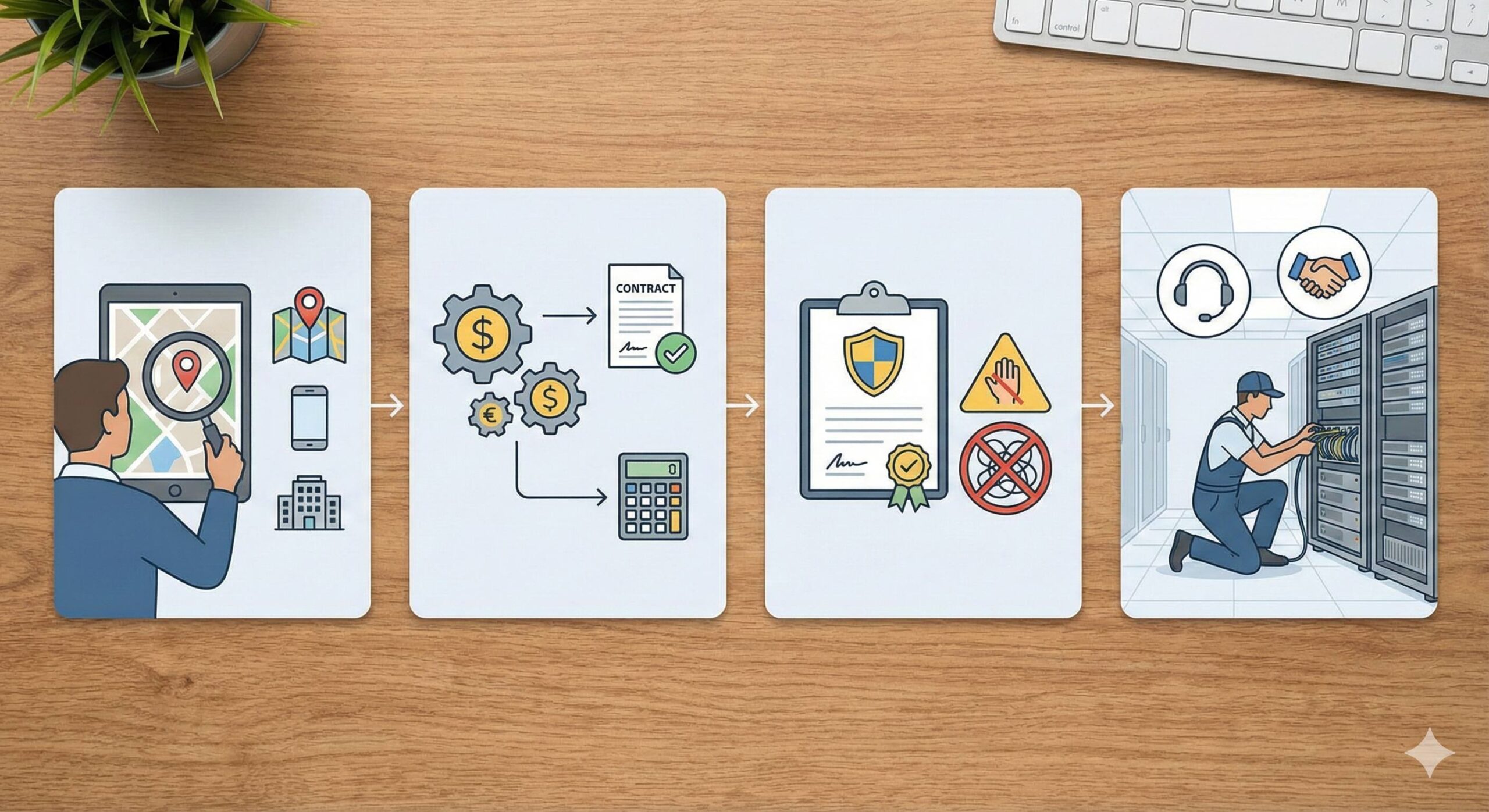
Quality providers visit your location. They examine your existing infrastructure, understand your workspace layout, assess network capability, and discuss your specific requirements. They don’t quote based on a phone call.
Customized Proposals
You receive a detailed proposal explaining recommended solutions, equipment specifications, implementation timeline, cost breakdown, and expected outcomes. It’s specific to your business, not a generic template.
Pilot Programs and Demos
For larger deployments, good providers offer pilot programs or live demonstrations. You test the system in your environment before committing fully.
Making the Transition: What to Expect During Implementation
Understanding the implementation process helps set realistic expectations and ensure smooth deployment.
Planning Phase
Your provider creates a detailed project plan covering equipment procurement, installation schedule, network preparation, and cutover strategy. They coordinate with your team to minimize business disruption.
Installation and Configuration
Technicians install hardware, configure system settings, integrate with existing infrastructure, and test all functionality. Professional providers work outside business hours when necessary.
Training and Documentation
Your staff receives comprehensive training on using the new system. You get documentation covering basic operations, troubleshooting common issues, and emergency procedures.
Go-Live and Stabilization
The new system goes live. Your provider monitors closely during the first few weeks, fine-tuning configuration and resolving any issues that emerge.
Long-Term Relationship: Growing Together
The best provider relationships extend beyond initial installation.
Regular Reviews and Optimization
Quality providers schedule quarterly or annual reviews, analyzing call patterns, discussing business changes, recommending optimizations, and planning for growth.
Technology Updates
Communication technology evolves rapidly. Your provider keeps you informed about emerging trends like cloud telephony, WebRTC, and 5G integration, helping you stay competitive without unnecessary upgrades.
Lifecycle Management
Nothing lasts forever. Professional providers offer lifecycle management services, helping you plan replacements and upgrades before equipment failures force emergency decisions.
Real-World Success Stories: What Good Service Looks Like
Let’s look at how the right provider makes a difference.
The Growing Startup
A tech startup with 15 employees chose a provider offering scalable IP PBX solutions. As they grew to 150 employees across three locations, their system expanded seamlessly. Cost per user actually decreased as they scaled. Their provider’s proactive support meant zero downtime during their busiest product launch period.
The Traditional Manufacturer’s Transformation
A 30-year-old manufacturing company ran an outdated EPABX system. Their new provider conducted a thorough assessment and recommended a phased migration from traditional to IP-based systems. The transition happened department by department with no disruption. Integration with their ERP system improved order processing efficiency by 40%.
The Multi-Location Retailer
A retail chain with 25 stores struggled with inconsistent communication. Their provider implemented a centralized IP PBX system with remote locations, unified call management, and backup and recovery protocols. Corporate could now monitor all locations from a single dashboard, and inter-store communication became effortless.
Taking the Next Step: Your Action Plan
You’re convinced you need the right EPABX service provider. Here’s your roadmap forward.
Assess Your Current Situation
- Document pain points with your existing system
- List must-have features and nice-to-have capabilities
- Determine your budget range
- Define your timeline for implementation
Research and Shortlist Providers
- Search for “EPABX service provider near me” and note local options
- Check websites for service offerings and expertise areas
- Read customer reviews and testimonials
- Verify certifications and authorizations
Request Consultations
Contact 3-5 shortlisted providers. Schedule site visits and request detailed proposals. Don’t rush this process—choosing the wrong provider costs far more than taking extra time to choose correctly.
Evaluate and Decide
Compare proposals on technical suitability, service commitments, total cost of ownership, and provider reputation. Trust your instincts—if something feels off during consultations, pay attention.
Plan for Success
Once you’ve chosen your provider, work closely during planning and implementation. Communication prevents misunderstandings and ensures your system meets expectations.
Frequently Asked Questions
What should I budget for a small office EPABX system?
For a small office with 10-15 extensions, expect ₹1.5-3 lakhs for a quality IP-based system including installation. This covers phones, PBX hardware/software, basic configuration, and warranty. Annual maintenance typically costs 10-15% of system value. Budget options exist but often lack features, reliability, or adequate support that growing businesses need.
How often does an EPABX system need maintenance?
Professional-grade systems should receive preventive maintenance quarterly. This includes software updates, security patches, hardware inspection, and performance optimization. Many issues emerge slowly—quarterly maintenance catches them before they cause failures. Your AMC should include these scheduled visits plus emergency support for unexpected problems.
Can I upgrade my traditional EPABX to an IP-based system gradually?
Absolutely. Many providers offer hybrid solutions where you keep existing traditional infrastructure while adding IP capabilities. This phased approach spreads costs over time and reduces disruption. Start with new departments on IP while maintaining traditional systems for others, gradually migrating everyone to IP-based solutions as budget allows.
What certifications should my EPABX service provider have?
Look for manufacturer authorizations from brands like Matrix, NEC, Panasonic, or Avaya. Technicians should have industry certifications like CCNA (Cisco Certified Network Associate) or equivalent. Company certifications like ISO 9001 for quality management indicate professional operations. These certifications ensure your provider has genuine expertise and access to manufacturer support.
How do I protect my EPABX system from toll fraud and hacking?
Work with providers who implement strong authentication, regular security updates, call monitoring and alerts, restricted international dialing, and encrypted communications. Many businesses lose lakhs to toll fraud annually. Your provider should proactively monitor for suspicious activity and configure systems to minimize security risks from day one.
What’s the difference between cloud-based and on-premise EPABX systems?
Cloud-based systems host your PBX functionality on provider servers—you pay monthly per user and access features via internet. On-premise systems install hardware at your location—higher upfront costs but lower long-term expenses and complete control. Cloud offers flexibility and easy scaling; on-premise provides reliability and privacy. Many businesses choose hybrid approaches, keeping critical functions on-premise while leveraging cloud features for flexibility.
Should I buy or lease EPABX equipment?
Buying makes sense if you have capital budget, plan to stay in the same location long-term, and want to minimize ongoing costs. Leasing works better if you prefer predictable monthly expenses, want easier technology upgrades, or lack upfront capital. Consider that technology evolves—equipment you buy today might be outdated in 5-7 years. Your provider can help analyze which option suits your financial situation best.
How long does EPABX system installation typically take?
For a small office (10-20 extensions), expect 2-3 days. Medium businesses (50-100 extensions) need 1-2 weeks. Large or complex deployments can take several weeks. This includes physical installation, configuration, testing, and training. Good providers work in phases to minimize disruption—perhaps installing hardware outside business hours and configuring systems during quieter periods.
Your business communication system is too important to leave to chance. The right EPABX service provider near me isn’t just a vendor—they’re a partner in your business success. Take time to choose wisely, ask the right questions, and build a relationship with a provider who understands that your phone system is the lifeline connecting you to customers, employees, and opportunities.
When you find that provider, you’ll stop worrying about communication failures and focus on what matters most—growing your business and serving your customers exceptionally well.
Ready to transform your business communication? Contact us to discuss how we can help you build a reliable, scalable, and future-ready EPABX system tailored to your unique needs.