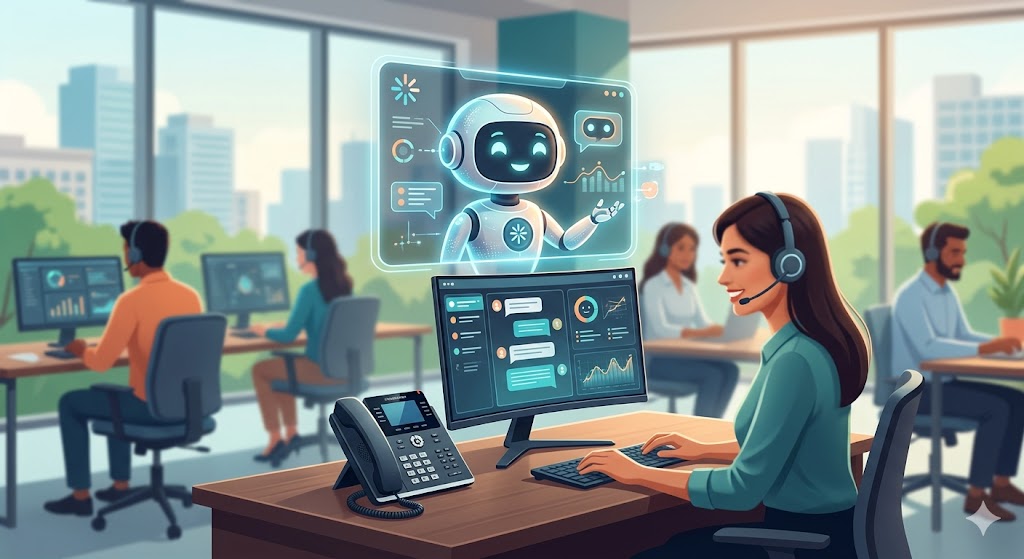
In today’s hyper-connected, instant-gratification economy, customer support is no longer a cost center—it is the frontline of brand identity. Consumers do not just buy products; they buy the experience surrounding them. A single delayed response or convoluted support ticket can send a loyal client searching for a competitor. This is where modern artificial intelligence is transforming business strategy. If you are struggling with long wait times, frustrated agents, and mounting operational costs, understanding *How astTECS Chatbots are Revolutionizing Customer Support Efficiency is critical for your survival.
The premise is simple but profound: humans are great at complex problem-solving and emotional nuance, but we are terribly inefficient at repeating the same basic instructions 50 times a day. By automating the repetitive, high-volume interactions, *astTECS chatbots unlock a level of productivity that traditional support models simply cannot achieve.
The Problem with Status Quo Support Models
Before we dive into the revolution, we must acknowledge the friction points. Traditional customer support relies heavily on voice calls and email ticketing. In large metropolitan areas like Chennai and Coimbatore, where businesses serve large, diverse populations, the demand for support is relentless.
-
Long Queues: Customers hate waiting. A 10-minute hold time feels like an eternity in the digital age.
-
High Agent Burnout: Answering the question “How do I reset my password?” all day drains an agent’s morale, leading to high turnover and poor service quality.
-
Limited Availability: Traditional call centers often operate on business hours (e.g., 9-to-5). Customers expect support when they need it, not just when you are open.
This is why so many businesses are evaluating their infrastructure and looking at 10 signs to upgrade traditional PBX to IP EPABX, realizing that older systems simply cannot support the modern omnichannel demand that AI solutions require.
Redefining Speed: The *astTECS AI Advantage
When we talk about the *astTECS chatbot revolution, the first and most immediate metric is speed. An AI chatbot does not “get a coffee.” It does not “look something up in another window.” It has near-instant access to your entire knowledge base and customer database.
*astTECS chatbots, often integrated through advanced IP PBX systems, utilize Natural Language Processing (NLP). This means the bot isn’t just looking for keywords; it is understanding the intent behind the user’s message.
-
Zero Wait Time: When a customer initiates a chat, the response is immediate. This alone dramatically boosts customer satisfaction (CSAT) scores.
-
Parallel Processing: While one human agent can handle maybe two or three simultaneous text chats, a single chatbot can manage thousands of interactions at the same exact second. This is scalability that no hiring spree can match.
-
First Contact Resolution (FCR): A well-trained *astTECS bot can resolve common issues (FAQs, basic troubleshooting, order tracking) in the initial interaction, ensuring the customer never needs to follow up.
The Economic Ripple Effect: Cost Reduction and ROI
The efficiencies gained through *astTECS chatbots are not just theoretical; they are reflected directly in the budget. When you decrease the dependency on human agents for basic tasks, your operational costs drop significantly.
How do *astTECS chatbots achieve this economic revolution?
-
Lower Cost Per Interaction: A chatbot interaction costs pennies compared to a phone call handled by a live agent.
-
Redirected Human Capital: Agents are freed from monotonous tasks, allowing them to focus on high-value activities, such as processing a complex claim or managing a VIP hospitality IP audio system requirement. This maximizes the return on your most expensive asset: your people.
-
Reduced Training Overhead: New human agents require weeks of training. Training a chatbot involves updating a centralized knowledge base, which then instantaneously updates the “intelligence” of the entire support system.
For companies still using legacy analog infrastructure, the cost comparison is stark. Transitioning to modern VoIP (Voice over Internet Protocol) architecture, which chatbots require, offers a fundamental cost advantage, as detailed in our guide comparing IP PBX vs Traditional PBX.
Personalization at Scale: The Data Integration Power
Efficiency isn’t just about speed; it’s about accuracy and relevance. A fast answer that is wrong or generic is worse than no answer at all.
This is where the true power of *astTECS AI shines, particularly when implemented with a unified IP PBX system with CRM.
When a chatbot is integrated into your existing business software, it accesses a deep well of customer data.
The Contextual Conversation
When a customer, “Rajesh from Chennai,” initiates a chat, the bot already knows who he is.
-
It knows his recent orders.
-
It knows his past support tickets.
-
It knows his billing status.
Instead of asking “What is your account number?” the chatbot can open with, “Hi Rajesh, are you chatting about the order you placed yesterday?” This level of proactivity transforms a cold support interaction into a helpful concierge service.
Proactive Outreach
*astTECS chatbots aren’t just reactive. When connected to a sophisticated backend like an IP EPABX system, they can initiate interactions based on triggers. For example, if an order status changes to “Delayed,” the bot can send an automated update to the customer via their preferred chat channel (WhatsApp, web chat, SMS), managing expectations before the customer becomes frustrated enough to call.
Creating a Harmonious Agent-AI Team
The biggest misconception about chatbots is that they are meant to replace humans. In the context of *astTECS solutions, they are designed to amplify humans.
The optimal support model is a hybrid one, where the chatbot acts as the first line of defense.
-
Tier 1 Support (The Bot): Handles 60-80% of all inquiries—password resets, product features, shipping status, appointment scheduling.
-
Tier 2/3 Support (The Human): For everything else. Complex technical debugging, emotional escalations, non-standard requests.
The Seamless Handoff
Efficiency plummets when a customer has to repeat their entire story to a human after the chatbot fails. *astTECS solutions avoid this “boaring” and frustrating pain point through a unified context transfer.
When the chatbot realizes the issue requires a human touch, it automatically transfers the chat to an available agent, along with a full transcript and the context of the user’s need. The human agent steps into the conversation fully briefed, significantly reducing Average Handle Time (AHT) and dramatically improving the user experience.
Real-time Agent Assist
A final layer of efficiency occurs when the human agent is handling a conversation. The AI is still working in the background. As the customer types, the *astTECS AI analyzes the message and suggests possible responses, relevant knowledge base articles, or even pre-fills forms for the agent to approve. This “human-in-the-loop” AI integration ensures maximum efficiency while retaining a personal touch.
Beyond the Script: Handling Real-World Complexity
One of the key reasons *astTECS chatbots are revolutionizing the space is their ability to handle conversational nuance that goes beyond simple decision trees (e.g., “If User Presses A, Then Do B”).
Modern *astTECS AI uses Machine Learning (ML). The system doesn’t just execute instructions; it learns from every interaction.
-
Handling Ambiguity: If a customer types “My service is broken,” the bot will dynamically ask clarifying questions (e.g., “Are you experiencing no dial tone, or is the call quality poor?”) to narrow down the problem, just as a human operator would, utilizing insights found in IP PBX maintenance guides.
-
Sentiment Analysis: If the bot detects anger or frustration in the customer’s language, it can prioritize that interaction and immediately route it to a senior human agent, bypassing normal queues.
This ability to manage complexity ensures that the efficiency gains do not come at the cost of service quality. In specialized environments, such as managing a complete guide to IP EPABX systems deployment, these bots can triage complex configurations before a specialist intervenes.
Deployment Best Practices: The Roadmap to AI Efficiency
To truly revolutionize your support efficiency, implementing an *astTECS chatbot must be strategic. It’s not just about turning on a piece of software; it’s about aligning it with your business goals.
Phase 1: Knowledge Base and Data Structuring
A chatbot is only as smart as the data you feed it. Before deployment, you must have a clean, structured Step-by-Step guide of FAQs, troubleshooting guides, and service procedures. This structured content is the “fuel” for the AI engine.
Phase 2: Channel Integration
Where do your customers talk to you? Website chat is critical, but in India, WhatsApp is essential. *astTECS chatbots are omnichannel, meaning they can centralize interactions from WhatsApp, Facebook Messenger, web chat, and even SMS into a single dashboard for human agents, ensuring a consistent user experience. This omnichannel capability is supported by modern infrastructure, such as VoIP Call Center Solutions, which are essential for large-scale operations.
Phase 3: Continuous Training and Optimization
A common pitfall is treating the chatbot as “set it and forget it.” To maintain peak efficiency, you must analyze the interaction data. Identify where the bot is handing off to humans most frequently. Are these “fails” due to missing information, or is the bot misunderstanding user intent? Constant refinement ensures the bot gets smarter every day.
Securing the Future: AI, VoIP, and Data Privacy
As customer support becomes increasingly digitized, the focus on data security intensifies. Businesses must ensure that their efficiency gains don’t introduce vulnerabilities.
When a chatbot, particularly one integrated with an IP PBX, is handling customer data—such as orders or personal information—strict security protocols are necessary. *astTECS AI solutions prioritize security, utilizing encryption for both voice (SRTP) and data (TLS).
By reviewing established IP telephony security principles, you ensure that your revolutionary chatbot setup is not only efficient but also resilient against toll fraud and unauthorized data access.
Final Thoughts on AI-Driven Productivity
The narrative surrounding customer support is changing. It is no longer a conversation about “handling calls” but about “managing experiences.”
*How astTECS Chatbots are Revolutionizing Customer Support Efficiency is not about reducing headcount or cutting corners. It is about deploying a scalable digital workforce that never sleeps, never repeats a basic error, and has instantaneous access to the data needed to solve a problem. This automation empowers your human staff to do what they do best—provide genuine, complex, high-value assistance—while ensuring your customers receive immediate, personalized responses 24/7. This is the new standard of business productivity.
Frequently Asked Questions (FAQs) Regarding *astTECS Chatbots
Are *astTECS chatbots difficult to set up and train?
The complexity depends on your desired integration. A basic FAQ bot can be set up quickly. More complex deployments, like those needing tag:ip-audio-for-hotels integration or dynamic database access, require strategic planning. The core chatbot “intelligence” is trained by uploading your existing documentation, knowledge base, and past chat logs, which the AI analyzes to build its conversational structure.
Can a chatbot truly understand human emotion?
*astTECS chatbots use sentiment analysis to detect frustration, anger, or urgency by analyzing keywords and sentence structure. They don’t feel emotion, but they recognize it and can adjust the tone of the response or immediately escalate the chat to a human agent, preventing an interaction from “boaring” a sensitive customer.
Does using a chatbot mean I can eliminate my call center?
For most businesses, chatbots are a hybrid solution. They handle the vast majority of simple, repetitive tasks (Tier 1 support), allowing you to maintain a much smaller, highly specialized human support team for complex or high-value issues (Tier 2/3). This deployment model significantly optimizes resources rather than eliminating them.
What happens to data collected by the chatbot?
*astTECS prioritizes data sovereignty. The data collected by the chatbot is handled based on your specific compliance needs (e.g., ISO, GDPR). The AI logs interactions to improve its performance, but this is done securely. By following robust securing IP telephony protocols on the underlying infrastructure, your chatbot deployment remains secure and compliant.