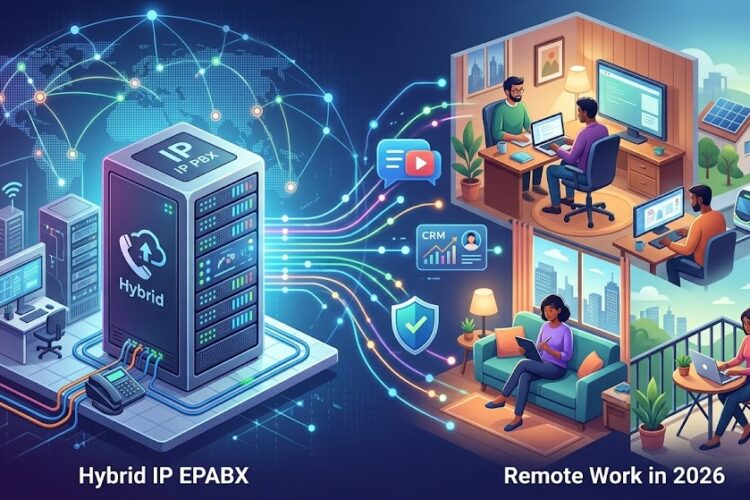
Picture this: It’s Monday morning, and your office phone system crashes. Your customers can’t reach you, your sales team is paralyzed, and every passing minute costs you money. Now imagine the same scenario, but your phone system is in the cloud—accessible from anywhere, with automatic backups, and support available at your fingertips. This is the power of a cloud based IP PBX system.
If you’re still relying on traditional phone systems or wondering whether cloud telephony is right for your business, you’re not alone. Thousands of businesses across Chennai, Coimbatore, and beyond are making the switch, and for good reason. Let’s explore why cloud-based IP PBX has become the backbone of modern business communication.
What Exactly is a Cloud Based IP PBX?
Before diving into the benefits, let’s clarify what we’re talking about. A cloud based IP PBX is essentially your entire phone system hosted on remote servers instead of bulky hardware sitting in your office. Think of it like the difference between storing files on your computer versus using Google Drive—one ties you to a physical location, while the other gives you freedom and flexibility.
Unlike traditional PBX systems that require expensive on-premise equipment, maintenance contracts, and dedicated IT staff, cloud-hosted solutions shift all that complexity to your service provider. You simply connect your internet-enabled devices—whether IP phones, computers, or smartphones—and you’re ready to communicate.
The Pain Points That Cloud Based IP PBX Solves
The High Cost of Traditional Systems
Let’s talk money. Traditional phone systems require significant upfront investment. You’re looking at purchasing hardware, installation fees, wiring costs, and that’s before you even make your first call. One business owner in Chennai told me he spent over ₹5 lakhs just setting up a 50-extension system.
With cloud based IP PBX, you pay a predictable monthly fee per user. No surprise expenses, no depreciation, no replacing outdated equipment every few years. For small businesses and startups, this difference can mean survival versus struggling to manage cash flow.
Limited Flexibility and Scalability
Remember when adding a new phone line meant calling a technician, waiting days for installation, and paying hefty fees? Traditional systems make growth painful. If you’re expanding your team during peak season or downsizing temporarily, you’re stuck with your existing infrastructure.
Cloud solutions scale instantly. Adding 10 new users? Done in minutes through your web portal. Need to reduce licenses next quarter? Equally simple. This flexibility is particularly valuable for businesses with seasonal fluctuations or rapid growth trajectories.
Remote Work Impossibility
The pandemic taught us one critical lesson: businesses need remote work capabilities. Traditional phone systems anchor you to the office. How do you transfer calls to someone working from home? How does your sales team access the company directory from their living rooms?
A cloud hosted PBX system eliminates these barriers entirely. Your team in Mumbai, Chennai, or working from their bedrooms—they all access the same system with identical features. Customer calls get routed seamlessly, regardless of physical location.
The Game-Changing Benefits of Cloud Based IP PBX
Advanced Features Without the Advanced Price Tag
Here’s where cloud systems truly shine. Features that would cost thousands extra on traditional systems—call recording, auto-attendants, advanced call routing, voicemail-to-email, real-time analytics—come standard with most cloud providers.
Want to set up an IVR system for your call center? It’s typically included. Need call queuing and skills-based routing? Already built in. These aren’t expensive add-ons; they’re fundamental features that level the playing field for smaller businesses.
Disaster Recovery and Business Continuity
Natural disasters, power outages, hardware failures—these aren’t hypotheticals. They happen. With traditional systems, you’re offline until someone physically repairs your equipment.
Cloud based IP PBX systems keep running regardless of local conditions. Servers are redundantly located across multiple data centers. If Chennai experiences flooding (as we’ve seen), your phone system continues operating normally because it’s not dependent on local infrastructure. Calls automatically route to mobile devices or home offices. Your business never stops.
Integration with Modern Business Tools
Today’s businesses don’t just make phone calls—they use CRM systems, helpdesk software, email platforms, and collaboration tools. Cloud PBX solutions integrate seamlessly with these platforms.
Imagine a customer calls. Your screen instantly pops up their complete history—previous purchases, support tickets, interaction records. Your team provides personalized service without fumbling through multiple systems. This integration, combined with modern unified communications, transforms customer experience.
Real-World Applications Across Industries
Manufacturing and Warehouses
Manufacturing facilities benefit tremendously from cloud telephony. IP speaker systems can broadcast announcements across large facilities. Supervisors manage communications from tablets while walking the floor. Integration with biometric attendance systems streamlines operations.
One Chennai manufacturing client told me their productivity increased 15% simply because supervisors could resolve issues faster with instant communication capabilities.
Call Centers and Customer Service
For call centers, cloud based IP PBX is revolutionary. Advanced call center metrics become accessible to businesses of all sizes. Real-time dashboards show call volumes, wait times, and agent performance. Quality monitoring through call recording helps training and compliance.
The cost comparisons speak for themselves—cloud solutions reduce operational expenses by 30-50% compared to traditional setups while providing superior features.
Small Businesses and Startups
Small businesses face a unique challenge: appearing professional and established while operating on startup budgets. Cloud PBX solves this elegantly.
A three-person startup can have an auto-attendant, multiple department extensions, professional hold music, and after-hours routing—all for less than the cost of three mobile phone bills. Customers can’t tell if they’re calling a three-person operation or a thirty-person company.
Security Considerations You Can’t Ignore
Let’s address the elephant in the room: security. Moving to the cloud means your business communications travel over the internet. Isn’t that risky?
Actually, properly implemented cloud based IP PBX systems are often more secure than traditional setups. Reputable providers implement enterprise-grade encryption, regular security audits, and threat monitoring that most small businesses couldn’t afford independently.
However, securing your IP telephony system requires attention. Toll fraud—where hackers make expensive international calls through your system—is a real threat. Strong passwords, regular security updates, and proper access controls are non-negotiable.
Additionally, implementing IP EPABX security measures and establishing a comprehensive backup and recovery plan protects against both external threats and internal failures.
Making the Transition: What to Expect
Assessing Your Current Setup
Before migrating, evaluate your existing infrastructure. How many users do you have? What features do you actually use versus pay for? What’s your current monthly spend?
If you’re recognizing signs it’s time to upgrade, creating a transition plan becomes critical. Understanding your IP EPABX lifecycle helps you time the migration optimally.
Choosing the Right Provider
Not all cloud PBX providers are equal. Consider factors like:
- Reliability and uptime guarantees: Look for 99.9% or higher SLA commitments
- Feature sets: Ensure they match your business needs
- Scalability: Can they grow with you from 10 to 100+ users?
- Support quality: Is technical support available 24/7?
- Pricing transparency: Watch for hidden fees and long-term contracts
For businesses in Chennai and Coimbatore, working with local EPABX service providers who understand regional requirements and can provide on-ground support when needed offers significant advantages.
Implementation and Training
Contrary to popular belief, migrating to cloud based IP PBX doesn’t require weeks of downtime. Most providers can port your existing numbers and have you operational within days.
The bigger challenge is change management. Your team needs training on new features and workflows. Start with super-users who can help others. Create quick reference guides. Most importantly, emphasize the benefits—like being able to check voicemail from anywhere or easily transferring calls to mobile devices.
The Role of Network Infrastructure
Here’s something many businesses overlook: your cloud phone system is only as good as your internet connection. Unlike traditional systems that work independently, cloud based IP PBX depends entirely on your network.
A reliable internet connection with sufficient bandwidth is critical. For a 50-user office, you’ll need at least 10-15 Mbps dedicated to voice traffic. Network infrastructure maintenance becomes as important as the phone system itself.
Consider implementing Quality of Service (QoS) settings that prioritize voice traffic over other data. A dropped video download is annoying; a dropped customer call costs money. Additionally, having a backup internet connection ensures continuity if your primary connection fails.
Cost Analysis: Cloud vs. Traditional
Let’s break down real numbers for a 25-user business:
Traditional PBX (First Year):
- Hardware: ₹3,50,000
- Installation: ₹75,000
- Maintenance contract: ₹50,000
- Total: ₹4,75,000
Cloud Based IP PBX (First Year):
- Monthly fees (₹500/user): ₹1,50,000
- Setup fees: ₹25,000
- IP phones (optional): ₹1,25,000
- Total: ₹3,00,000
The cloud solution saves ₹1,75,000 in year one. Over five years, the savings become even more dramatic—the traditional system requires ongoing maintenance, eventual upgrades, and replacement costs that the cloud solution doesn’t.
Future-Proofing Your Communication Infrastructure
Technology evolves rapidly. Cloud telephony trends for 2025 include AI-powered call routing, advanced speech analytics, and seamless integration with collaboration platforms.
With traditional systems, accessing these innovations means replacing expensive hardware. With cloud based IP PBX, your provider simply rolls out updates. You benefit from cutting-edge features without additional investment.
This future-proofing extends to emerging technologies. As 5G networks become ubiquitous, as AI transforms customer service, as WebRTC enables browser-based calling—cloud systems adapt automatically. You’re not locked into yesterday’s technology.
Common Misconceptions Debunked
“Internet calling means poor quality” Modern codecs and sufficient bandwidth deliver crystal-clear audio that rivals or exceeds traditional lines. Poor call quality usually indicates internet or configuration issues, not inherent cloud limitations.
“Cloud systems are too complex for small businesses” Actually, the opposite is true. Cloud solutions eliminate the complexity of managing on-premise hardware. Most business owners find them more intuitive than traditional systems.
“I lose control of my phone system” You gain control through user-friendly web portals that let you make changes instantly, without calling technicians. Want to reroute calls? Add a new menu option? Change business hours routing? Do it yourself in minutes.
Taking Action: Your Next Steps
If you’ve recognized your business could benefit from cloud based IP PBX, here’s how to move forward:
- Audit your current system: Document costs, features, and pain points
- Define your requirements: What features matter most? How many users? Growth plans?
- Research providers: Compare at least three options with similar features
- Request demos: Actually use the systems before committing
- Plan your migration: Choose a low-impact time for transition
- Train your team: Ensure everyone understands the new capabilities
For businesses in Chennai and Coimbatore looking for comprehensive guidance, expert EPABX solutions can help navigate the entire process—from initial setup through ongoing maintenance and support.
Conclusion: The Communication Revolution is Here
Cloud based IP PBX isn’t just a technology upgrade—it’s a fundamental shift in how businesses communicate. It democratizes enterprise-level features, enables remote work, reduces costs, and future-proofs your infrastructure.
The question isn’t whether to move to the cloud, but when. Every month you delay, you’re paying more for less capability. Your competitors are already making this transition, serving customers more effectively, and operating more efficiently.
The businesses that thrive in 2025 and beyond will be those that embrace flexible, scalable, cloud-based communication infrastructure. Don’t let outdated technology hold your business back.
Frequently Asked Questions
Q: How much does a cloud based IP PBX system typically cost?
A: Pricing varies by provider and features, but expect ₹400-800 per user monthly for small to medium businesses. This typically includes all basic features, support, and updates. There may be a one-time setup fee of ₹10,000-50,000 depending on complexity.
Q: Can I keep my existing phone numbers when switching to cloud PBX?
A: Yes, absolutely. Number porting is a standard process. Your provider handles the transfer, which typically takes 7-14 business days. During the transition, your old system continues working until the new one is fully operational.
Q: What happens if my internet goes down?
A: Most cloud PBX systems have failover options. Calls can automatically forward to mobile phones, backup internet connections can maintain service, or you can configure specific routing rules for outage scenarios. This is actually more resilient than traditional systems, which also fail during power outages.
Q: Is cloud based IP PBX secure enough for sensitive business communications?
A: When properly configured, yes. Enterprise-grade encryption, secure data centers, and regular security audits make cloud systems very secure. However, you must implement proper security practices like strong passwords, regular updates, and access controls to maintain security.
Q: How long does it take to implement a cloud based IP PBX system?
A: For a small to medium business (up to 100 users), implementation typically takes 1-2 weeks from contract signing to full operation. This includes number porting, configuration, testing, and training. Larger enterprises may need 4-8 weeks for complex deployments.
Q: Do I need special phones for cloud based IP PBX?
A: Not necessarily. While IP phones provide the best experience, you can use softphones (software applications) on computers and smartphones. Many businesses start with a mix—desk phones for reception and key staff, softphones for others—then expand as needed.
Q: Can cloud PBX handle high call volumes for call centers?
A: Yes, cloud systems excel in call center environments. They provide advanced features like ACD, IVR, real-time reporting, and call recording that are essential for call centers. The scalability allows you to handle varying call volumes without infrastructure changes.
Q: What bandwidth do I need for cloud based IP PBX?
A: As a general rule, allocate 100 kbps per simultaneous call. A 50-user office might have 15-20 simultaneous calls maximum, requiring about 2 Mbps dedicated to voice. Add 25% buffer and ensure QoS prioritization for optimal performance.