Launching a startup is an exhilarating whirlwind. You have a disruptive idea, a passionate core team, and an ambitious growth roadmap. But you also have a limited runway, a tight budget, and a desperate need to look and operate like an established enterprise from day one.
In the chaotic early days, internal communication and customer support often get cobbled together using personal mobile phones, scattered WhatsApp threads, and fragmented consumer apps. This messy setup works fine when you are just three people sitting around a coffee table. But the moment you land your first dozen clients or hire your tenth team member, the cracks start to show. Missed client calls, dropped handoffs, zero data tracking, and exploding cellular bills quickly become major bottlenecks.
To survive and thrive, your business needs a unified setup. Investing in an IP EPABX (Internet Protocol Electronic Private Automatic Branch Exchange) system isn’t just a tech upgrade—it is a foundational business strategy. Let’s dive deep into why this smart communication framework is the single best investment your small startup can make.
The Massive Communication Pain Points Every Startup Faces
Before looking at the solution, it helps to identify the exact friction points that quietly drain a young company’s time and money.
The Trap of Fragmented Communication Channels
When a business relies on a mix of personal mobile numbers, standard landlines, and separate chat applications, critical information gets trapped in siloes. If a high-value prospect calls a co-founder’s personal mobile number while they are in a meeting, that lead is effectively frozen. There is no clean way to transfer that live call to an available sales representative. This lack of structure leads to communication gaps that stall your sales velocity.
The Stigma of Looking “Too Small”
In the B2B and high-growth sectors, credibility is currency. If a potential enterprise client calls your business and gets a standard mobile phone ringback tone—or worse, a busy signal—they immediately realize you are operating a small operation. Without a professional automated receptionist, custom hold music, or structured department routing, building elite market trust becomes an uphill battle.
The Nightmare of Exploding Operational Costs
Traditional analog phone setups require separate copper wiring for every single phone extension. If you move offices or expand your team, the installation and technician fees accumulate rapidly. Furthermore, making long-distance client calls or connecting overseas vendors via standard telecom lines results in unpredictable, high monthly bills that eat into your precious startup capital.
Unpacking the Core Technology: What Exactly is IP EPABX?
To understand why this framework solves these pain points completely, we need to demystify what goes on behind the scenes.
Moving From Copper Wires to the Cloud
At its core, an IP EPABX system routes your business phone calls over your existing office internet connection instead of traditional physical copper telephone lines. It converts voice signals into digital data packets, sends them securely across the internet, and decodes them on the receiving end.
If you are new to this technology, reading an introductory resource like a what is an ip epabx system a beginners guide to modern business communication will give you a clear baseline of how the tech works. Essentially, it blends your internet data network and your voice network into one high-performance channel.
The Demise of the Traditional PBX Switch
For decades, businesses had to install massive, expensive hardware boxes in server closets to manage internal extension routing. These systems were complex, rigid, and pricey.
Modern voice over IP (VoIP) architecture completely alters this equation. If you evaluate a modern ip pbx vs traditional pbx switch, you will notice that the digital version eliminates physical hardware constraints, offering feature sets that legacy equipment simply cannot match.
Radical Cost Reduction: Saving Your Startup’s Precious Capital
Every single dollar saved in operational overhead is a dollar you can reinvest into product development, marketing, or hiring top talent. Here is how upgrading your phone system slashes your monthly burn rate.
Eliminating Dual Infrastructure Costs
Because IP-based telephony runs on your existing local area network (LAN) data cables, you don’t need to spend thousands of rupees installing dedicated phone lines for every desk. One ethernet cable—or even a strong office Wi-Fi connection—handles both your high-speed internet and your crystal-clear voice extensions.
Slashing Long-Distance and Multi-Site Bills
Traditional telecom companies charge premium rates for outbound long-distance calls. Because IP telephony treats voice calls as standard internet data, distance-based pricing models disappear. Whether you are calling a vendor down the street in Chennai or a client located across the globe, the cost structure remains incredibly low.
Startups can implement smart strategies to how to significantly reduce monthly phone bills with ip pbx systems, often realizing immediate savings of 30% to 50% compared to legacy setups.
Minimal Hardware Overhead and Simple Licensing
For resource-constrained startups, picking the right underlying software engine is critical. You don’t necessarily have to buy incredibly expensive proprietary telecom equipment. Weighing the options between pros cons open source asterisk vs branded hardware allows your IT team to deploy open-source platforms on simple, cost-effective servers, saving massive upfront capital while retaining total control over your infrastructure.
Instant Credibility: Projecting an Enterprise-Level Image
In business, perception shapes reality. An IP-based voice network gives a five-person startup the exact same professional communication presence as a Fortune 500 corporation.
Advanced Multi-Level Interactive Voice Response (IVR)
When a customer dials your business number, they shouldn’t hear a generic ring. Instead, they should be greeted by a polished, professional auto-attendant: “Thank you for calling. For Sales, press 1. For Technical Support, press 2.”
Setting up a multi level ivr configuration ip epabx systems ensures that incoming calls are categorized and funneled to the right team member immediately. This reduces customer frustration and keeps your internal workflows organized.
Intelligent Call Distribution and Queueing
If all your sales reps are currently busy on other calls, you don’t want a new prospect to get a busy tone and hang up. The system automatically places the caller into a civilized queue, playing custom company announcements or hold music while routing the call to the next available agent the exact second they become free.
Understanding the mechanics of acd vs ivr understanding the backbone of modern call centers allows startups to build highly advanced, automated customer touchpoints right from day one.
Unlocking Seamless Remote Work and Global Mobility
The modern startup workforce isn’t tied to a physical office desk. Founders are out traveling for pitch meetings, sales reps are on the field, and developers might be working from home across different cities. Legacy phone networks completely isolate remote workers, but an IP-enabled structure keeps everyone connected under one umbrella.
Extensions that Live on Smartphones and Laptops
With an IP setup, a workplace extension is no longer just a physical plastic phone on a desk. Through software applications called softphones, your team members can register their office extensions directly on their personal smartphones or laptops.
When a client dials their office extension, their mobile app rings seamlessly anywhere in the world. This approach makes setting up remote work essentials flyingvoice grandstream global team targets highly achievable, preserving clear boundaries between personal phone numbers and official business communications.
Managing Multi-Branch Offices and Hybrid Teams
If your startup scales from a small co-working space to opening a secondary warehouse or branch office in Coimbatore, you don’t need to purchase two separate phone systems. A centralized cloud or on-premise IP engine bridges both locations together seamlessly.
Reviewing the setup for a difference between on premise ip pbx and cloud pbx multi branch offices will show you how simple it is to enable free inter-office calls between employees across multiple regions, creating a truly unified workspace.
Future-Proof Scalability: Growing Without Growing Pains
The biggest issue with legacy office systems is that they are incredibly rigid. If you buy an 8-line analog card and want to hire a 9th employee, you have to buy brand new physical media cards, run more wires, and pay a technician to configure the hardware.
Adding Users in Seconds via a Digital Dashboard
With IP-driven voice frameworks, adding a new team member is entirely software-defined. You login to a clean, web-based control panel, click “Create New Extension,” assign a name, and your new hire is ready to make calls instantly using an app or an IP desk phone.
This hyper-flexible growth model makes a voip pbx for small business complete guide 2025 roadmap perfect for hyper-growth startups that plan to double or triple their headcount within a matter of months.
Seamless Software Integrations with CRMs
Your communication stack shouldn’t live in a vacuum. It needs to talk directly to your CRM (Customer Relationship Management) platforms, your helpdesks, and your internal databases.
When an IP voice system integrates directly with your customer records, a pop-up instantly appears on your agent’s screen showing the caller’s complete interaction history, open tickets, and previous purchase data the moment the phone rings. This immediate context transforms standard customer support into a highly personalized, efficient experience.
Choosing the Ideal Deployment Model: On-Premise vs. Cloud
Once you decide to invest in an IP EPABX setup, your next big strategic choice is deciding where the core call-routing engine will live.
The On-Premise Architecture: Ultimate Control and Security
An on-premise setup means the physical or software IP-PBX server lives right inside your office building. It connects directly to your local network infrastructure.
Who is On-Premise Best For?
This approach is highly favored by startups that handle sensitive client information—such as fintech, legal tech, or healthcare startups—where keeping data tracking localized is an absolute regulatory priority. If you value full structural independence and want to avoid recurring monthly software-as-a-service (SaaS) operational fees, deploying your own internal hardware engine is a great choice.
Maintenance and Upkeep Realities
It’s worth noting that managing an internal server means your team takes ownership of physical maintenance, backup plans, and security patches. Following a structured framework like an ultimate epabx system maintenance checklist guide helps ensure your office network maintains high uptime without unexpected service interruptions.
The Cloud-Hosted Architecture: Zero Friction and Instant Setup
With a cloud-hosted phone system, the entire communication engine is managed by a third-party provider in a secure data center. Your office IP phones simply connect to the provider’s remote servers over the internet.
Unmatched Agility for Fast-Moving Startups
Cloud models are incredibly attractive for early-stage companies because they require practically zero upfront capital investment. You don’t need to buy a dedicated server or manage complex in-house infrastructure. Everything is handled through a predictable monthly or yearly per-user subscription model.
Comparing the Two Paths Contextually
If you find yourself stuck choosing between these two deployment strategies, browsing an in-depth breakdown on cloud vs on premise ip pbx settings will clarify exactly which path aligns with your current technical capabilities, financial runway, and long-term scaling milestones.
Essential Hardware Components to Build Your Tech Stack
To get your modern voice network up and running, you need to select a few core hardware building blocks that match your workspace needs.
High-Performance IP Desk Phones
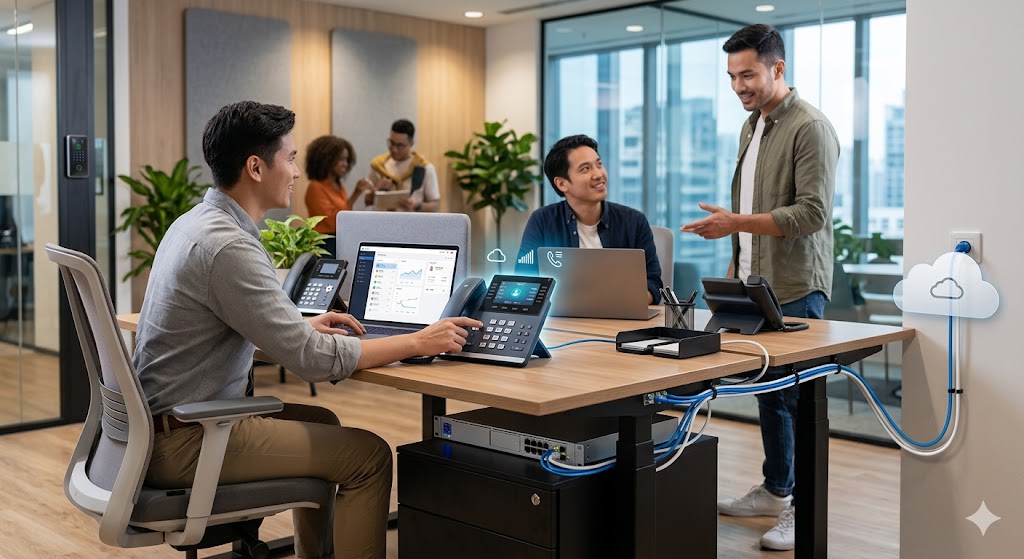
While softphone applications are incredible for mobile employees, having robust physical IP desktop phones is crucial for your core office receptionists, executives, and support agents. Modern IP phones connect directly via ethernet cables, feature crisp high-definition voice clarity, and include dedicated keys for transfering and holding calls. Brands like Grandstream, Fanvil, and Flyingvoice offer budget-friendly hardware options packed with advanced features tailored specifically for growing businesses.
VOIP Gateways: Bridging Analog and Digital Networks
Many startups move into affordable office spaces that come pre-equipped with legacy analog telephone lines or older traditional hardware. Instead of ripping out all the old infrastructure, you can use specialized media gateways to connect old analog tech to your new high-speed digital network.
FXS Gateways for Analog Handsets
An FXS (Foreign Exchange Station) gateway lets you connect legacy analog telephone instruments or fax machines directly to your modern IP-PBX system, keeping older functional hardware from going to waste.
FXO Gateways for Traditional Outside Lines
Conversely, an FXO (Foreign Exchange Office) gateway allows your new digital system to connect directly to traditional analog public phone lines (PSTN) provided by local telecom companies. This provides a reliable physical fallback channel if your main internet connection experiences an unexpected outage.
To dig deeper into how these smart bridging modules operate, check out this comprehensive breakdown on fxs vs fxo gateways business guide to pick the perfect hardware additions for your network layout.
Step-by-Step Implementation Strategy for Startups
Ready to upgrade your office communication game? Here is a clear, sequential path to successfully deploying an IP EPABX framework without disrupting your daily business workflows.
1. Audit Your Internet Bandwidth & Network Capacity
   Ensure your local office network has enough throughput to handle voice packets cleanly.

2. Select Your Core Deployment Model
   Choose between an Agile Cloud Subscription or a High-Control On-Premise Server.

3. Procure High-Quality IP Endpoints & Gateways
   Invest in reliable IP desktop phones and necessary media gateways for legacy connections.

4. Map Out Your Inbound Call Routings & IVR Menus
   Design professional greeting structures, extension maps, and automated department queues.

5. Train Your Internal Team & Monitor Voice Metrics
   Educate employees on call handling features and track metrics to continuously optimize.
Step 1: Audit Your Current Internet Bandwidth
Before purchasing any new hardware, you must verify that your office internet connection is stable and has sufficient bandwidth. A single high-quality voice call uses roughly 85-100 Kbps of upload and download speeds. Ensure your internet service provider (ISP) can comfortably handle your peak concurrent call volume alongside daily web browsing traffic.
Step 2: Choose Your Core Infrastructure
Decide whether a Cloud-hosted model or an On-Premise system makes the most sense for your business model. If you have an internal IT specialist, an on-premise system offers excellent long-term cost benefits. If you want immediate setup with zero maintenance headaches, opt for a cloud framework.
Step 3: Design Your IVR Flow and Call Routing Maps
Sit down with your team and map out exactly what happens when a customer calls your main business number. Keep your interactive voice response menus simple, direct, and helpful. Ensure that if an extension goes unanswered for more than 15 seconds, the call automatically routes to a secondary teammate or directly to voicemail-to-email routing.
Step 4: Deploy and Run Pilot Tests
Configure your extensions and run test calls across various departments. Check for voice clarity, latency, and ensure call transfers handle cleanly without dropping. If your startup is operating in South India, working with professional local experts like hightech solutions epabx services in coimbatore installation maintenance support partners will help ensure your system is optimized for local networks and telecom standards right from day one.
Essential FAQs for Startup Founders
Can we run our IP EPABX system if our office internet goes down?
If you are using an on-premise system with an FXO gateway connected to local analog phone lines, your internal office routing and external analog trunk calls will continue working perfectly even if your main internet drops. For cloud-hosted configurations, if your office internet goes offline, your softphone apps will automatically switch to mobile 4G/5G data networks, ensuring your clients can still reach your team without any downtime.
Is it possible to use our existing traditional analog desk phones with an IP system?
Yes, absolutely. You do not need to throw away functional legacy desk phones. By integrating a dedicated FXS gateway into your network layout, you can plug standard analog phones right into your digital system, saving massive upfront replacement costs.
How long does it take to fully set up an IP-based business phone system?
Cloud-hosted systems can be configured and deployed in less than a day since there is no physical server hardware to set up. On-premise deployments that require physical server provisioning, local network cabling adjustments, and gateway configurations generally take between 2 to 5 business days depending on the total number of desk extensions.
What is a SIP Trunk, and does our small startup actually need one?
A SIP (Session Initiation Protocol) trunk is essentially a digital version of a traditional phone line. It connects your IP-PBX system directly to the public telephone network over the internet, allowing you to run multiple concurrent voice lines over a single connection without needing physical wires. For any growing startup that needs to manage multiple simultaneous inbound and outbound customer calls efficiently, setting up a SIP trunk is highly recommended.
Can an IP phone system help us track our sales team’s daily performance?
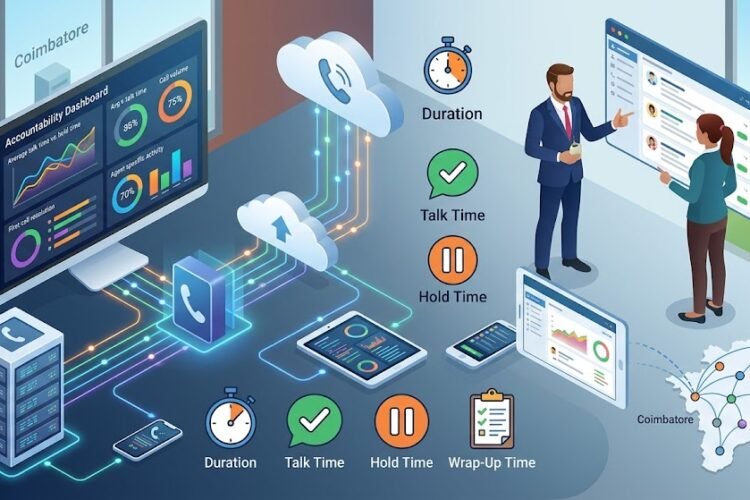
Yes, this is one of its biggest advantages. Modern IP communication suites come with advanced built-in analytical dashboards. Founders and managers can track critical metrics like total daily calls made, average call duration, wait times in queue, and abandoned call rates. Many systems also offer automatic call recording, which serves as a powerful tool for training sales reps and maintaining quality control.
Final Verdict: Future-Proofing Your Business Journey
In the highly competitive startup ecosystem, communication efficiency isn’t a luxury—it is a core pillar of survival. Relying on disorganized mobile setups or rigid, outdated analog phone lines creates unnecessary friction that slows down your operations and frustrates your growing customer base.
Investing in a robust IP EPABX network provides your startup with an agile, cost-effective, and highly professional platform that scales effortlessly alongside your business. It protects your cash flow, keeps your distributed team aligned, and ensures that every single inbound lead is managed with elite enterprise-level polish. Make the smart investment early on, build a solid foundation, and set your business up for long-term growth.