There’s a quiet revolution happening in Chennai’s business districts right now. Walk into a mid-sized manufacturing firm in Ambattur, a logistics company in Guindy, or a growing IT services outfit in OMR — and you’ll notice something different about how their teams communicate. The clunky desk phones tied to outdated analog PBX boxes are gone. In their place: sleek IP phones, softphones on laptops, and a unified communication system that actually keeps up with how modern businesses move.
Your competitors made the switch. Some did it quietly. Others announced it as part of a bigger digital upgrade push. But all of them had the same reason: the old way of handling business calls was bleeding money and slowing them down.
If you’ve been curious about what’s driving this shift — and whether it’s time for your business to move — this post breaks it all down without the jargon.
What Exactly Is Driving Businesses Away from Traditional EPABX?
The traditional EPABX system was the gold standard of office telephony for decades. It worked. But “it works” is no longer enough when your competitors are running leaner, faster, and smarter operations.
Here’s the core problem: legacy EPABX systems were designed for a world where all your employees sat in one building, called only within India, and didn’t need their phone system to talk to their CRM, helpdesk, or remote workforce tools. That world doesn’t exist anymore.
Chennai’s business environment has changed drastically. Export-focused textile businesses in the city have suppliers in Turkey and buyers in the UK. IT firms have team members working from Coimbatore, Bengaluru, and sometimes from home. Hospitals and clinics manage patient calls across multiple branches. In all these cases, a traditional EPABX system creates bottlenecks — expensive ISD calls, no visibility into call volumes, no way to route calls intelligently, and zero flexibility for remote teams.
The hidden costs of sticking with legacy phone infrastructure aren’t always visible on a balance sheet line item. They show up as lost calls, slow response times, frustrated customers, and wasted hours managing a system that was never designed for scale.
The IP PBX Advantage — Why It’s Not Just a Trend
IP PBX — or Internet Protocol Private Branch Exchange — routes your business calls over the internet instead of traditional copper telephone lines. But calling it just a “calls over internet” system undersells it significantly.
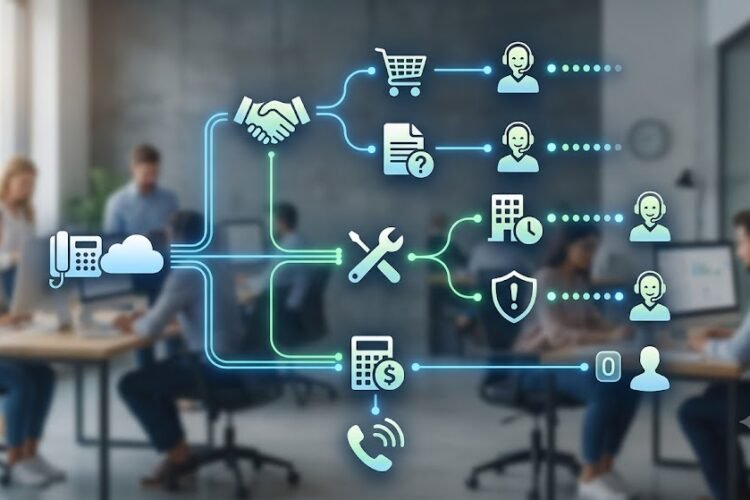
When your business runs on an IP PBX, your entire communication infrastructure becomes software-defined and manageable. You can add or remove extensions without calling a technician. You can set up a remote worker in Madurai on the same internal extension system as your Chennai office. You can record calls for quality assurance. You can set intelligent call routing rules so customers always reach the right department.
For Chennai businesses specifically, the benefits translate into real numbers. Coimbatore textile exporters have already demonstrated how IP PBX reduces international calling costs significantly — and Chennai’s export-facing businesses can replicate the same savings on every international call made through SIP trunks instead of traditional ISD lines.
If you want to understand the full technical picture before making a decision, the complete guide to IP EPABX systems in Chennai gives you a solid foundation.
The Pain Points Your Competitors Were Dealing With (And You Probably Are Too)
Let’s be specific about what actually pushes businesses over the edge into making the switch.
Paying for Lines Nobody Uses
Traditional EPABX systems require you to lease a fixed number of telephone lines from BSNL or your telecom provider. You pay whether those lines are active or not. Seasonality doesn’t matter. A slow quarter doesn’t reduce your bill. Businesses running 20-line systems often find that 8 of those lines sit idle at any given time — and they’re paying full price for all 20.
IP PBX eliminates this by virtualising your phone lines. You provision exactly what you need through SIP trunks, scale up during peak periods, and scale back when volume drops. The difference between on-premise IP PBX and cloud PBX also gives you further flexibility on how you structure costs — capital expenditure or operating expenditure, depending on your business model.
No Visibility Into Call Performance
How many calls did your sales team receive last Tuesday? How long was the average hold time before a customer hung up? Which extension has the highest missed call rate?
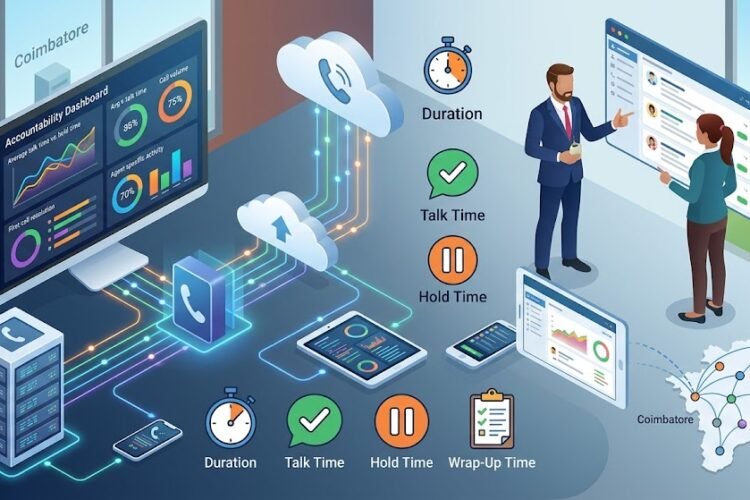
If you’re running a traditional EPABX, you likely can’t answer any of these questions without manually reviewing call logs — if those logs even exist. IP PBX systems come with built-in analytics and reporting dashboards. Managers can pull real-time data, spot patterns, and fix issues before they become complaints.
This matters enormously in customer-facing roles. Boosting customer satisfaction with faster call handling starts with knowing where your current system is failing — and that requires data your legacy EPABX simply doesn’t produce.
Remote Teams Left Behind
Post-2020, the concept of “everyone is in the office” has become a management fantasy rather than an operational reality. Chennai businesses with hybrid teams, field sales reps, and remote support staff are constantly fighting against the limitations of a phone system that assumes physical presence.
IP PBX solves this natively. A salesperson in Tiruppur can carry a softphone on their laptop and appear as an internal extension to callers. A customer support rep working from home in Velachery answers calls on the same queue as the team in the Guindy office. There’s no “forwarding” setup required — they’re just part of the system.
Setting up remote extensions on IP EPABX for work-from-home teams is straightforward with modern IP PBX platforms — and it makes your entire workforce reachable on one unified number.
Scaling Costs That Don’t Scale
When a traditional EPABX business adds 10 new employees, they call a vendor, wait for a technician visit, pay for new hardware cards, new physical phones, and new telephone lines. The timeline from “we need more phones” to “the phones work” is measured in weeks.
With IP PBX, adding 10 extensions takes a configuration change and 10 IP phones plugged into the network. Some businesses handle this entirely in-house with zero technician involvement. For growing businesses in Chennai’s competitive sectors — manufacturing, logistics, healthcare, IT services — this agility is a genuine competitive advantage.
If you’re evaluating the numbers, IP PBX pricing for 20 users in Coimbatore and Tamil Nadu gives you a realistic benchmark for what a properly sized system costs.
Who’s Already Making the Move in Chennai?
The businesses switching fastest to IP PBX in Chennai tend to fall into recognisable categories:
Manufacturing and Export Firms dealing with multi-timezone supplier and buyer communication, where every missed call or dropped ISD connection costs money. The ability to reduce monthly phone bills using IP EPABX and VoIP integration is a compelling enough reason on its own.
Healthcare and Clinic Chains running multiple branches across the city, needing centralised call routing, appointment scheduling queues, and the ability to transfer calls between locations without losing the patient.
IT Services and BPO Operations requiring call recording, IVR automation, agent performance tracking, and seamless remote connectivity. The multi-level IVR configuration capabilities of modern IP EPABX systems allow businesses to build sophisticated call flows without custom development work.
Real Estate and Sales Teams with field agents who need to stay connected to the central office system. IP EPABX with mobile app integration for real estate teams gives managers visibility into every agent’s call activity, no matter where they’re working.
What About the Investment?
One reason businesses hesitate is the assumption that modernising phone infrastructure means a major capital outlay. This isn’t necessarily true.
For small offices, a well-designed IP PBX setup under ₹50,000 is achievable with the right vendor and hardware choices. Small business phone systems with IP PBX in Coimbatore under 50K explores this in detail — and the principles apply to Chennai businesses at the same scale.
For larger operations, the ROI case becomes even cleaner. Measuring ROI when upgrading to IP telephony typically shows payback periods of 12-18 months when you factor in reduced call costs, eliminated line rental charges, and productivity gains from better call management.
The cost of not upgrading — continued overpayment, poor call quality, inability to support remote teams, and falling behind competitors who’ve already made the move — is the number that often goes uncalculated.
IP PBX and the Bigger Picture: Unified Communications
The businesses that get the most from IP PBX aren’t just treating it as a phone upgrade. They’re using it as the foundation for a broader unified communications strategy — integrating voice calls, video conferencing, instant messaging, and CRM data into a single platform.
Why your business needs a unified communications strategy is no longer a futurist argument. It’s a practical response to how distributed, digital-first teams actually work. When your phone system connects with your customer database, your support ticketing system, and your team collaboration tools, the quality of every customer interaction improves measurably.
IP PBX system integration with CRM in Chennai and Coimbatore is already live at businesses across the region — giving sales and support teams caller context before they even say hello.
Making the Transition: What to Expect
Switching from legacy EPABX to IP PBX doesn’t have to be disruptive. Most businesses run hybrid setups during the transition period — keeping existing analog extensions working through FXS gateways while new IP phones come online in phases.
Understanding how to connect analog extensions to IP PBX using FXS gateways makes this migration path practical for businesses that have invested in existing wiring and hardware.
The key is working with a vendor who understands Chennai’s infrastructure environment — power backup requirements, local BSNL SIP trunk provisioning timelines, and the specific compliance requirements for businesses in regulated sectors. A good installation partner will assess your current setup, design a migration path that minimises disruption, and configure the system correctly from day one.
Frequently Asked Questions
Is IP PBX suitable for a small Chennai business with only 10 employees?
Absolutely. IP PBX scales down just as effectively as it scales up. A 10-person office can run a fully featured IP PBX with call recording, IVR, and remote extensions at a fraction of what a traditional EPABX would cost for the same capability. The complete guide for small offices on IP EPABX systems breaks down what a lean, well-configured setup looks like.
Will my existing telephone numbers and BSNL lines still work?
Yes. Through SIP trunk configuration or FXO gateways, you can retain your existing numbers while routing calls through the IP PBX. Your customers call the same numbers — they just experience better call handling on your end.
What happens to call quality if my internet connection is unstable?
IP PBX quality depends on network quality, which is why proper setup includes QoS (Quality of Service) configuration on your router to prioritise voice traffic. Well-configured systems deliver call quality indistinguishable from — and often better than — traditional PSTN calls. Troubleshooting echo and voice lag on IP PBX with Wi-Fi covers the common quality issues and how they’re resolved.
How secure is an IP PBX system? Can it be hacked?
IP PBX security is a genuine concern — toll fraud via compromised SIP credentials is a real threat. However, properly configured systems with strong authentication, encrypted SIP, and regular security audits are highly secure. Securing IP telephony to prevent toll fraud and unauthorised access is a detailed guide on keeping your system protected.
How long does a typical IP PBX installation take for a Chennai business?
For a 20-50 user office, a standard installation with pre-configured hardware takes 1-3 working days depending on network complexity. Larger deployments with CRM integration and multi-site connectivity take longer but are typically phased to minimise business disruption.
Should I go with on-premise IP PBX or cloud PBX?
Both have merit depending on your situation. On-premise gives you more control and often better long-term economics for stable, larger teams. Cloud PBX is better for fast-scaling businesses or those with significant remote workforces. The detailed comparison of on-premise IP PBX vs cloud PBX for multi-branch offices helps you work through the decision for your specific context.
The Bottom Line
Your competitors in Chennai aren’t switching to IP PBX because it’s new or fashionable. They’re switching because it cuts communication costs, gives them operational visibility they never had before, supports the way distributed teams actually work, and creates a platform for integrating communication with every other tool in their business.
The businesses still running legacy EPABX systems are paying a compounding penalty — in money, in agility, and in the customer experience they can deliver. The longer they wait, the wider that gap gets.
The question isn’t whether IP PBX makes sense for a Chennai business in 2026. The question is how much longer you can afford to let your competitors have an advantage you haven’t taken yet.