The silence in a modern office is rarely peaceful; usually, it is expensive. If your business is still relying on traditional copper lines, clunky hardware cabinets, and a maze of tangled analog wires, that silence might just be the sound of missed opportunities and leaking revenue.
Many business owners view their office phone setup like an old car: “It’s paid off, it works most of the time, so why touch it?”
However, maintaining the status quo comes with a steep invoice. The Hidden Costs of Sticking with Legacy Phone Infrastructure are rarely spelled out on a single monthly bill. Instead, they are scattered across your IT maintenance hours, expensive hardware replacements, call drop rates, and rigid geographic limitations that choke your team’s productivity.
Let’s pull back the curtain on what your legacy PBX system is actually costing you and explore how modern communication frameworks can turn a massive financial drain into a core business asset.
The Evolution of Office Telephony: How We Got Here
To understand why legacy systems are draining your resources, it helps to look at the broader shift in how corporate communication functions. For decades, business communications relied heavily on hardwired networks. If you want to understand this transition deeply, reading about the evolution of business telephony from analog to digital reveals just how much the underlying technology has shifted.
Traditional Private Branch Exchange (PBX) systems required dedicated physical space, heavy copper telephone lines, and specialized telecom engineers to perform basic configuration changes. When Electronic Private Automatic Branch Exchange (EPABX) arrived, it streamlined internal switching, but the fundamental reliance on fixed, on-premise physical infrastructure remained.
Today, businesses are facing an entirely different reality. The emergence of Voice over Internet Protocol (VoIP) and IP-based frameworks has completely changed the playbook, making old setups obsolete.
Unmasking The Hidden Costs of Sticking with Legacy Phone Infrastructure
When calculating the Total Cost of Ownership (TCO) of your office communication tools, monthly trunk line rental is just the tip of the iceberg. The true financial strain of sticking with legacy phone infrastructure manifests in several distinct ways.
1. The On-Premise Maintenance Money Pit
Legacy systems rely on dedicated local hardware. When a card burns out or an extension line fails, you cannot fix it via a cloud dashboard. You have to wait for a specialized technician to visit your premises, charge an expensive emergency diagnostic fee, and source obsolete spare parts.
Over time, these ad-hoc repair bills accumulate rapidly. Transitioning to an IP environment shifts the burden of physical hardware upkeep to software-driven interfaces, which is a major reason why companies notice a massive drop in operational overhead.
2. Rigid Scalability Constraints
Are you planning to hire five new team members next month? With a traditional analog system, doing so isn’t as simple as clicking a button. You will likely need to:
-
Buy expensive new physical proprietary handsets.
-
Install additional physical expansion cards into your telecom cabinet.
-
Pay an engineer to manually punch down new wires.
If you scale down later, that capital expenditure is permanently lost. Modern setups eliminate this friction completely by allowing you to add or remove user licenses instantly through a software interface.
3. The Nightmare of Multi-Branch Disconnection
If your business operates across multiple locations—such as offices in Chennai and manufacturing setups in Coimbatore—legacy infrastructure forces you to maintain completely separate telephone setups at each site. This leads to high inter-branch calling costs and fragmented customer experiences.
By contrast, modern setups unify multiple sites under a single network. This structural shift allows companies to radically cut down their telecom bills, as detailed in this case study on how Hi-Tech Solutions reduced communication costs by 40% with IP EPABX.
Structural Comparison: Legacy vs. Modern Communication
Understanding exactly where the money goes requires a look at the architecture of these systems. The table below breaks down the structural differences that drive up the costs of older infrastructure.
| Cost & Operational Factor | Legacy PBX Infrastructure | Modern IP PBX / Cloud Frameworks |
| Initial Capital Expense (CAPEX) | High; requires proprietary servers, cards, and wiring. | Low; runs on existing data networks and standard SIP devices. |
| Line Scalability | Fixed by physical ports; requires physical upgrades. | Virtually unlimited; scales up or down via software instantly. |
| Remote Work Integration | Difficult; requires complex hardware patches or call forwarding. | Native; supports mobile apps, laptops, and remote IP phones. |
| Inter-Branch Calling Fees | Charged at standard local/long-distance provider rates. | Free; entirely handled as internal data packets over the network. |
| Feature Customization (IVR/ACD) | Requires expensive proprietary software modules. | Built-in; easily configured via web-based management consoles. |
The Invisible Productivity Killers
Beyond direct hardware and maintenance bills, old telephone infrastructure quietly damages your daily operations in ways that are hard to track on a balance sheet but severely impact your bottom line.
The Remote Work Dead-End
Modern business moves fast, and talent is no longer tied to a single desk. If your staff cannot answer their office extensions from a laptop or mobile application while traveling or working from home, your customer response times will plummet.
Legacy systems trap your telephone presence within the four walls of your office building. Embracing an IP framework allows you to easily configure remote extensions on an IP EPABX for work-from-home employees, keeping your team connected globally without complex call-forwarding fees.
Siloed Data and Missing Insights
Who called your sales line today? How long did a frustrated customer wait before an agent answered? Which hours of the day experience the highest call volume?
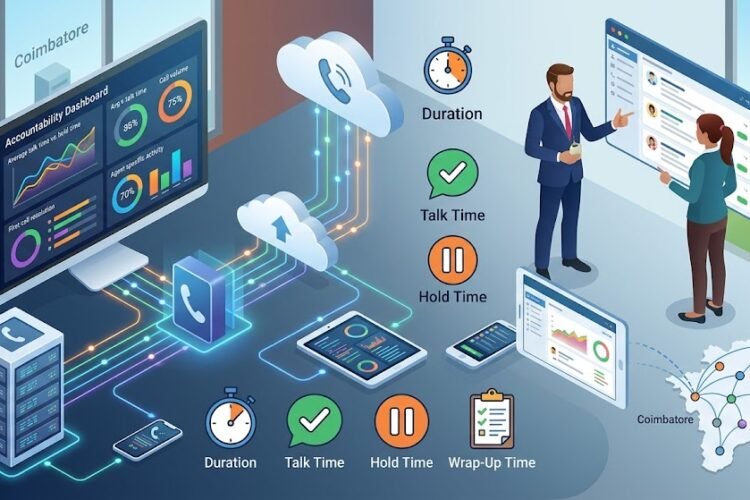
If you are running on an older analog framework, answering these questions is nearly impossible. Legacy setups don’t integrate with modern Customer Relationship Management (CRM) tools, leaving your management team blind to critical performance metrics. Bridging this gap with an integrated system provides deep analytical insights that directly improve conversion rates and customer satisfaction.
Transition Strategies: Upgrading Without Tearing Down Everything
The phrase “infrastructure upgrade” often conjures up images of torn-down walls, massive capital spending, and days of operational downtime. Fortunately, moving away from legacy limitations doesn’t require an all-or-nothing approach.
The Power of Hybrid Environments
If you have already invested heavily in analog desktop wiring or thousands of traditional handsets, you can choose a gradual upgrade path. A hybrid setup acts as a bridge, allowing you to keep your existing analog extensions while connecting them to a modern IP backbone.
This hybrid approach allows businesses to unlock features like SIP trunking and web consoles without abandoning their original hardware investments. If you’re weighing these options, comparing a hybrid IP PBX vs. a pure IP PBX for existing wiring can help you figure out the most cost-effective path forward for your building.
Leveraging VoIP Gateways
VoIP gateways are highly effective tools for extending the lifespan of older hardware while eliminating expensive legacy trunk lines. By using FXS (Foreign Exchange Station) and FXO (Foreign Exchange Office) gateways, you can translate analog voice signals into digital data packets.
For instance, you can easily learn how to connect an analog extension to an IP PBX using an FXS gateway, which protects your hardware investment while removing the high costs of traditional telecom lines.
Real-World Business Value: Slashing Monthly Costs
The financial impact of modernizing your phone infrastructure becomes clear when you look at international and long-distance operations. For example, textile exporters in industrial clusters like Coimbatore frequently communicate with global clients, spinning up huge international long-distance calling bills on older phone networks.
By switching to an IP-routed network, these cross-border calls bypass traditional international carriers entirely, running safely over the internet instead. This shift can fundamentally change a company’s bottom line. You can read more about this in our targeted guide on how Coimbatore textile exporters reduce international calling costs using IP PBX systems.
Furthermore, businesses can significantly cut their regular overhead by dropping local analog trunks and moving to SIP trunks. This modernization offers a clear, repeatable way to significantly reduce monthly phone bills with an IP PBX.
Key Technical Concepts Explained
If you are new to modern enterprise telephony, the sheer volume of acronyms can feel overwhelming. Let’s break down three foundational terms in plain language:
-
IP PBX / EPABX: A business phone switching system that moves calls over an internet data network rather than traditional analog phone lines.
-
SIP Trunking: A digital replacement for traditional physical phone lines. It uses the Session Initiation Protocol (SIP) to stream voice, video, and messaging channels over your internet connection.
-
VoIP Gateway: A physical device that converts traditional telephony traffic (analog or digital) into IP packets, acting as a bridge between old hardware and modern networks.
Frequently Asked Questions
How can I tell if my office phone system is truly legacy or modern?
If your office setup uses a central wall cabinet filled with hardwired circuit boards, requires physical copper lines from a local telecom provider, and cannot route calls to a mobile app without an expensive external forwarding service, it is a legacy system. Modern systems are software-driven, use standard Ethernet cables or Wi-Fi, and are managed via a web browser dashboard.
Can we keep our current phone numbers if we abandon our legacy infrastructure?
Yes. Through a standard process called number porting, you can migrate your existing corporate phone numbers from your old analog telecom provider over to a modern SIP trunk or cloud telephony provider without any customer-facing downtime.
Is an IP-based system secure against digital eavesdropping or hacking?
Modern IP communication systems offer robust, end-to-end encryption protocols (such as SRTP and TLS) that protect voice traffic far better than old analog lines, which are vulnerable to simple physical wiretapping. However, because they run on data networks, they do require standard IT security practices like strong passwords and firewalls.
What happens to an internet-based phone system if our office internet goes down?
Modern cloud and IP systems offer excellent disaster recovery options. If your primary office internet connection drops, calls can be instantly automated to route to employee mobile applications, backup cellular networks, or a secondary off-site branch, ensuring you never miss a client call.
Is it worth upgrading to an IP system if we only have a small team of 10 to 15 users?
Absolutely. In fact, small businesses often see the fastest return on investment. Eliminating the monthly rental costs of multiple individual physical phone lines and replacing them with a single scalable internet-based trunk quickly covers the initial configuration setup costs.