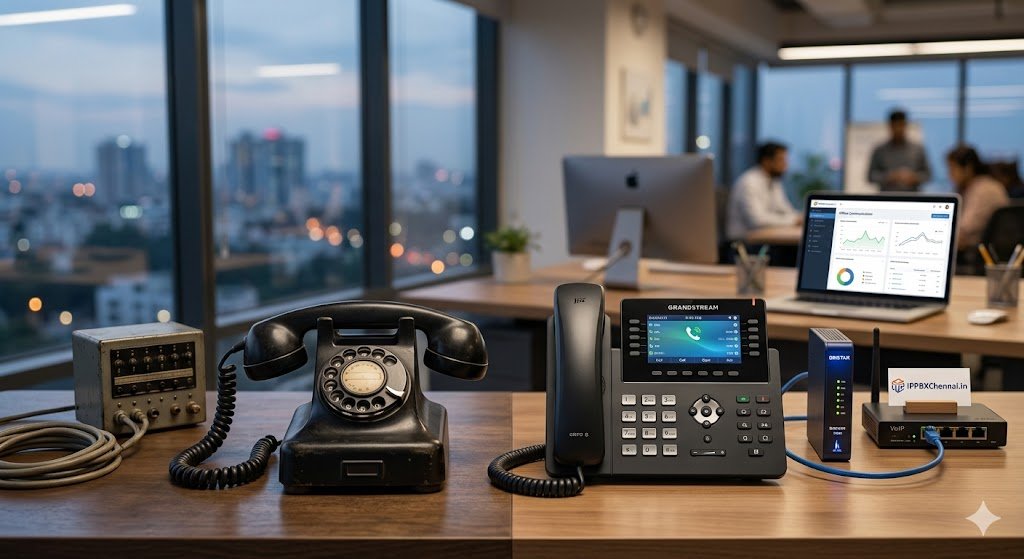
Imagine stepping into a bustling corporate office several decades ago. The soundscape was unmistakable: loud, metallic telephone bells ringing incessantly, heavy mechanical switches clicking into place, and rows of receptionists frantically plugging thick cords into manual switchboards. Telephony was a physical, hardwired constraint. Fast forward to today, and that entire chaotic infrastructure has evaporated into the cloud, leaving behind silent, ultra-efficient digital streams that manage global corporate networks with a single line of code.
For any business owner or IT manager, keeping up with this transformation isn’t just a trip down memory lane—it is a survival guide. Communication bottlenecks directly translate to lost revenue. If your office infrastructure feels sluggish or expensive, understanding The Evolution of Business Telephony: From Analog to Digital is the first step toward reclaiming your competitive edge.
Let’s dive into this fascinating journey, unpack the mechanics of how we got here, and explore how these shifts impact your daily business operations.
The Era of Copper and Cords: Understanding Traditional Analog PBX
To appreciate where we are today, we have to look back at the traditional Private Branch Exchange (PBX). Before PBX systems existed, every single telephone in an office required its own physical copper wire running all the way to the telephone company’s central office. If a business had 50 employees, they had to pay for 50 separate external phone lines. It was a massive financial drain.
The advent of the on-premise PBX solved this by acting as a miniature, localized telephone exchange inside the office building. Employees could now call each other internally without routing the call through the public network, and they could share a smaller, pooled allocation of external lines (known as trunk lines).
However, these traditional analog setups relied heavily on physical hardware. Massive cabinets filled with circuit boards were mounted in server closets, connected by a dizzying web of telephone wires.
While revolutionary for its time, the analog PBX came with severe limitations:
-
High Maintenance Overhead: Adding a new employee meant physically running a new wire to their desk and manually configuring the central hardware switchboard.
-
Geographic Confinement: If an employee left their desk, they left their phone system. Remote work was a logistical impossibility.
-
Prohibitive Scaling Costs: Upgrading system capacity meant buying expensive, proprietary expansion cards from specific hardware vendors.
As businesses expanded across regions and demanded more agile tools, the limitations of pure copper wiring became an undeniable bottleneck.
The Hybrid Bridge: Merging Old Wiring with New Intelligence
As digital computing began to dominate the corporate world in the late 20th century, telephony faced a choice: adapt or become obsolete. The market wasn’t entirely ready to throw away millions of miles of existing copper infrastructure, giving rise to the Electronic Private Automatic Branch Exchange (EPABX) and hybrid setups.
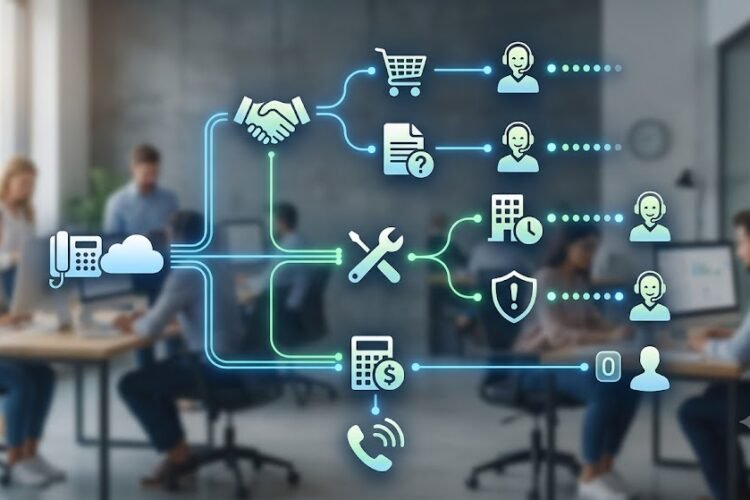
Instead of relying purely on physical relays, EPABX systems introduced computerized switching logic. This allowed for foundational automated features we take for granted today, such as automated Interactive Voice Response (IVR) menus, call forwarding, and basic voicemail boxes.
To get a clearer sense of how these traditional systems compare to their modern counterparts, it helps to break down their core differences:
| Feature Set | Traditional PBX / Early EPABX | Modern IP-Based Systems |
| Core Media Infrastructure | Physical copper lines, analog signals, and dedicated circuit switching. | IP Networks, packet-switched data, and fiber/internet cabling. |
| Scalability Potential | Rigidly limited by physical ports; requires manual wiring for expansion. | Virtually infinite scaling; handled via digital software licensing. |
| Feature Integration | Basic, localized functions like call forwarding and simple hold music. | Unified communications (CRM syncing, softphones, video conferencing). |
| Maintenance Profile | Demands specialized on-site technicians and proprietary hardware parts. | Remote administrative dashboards, automated cloud software patches. |
For a deeper dive into this specific transition period and to see which model matches your legacy hardware, check out this comprehensive breakdown on the difference between pbx and epabx systems complete guide.
For businesses that aren’t quite ready to rip out their older desktop hardware but want the perks of digital routing, hybrid systems became a lifesaver. These systems allow you to keep your stable physical phone lines on your desks while using digital trunking to lower costs. If your office layout still relies heavily on older building infrastructure, exploring a hybrid ip pbx vs pure ip pbx existing wiring setup might provide the perfect transitional compromise.
The IP Revolution: Enter Voice Over Internet Protocol (VoIP)
The true tipping point in The Evolution of Business Telephony: From Analog to Digital came with the mainstreaming of the internet. Instead of sending voice signals over dedicated, expensive telecommunication lines, engineers figured out how to slice human speech into digital data packets, send them across the internet, and reassemble them instantly on the other side.
This breakthrough is known as Voice over Internet Protocol (VoIP), and it completely rewrote the rules of enterprise communication.
When an organization migrates to an IP-Based EPABX, the telephone network stops being a separate, isolated utility and becomes an application running on the company’s existing local computer network. The cost savings alone are immediate. Long-distance call rates plummet because the voice data travels over standard broadband internet connections rather than international phone networks.
Beyond financial relief, the feature set expands exponentially. Because voice is now just digital data, it can easily interact with other corporate software.
-
Your desk phone can automatically log a call inside your customer relationship management (CRM) dashboard.
-
Voicemails can be transcribed automatically and dropped straight into your email inbox as text.
-
Phone extensions are no longer tied to physical desks; an employee can open a “softphone” application on their laptop in an airport or on their smartphone at home and make calls exactly as if they were sitting in the main office.
To understand how this protocol operates under the hood to handle your everyday conversations, read through our explanatory article detailing how does voice over ip voip actually work.
Designing and Sustaining Your Digital Voice Network
Switching over to a digital telephony network brings immense freedom, but it also means treating your voice communication with the same care and strategy you apply to your corporate IT systems. When voice signals share the same network lines as your company’s emails, web browsing, and heavy file downloads, a poorly optimized network can lead to choppy audio, echoing, or dropped connections.
Ensuring crystal-clear audio quality requires selecting high-performance hardware and setting up clean routing profiles. If you are experiencing issues with call quality, reviewing our guide on troubleshooting echo voice lag ip pbx wifi can help you pin down and resolve common wireless interference and latency bottlenecks.
Equally important is establishing an ongoing system maintenance plan. Unlike analog phones that could sit untouched in a corner for a decade, digital IP systems run on active software that needs regular security patches, backup routines, and performance tune-ups to block toll fraud and unauthorized network access. To keep your system running smoothly, implement our recommended ultimate epabx system maintenance checklist guide to protect your channels from unexpected downtime.
Navigating the Modern Telephony Ecosystem: On-Premise vs. Cloud
As you plan your company’s communication upgrade, the biggest decision you’ll face is choosing where your system’s “brain” will live. The digital telephony market has split into two main paths, each offering distinct advantages based on your operational model.
On-Premise IP PBX Systems
With an on-premise setup, your business purchases and owns the physical IP-PBX appliance, housing it right inside your own server room. Your phones connect directly over your local office network.
This model is highly favored by companies that require absolute, granular control over their security perimeters, possess specialized in-house IT staff, or must comply with strict local data storage regulations. Because you own the underlying hardware, you aren’t reliant on external cloud uptime to manage your internal office routing.
Cloud-Based Hosted Telephony
Alternatively, cloud telephony completely removes physical phone servers from your office space. Your system’s logic is hosted inside an off-site, secure data center managed by a specialized service provider. Your office IP phones simply plug into your standard internet connection and check in securely with the cloud.
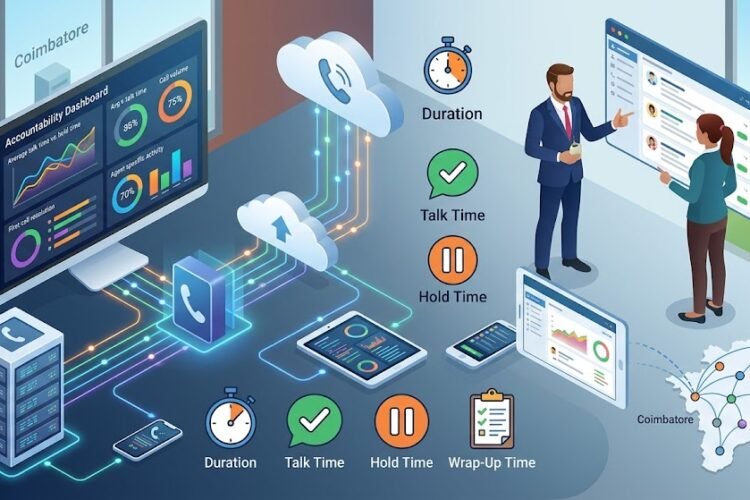
This approach minimizes upfront hardware costs and simplifies expansion. If you open a new branch office, you don’t need to purchase more server gear—you simply order more IP handsets, activate them online, and instantly manage them from a unified central dashboard.
To weigh the financial differences, architectural trade-offs, and administrative workflows of both approaches for your business, take a look at our side-by-side analysis of the difference between on premise ip pbx and cloud pbx.
Frequently Asked Questions
How does an IP EPABX system reduce a business’s monthly operational expenses?
An IP EPABX reduces costs primarily by eliminating the need for dedicated analog telephone lines from local telecom providers, routing calls over your existing internet connection instead. It drastically lowers long-distance and international call rates. Furthermore, it cuts out expensive on-site technician fees because shifting, adding, or changing user extensions can be completed instantly through a web-based software dashboard.
Can we keep our existing analog office desk phones if we upgrade to an IP-based digital platform?
Yes, you do not have to discard your working analog telephone hardware. By installing a specialized piece of hardware called an FXS Gateway, you can plug your older analog phones directly into the gateway. The gateway converts the old analog voice signals into digital data packets, allowing them to communicate flawlessly with a modern IP PBX system.
What network requirements are necessary to ensure excellent VoIP call quality?
To experience consistent, crystal-clear voice clarity, your office network needs a stable internet connection with sufficient upload and download bandwidth, minimal packet loss, and low latency. It is highly recommended to configure Quality of Service (QoS) rules on your office routers. This ensures your network prioritizes voice data traffic above standard internet browsing or large file downloads during busy work hours.
Is a cloud-based phone system secure enough for businesses handling sensitive financial or client data?
Yes, modern cloud telephony systems are built with highly advanced enterprise security protocols. Reputable service providers utilize robust end-to-end encryption for voice data streams, enforce rigid access management layers, and undergo continuous security audits. For organizations that require absolute control over their data logs and hardware access, an encrypted on-premise IP PBX system remains an excellent alternative.