Why Slow Call Handling Is Silently Killing Your Business
Think about the last time you called a company and waited on hold for five minutes, only to be transferred twice before someone actually helped you. Did you trust that business more after the experience? Probably not.
Slow call handling is one of the most underestimated threats to customer retention. Studies across industries consistently show that a customer who gets a fast, helpful response on the first call is five times more likely to stay loyal than one who had to repeat their issue across multiple transfers. For businesses in Chennai and Coimbatore — where competition in manufacturing, retail, hospitality, and services is intensifying every year — call handling speed is no longer a back-office concern. It is a front-line revenue issue.
Boosting customer satisfaction with faster call handling is not about hiring more staff. It is about deploying the right communication infrastructure. And in 2026, that infrastructure is the modern IP-EPABX system.
The Real Pain Points Behind Poor Call Handling
Before diving into solutions, it helps to understand exactly why customer calls go wrong. Most business owners are aware of the symptoms — missed calls, angry customers, high churn — but not the root causes.
Unanswered Calls During Peak Hours
Many businesses in Coimbatore still operate on traditional EPABX or analog PBX setups with a fixed number of lines. When call volume spikes — say, during a product launch or festive season — callers hit busy signals or are placed in indefinite queues with no updates. This is a direct revenue leak. Every unanswered call is a potential order lost to a competitor who picked up. If you are wondering whether your current system is behind the times, the 10 signs you need to upgrade from traditional PBX to IP-EPABX make the case clearly.
Excessive Call Transfers and Hold Times
Customers hate being transferred. Each transfer adds friction, increases the risk of a dropped call, and signals to the customer that your team is disorganised. Legacy PBX systems lack intelligent routing, so calls often land on the wrong desk and get manually shuffled around. In a call center context, understanding the difference between ACD and IVR — and deploying them correctly — is the key to routing the right caller to the right agent in the shortest time. The complete breakdown of ACD vs IVR for modern call centers explains how these two tools work together to eliminate the transfer problem.
No Visibility Into Call Performance
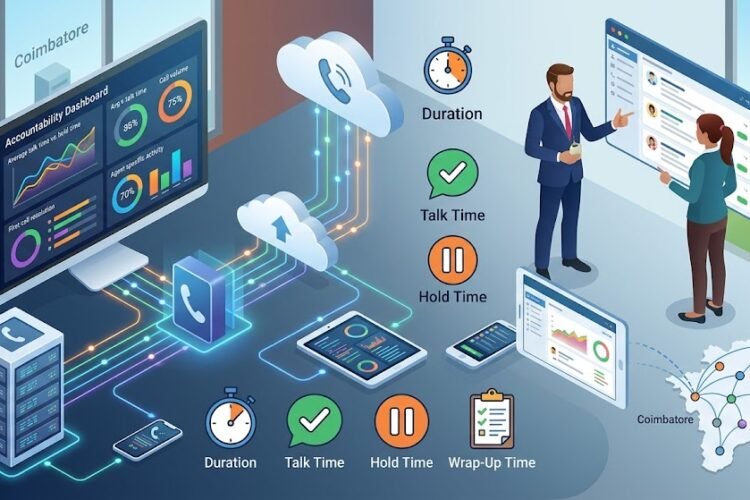
If you do not measure it, you cannot improve it. Many small and mid-sized businesses have no reporting on missed calls, average hold time, first-call resolution rate, or agent availability. Decisions are made on gut feel rather than data. This is why call center metrics that matter must become part of your weekly management review — not a luxury reserved for enterprise call centers.
Remote Teams Handling Calls Without Unified Systems
Post-pandemic work patterns have pushed many businesses toward hybrid setups. But if your sales team or support staff are taking customer calls on personal mobile phones with no call logging, no transfer capability, and no IVR — you are offering a completely inconsistent experience. Setting up remote extensions on IP-EPABX for work-from-home teams solves this by giving remote staff full office phone functionality from any location.
How IP-EPABX Systems Are Engineered for Faster Call Handling
Modern IP-EPABX is not simply a digital version of your old phone board. It is a complete communication platform with intelligent features designed specifically for speed, accuracy, and customer experience.
Auto Attendant and IVR: Your 24/7 First Responder
An auto attendant answers every call instantly — no ring-and-wait, no “everyone is busy.” It greets the caller professionally and routes them through a structured menu to exactly the department or agent they need. A well-configured multi-level IVR goes further, handling common queries automatically (store hours, order status, appointment confirmations) so live agents focus only on high-value interactions. The result is a dramatically reduced effective wait time for every caller, even during peak hours.
For businesses running busy customer support lines, learning how to configure multi-level IVR on IP-EPABX systems is one of the highest-ROI configuration tasks available.
Automatic Call Distribution (ACD): Smart Routing at Scale
Rather than routing calls to whichever extension happens to be next in a list, ACD analyses agent availability, skill set, and current load to connect the caller to the best-available agent. For businesses with multiple departments or product lines, this means a customer calling about a billing issue goes directly to accounts, while a technical support query routes to the relevant technician — without any manual transfer.
This kind of precision routing is what separates businesses that consistently achieve high first-call resolution from those constantly apologising for “wrong department” situations.
Call Queuing With Real-Time Updates
When all agents are genuinely busy, modern IP-EPABX does not just play hold music and hope the caller stays. It provides queue position updates, estimated wait times, and the option to receive a callback instead of holding. This transparency dramatically reduces call abandonment and keeps customer frustration in check. Callers who know their position in a queue are far more patient than those sitting in silent uncertainty.
Automatic Call Recording for Quality Assurance
Faster handling is meaningless if accuracy suffers. Automatic call recording allows supervisors to review interactions, identify training gaps, and catch errors before they reach the customer complaint stage. For customer support centers specifically, IP-PBX with automatic call recording is not an optional add-on — it is a core quality control tool.
CRM Integration: Context Before the Conversation Begins
Imagine your agent picking up a call and already seeing the caller’s name, their last purchase, their open support ticket, and their account tier — before they say a single word. This is exactly what happens when your IP-EPABX is integrated with a CRM system. The agent does not need to ask “Can I have your account number?” They can jump straight to solving the problem. For businesses in Chennai and Coimbatore deploying this combination, IP-PBX system with CRM integration creates a measurably superior customer experience in every interaction.
The Financial Case: Customer Satisfaction Is a Revenue Driver, Not Just a Cost
Many business owners treat customer satisfaction as a soft metric — nice to have, but hard to quantify. The reality is different.
A customer who experiences fast, accurate call handling is more likely to make repeat purchases, provide positive word-of-mouth referrals, and forgive occasional service gaps. A customer who waited 12 minutes on hold and spoke to three wrong agents before getting help will leave at the first opportunity — and they will tell others about the experience.
For businesses calculating the return on upgrading their phone infrastructure, measuring ROI when upgrading to IP telephony shows how improved call handling directly reduces churn, increases upsell conversion, and lowers support cost per resolution. The numbers are consistently compelling, especially for businesses currently running legacy EPABX with manual routing.
Practical Steps to Faster Call Handling in Your Business
Improving call handling speed is not a single-day project, but it is also not as complex as many business owners fear. Here is a practical sequence to follow.
H4: Audit Your Current Call Flow
Before upgrading any hardware, map your existing call flow. Where do calls go when they first arrive? How many transfers happen on average? What percentage of calls go unanswered? Most businesses are shocked by the data when they first pull it.
H4: Define Call Routing Logic for Each Department
Work with your operations team to define who handles which types of calls, what the escalation path looks like, and which queries can be resolved through IVR self-service. This logic forms the basis of your ACD and IVR configuration.
H4: Choose the Right IP-EPABX Platform for Your Scale
A five-person office has very different needs from a fifty-seat call center. For small offices in Coimbatore, IP-EPABX systems for small offices covers the right-sizing considerations clearly. For larger operations, a complete call center solution with IP-EPABX provides the infrastructure framework required.
H4: Train Your Team on the New System
Technology only improves call handling if agents know how to use it. Schedule structured training on blind transfer, attended transfer, call parking, and CRM integration before go-live. The best IP-EPABX system in the world delivers poor results in the hands of an untrained team.
H4: Monitor, Measure, and Improve Weekly
After deployment, review call data weekly. Track average handle time, first-call resolution rate, abandonment rate, and queue wait time. Use this data to refine your IVR menu, adjust agent scheduling, and identify training needs. Faster call handling is an ongoing discipline, not a one-time setup.
Industries in Tamil Nadu That See the Fastest Customer Satisfaction Gains
While faster call handling benefits every business, certain sectors in Tamil Nadu see disproportionate gains.
Textile and Manufacturing Exporters
Buyers placing bulk orders expect immediate access to their relationship manager. A missed call during a negotiation can cost lakhs. IP-EPABX with mobile app integration ensures the right person is always reachable, even on the production floor. Coimbatore textile exporters have seen measurable improvements in buyer retention after upgrading to IP-PBX solutions that reduce international calling costs.
Healthcare and Diagnostic Centers
A patient calling to book an appointment or get a test result is already anxious. Every second of hold time amplifies that anxiety. IVR self-service for appointment scheduling and result query handling dramatically improves the patient experience — and reduces reception staff workload simultaneously.
Real Estate Teams
Site visits are won and lost on response speed. A real estate team using IP-EPABX with mobile app integration ensures every inbound inquiry from a prospect reaches an available agent within seconds, regardless of where the team is physically located.
Hospitality
Hotels and resorts where guests wait more than two rings for front desk service face immediate negative perception. IP audio systems combined with smart call routing create the kind of seamless guest experience that drives review scores and repeat bookings.
Frequently Asked Questions
What is the most important feature of IP-EPABX for improving call handling speed?
Automatic Call Distribution (ACD) combined with a well-structured IVR is the most impactful feature combination. ACD ensures every call reaches the right agent without manual transfer, while IVR handles self-serviceable queries automatically — together they cut effective wait time dramatically.
How many extensions do I need to handle calls efficiently for a 20-person office?
For a 20-person office, a system supporting 20 to 30 extensions with at least 8 concurrent call paths is typically sufficient. The exact configuration depends on your call volume patterns. The IP-PBX price guide for 20 users in Coimbatore covers both capacity and cost considerations for this scale.
Can IP-EPABX help reduce hold time even with a small team?
Yes. IVR self-service handles a large percentage of incoming queries without agent involvement, so your available agents spend their time exclusively on calls that genuinely require human attention. This effectively increases the capacity of a small team without adding headcount.
Is call recording available on entry-level IP-EPABX systems?
Most modern IP-EPABX platforms include basic call recording capability even at entry-level tiers. Advanced features like selective recording, cloud storage, and supervisor playback dashboards are typically available on mid-range and higher systems.
How do I know if my current phone system is the reason for poor customer satisfaction?
Signs include frequent missed calls, customer complaints about being transferred multiple times, no call reporting data, and agents who cannot see caller history before answering. If two or more of these apply to your business, a system audit is warranted. Start with the hidden costs of sticking with legacy phone infrastructure for a clear picture of what inaction is costing you.
How long does IP-EPABX installation take for a mid-sized office in Coimbatore?
A standard installation for 10 to 30 extensions typically takes one to three days depending on existing network infrastructure and cabling. Businesses with structured cabling already in place complete faster. The complete EPABX installation guide walks through every phase of the process.
The Bottom Line
Boosting customer satisfaction with faster call handling is one of the most direct investments a business can make in long-term revenue growth. Every call that is answered quickly, routed correctly, and resolved on the first attempt builds trust. Every call that goes unanswered, bounces through wrong transfers, or leaves the customer on indefinite hold erodes it.
Modern IP-EPABX systems — with ACD, multi-level IVR, CRM integration, and automatic call recording — give businesses in Chennai and Coimbatore the infrastructure to consistently deliver fast, accurate, professional call experiences at scale. Whether you are running a ten-seat office or a fifty-agent call center, the technology is accessible, the ROI is measurable, and the impact on customer loyalty is immediate.
If your business is still relying on a legacy phone system to handle customer calls, the cost of inaction is higher than the cost of upgrading. The question is not whether to modernise your call handling — it is how quickly you can do it.