Streamlining Your Sales Funnel with Unified Communication
Picture this: a hot lead fills out your contact form at 11 PM. By the time your sales rep calls back the next afternoon, they’ve already booked a demo with your competitor. Sound familiar? It happens more often than most business owners in Chennai and Coimbatore would like to admit.
The truth is, a leaky sales funnel rarely fails because of bad leads. It fails because of broken communication — missed calls, scattered follow-ups, and reps who have no idea what a prospect said three conversations ago. Unified communication fixes exactly this gap, and it does it quietly, in the background, without asking your sales team to change how they already work.
Why Your Sales Funnel Leaks More Than You Think
Every sales funnel has four broad stages: awareness, interest, decision, and action. Somewhere between “interest” and “decision,” most Coimbatore and Chennai businesses lose a shocking percentage of prospects — not because the product wasn’t right, but because the follow-up was slow, inconsistent, or simply nonexistent.
The Real Cost of Disconnected Tools
When your phone system, CRM, and messaging apps don’t talk to each other, your sales team spends more time toggling between screens than actually selling. A rep has to manually search a customer’s number in the CRM, then switch to the phone app to dial, then switch back to log notes — assuming they remember to log anything at all.
A Familiar Scene in Most Offices
Sales manager: “Did anyone follow up with the client from Tuesday?”
Silence. Nobody’s sure. The lead goes cold.
This is precisely the problem unified communications strategies are built to solve, since fragmented communication channels create friction that directly impacts revenue and customer relationships.
What Unified Communication Actually Means for Sales Teams
Unified communication (UC) isn’t just a buzzword for “more apps.” It’s the integration of your calling system, CRM, chat, and even video conferencing into a single connected workflow. For sales teams specifically, this means every call, message, and customer interaction lives in one place — visible, searchable, and actionable.
The IP PBX as the Foundation
A modern IP PBX system with CRM integration forms the backbone of this setup. Instead of a phone system that only makes and receives calls, it becomes a data-rich communication hub that feeds information directly into your sales pipeline.
Why This Matters More Than Ever
Buyers today expect a seamless experience. If they’ve already emailed your team once, they don’t want to repeat their entire problem to a rep who’s calling cold. Unified communication ensures your team walks into every conversation already informed.
CRM Integration: Where the Magic Happens
The real transformation happens when your phone system starts talking directly to your CRM. Businesses that have gone through the process of integrating IP PBX with their CRM report faster response times and noticeably fewer dropped leads.
Popular CRM Integrations Worth Knowing
Two integrations come up constantly among Coimbatore and Chennai sales teams:
- Teams already using Zoho benefit heavily from a proper Zoho integration with IP PBX, which automatically logs calls against contact records without any manual entry.
- Larger sales operations often lean on Salesforce integration, which strengthens both sales tracking and customer support in one motion.
Screen Pop: The Small Feature With a Big Impact
If there’s one feature that instantly changes how a sales team feels about their phone system, it’s screen pop. The moment a call comes in, the rep’s screen automatically displays the caller’s name, past interactions, deal stage, and notes — before they’ve even said hello.
Why Screen Pop Changes the Conversation
Instead of asking “Sorry, can you remind me what we discussed?”, the rep opens with “Hi Priya, following up on the quote we discussed last week — did you get a chance to review it?” That single sentence builds more trust than an entire scripted pitch. This is explored in more depth in our piece on screen pop functionality transforming sales teams.
The Psychology Behind It
Customers don’t consciously notice screen pop working. They simply feel like your company remembers them. That feeling — being remembered — is one of the strongest (and cheapest) trust-builders available to any sales team.
Automated Call Logging: Ending the Manual Entry Problem
Ask any sales manager what their reps hate most about CRM discipline, and “manual data entry” will almost always top the list. Reps skip it when they’re busy, and busy is exactly when they’re closing deals — which means your most valuable interactions often go unrecorded.
How Automation Solves a Trust Problem
When call logging happens automatically, there’s no gap between “what actually happened” and “what’s written down.” Our detailed breakdown of how manual call logging entry is hurting sales covers exactly why this small administrative task has an outsized effect on funnel accuracy.
What Gets Captured Automatically
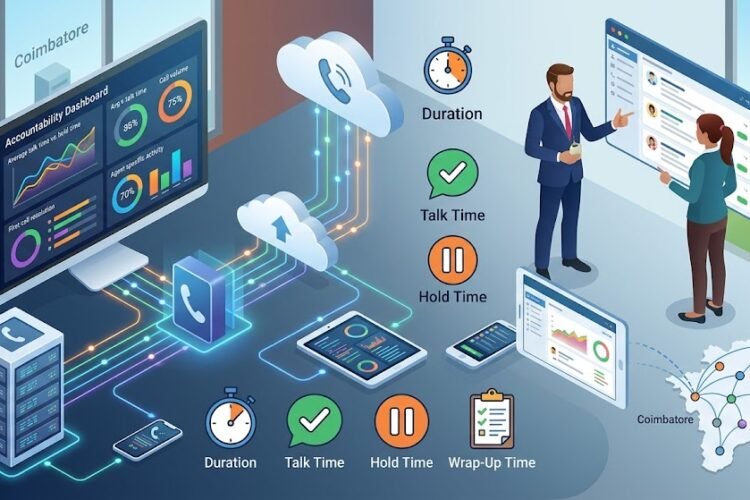
- Call duration and outcome
- Timestamp synced to CRM
- Recorded conversation (where enabled)
- Follow-up reminders based on call notes
IVR and Call Routing: Getting Leads to the Right Person, Instantly
A sales funnel isn’t just about follow-up speed — it’s also about first-contact accuracy. When a new lead calls in, does it land with the right salesperson immediately, or does it bounce between three extensions before someone picks up?
Multi-Level IVR for Smarter Routing
A well-configured multi-level IVR system routes callers based on their intent — new inquiry, existing customer, billing question — straight to the team best equipped to handle them.
ACD and IVR Working Together
For businesses handling higher call volumes, pairing IVR with automatic call distribution creates an even sharper routing system. Our comparison of ACD versus IVR breaks down when each is the better fit for a growing sales operation.
Call Recording: Turning Conversations Into Coaching Material
Every sales call is a training opportunity — if it’s captured properly. Automatic call recording doesn’t just protect you during disputes; it becomes a goldmine for improving pitch quality across your entire team.
From Recording to Recognition
Sales managers who review recorded calls regularly start spotting patterns: which objections keep coming up, which reps handle pricing pushback well, and which scripts actually convert. This is covered further in our article on IP PBX with automatic call recording for customer support centers.
A Quiet Competitive Advantage
Most competing businesses in Chennai still rely on gut feeling to judge sales performance. Teams using recorded, searchable call data are simply working with better information — and that shows up in monthly numbers.
Measuring What Matters: Metrics That Prove the Funnel Is Working
None of this technology means much unless you can measure its effect. Unified communication systems generate a wealth of data that’s often more valuable than the calls themselves.
Key Metrics Worth Tracking
- Average response time to new leads
- Call-to-conversion ratio per sales rep
- Missed call percentage during business hours
- Average deal-closing time from first contact
Our guide on call center metrics that matter goes deeper into which numbers actually predict revenue growth versus which ones are just noise.
Calculating the Real ROI
Business owners often ask whether the upgrade is worth the investment. Our resource on measuring ROI when upgrading IP telephony walks through a practical framework for putting a number on the improvement.
Employee Productivity: The Side Effect Nobody Talks About
While most of this article focuses on customer-facing benefits, there’s an internal win that’s just as significant — your team stops wasting time on administrative friction.
Less Switching, More Selling
When calling, logging, and CRM updates all happen in one connected system, reps reclaim hours every week that used to go toward manual busywork. Our piece on increasing employee productivity with modern phone systems covers this shift in detail.
A Team That Feels Supported, Not Micromanaged
Interestingly, sales teams don’t experience this as being watched more closely — they experience it as finally having the tools to do their job without friction. That distinction matters for morale as much as for numbers.
Scaling Without Starting Over
One concern business owners raise often: “What happens when we grow? Will we need to rip this out and start again?” The good news is that a properly built unified communication setup scales alongside the business.
Growing Without Growing Pains
Our overview of scalable IP PBX solutions that grow with your business explains how additional extensions, locations, and CRM users can be added without a complete system overhaul.
Why Starting Early Pays Off
Businesses that build this foundation early avoid the painful, disruptive migration that comes from bolting on integrations after years of accumulated workarounds.
Bringing It All Together
A sales funnel doesn’t leak because your product is weak or your team isn’t trying hard enough. It leaks because information doesn’t move fast enough between the moment a customer reaches out and the moment your team responds meaningfully. Unified communication — built around a properly integrated IP PBX, CRM sync, screen pop, automated logging, and smart call routing — closes that gap for good.
If you’re evaluating where to start, our broader explainer on why your business needs a unified communications strategy is a useful next read before making any decisions.
Frequently Asked Questions
Does unified communication only help large sales teams?
Not at all. Even a two- or three-person sales team benefits from screen pop and automated logging, since small teams often have the least time to spare on manual admin work.
Will switching to a unified system disrupt current sales operations?
A well-planned migration typically runs alongside your existing setup during transition, so there’s minimal downtime. Most businesses see the switch completed within days, not weeks.
Does this work with the CRM we’re already using?
Most modern IP PBX systems support integration with popular CRMs including Zoho and Salesforce, and many others through standard APIs. It’s worth checking compatibility with your specific CRM version before committing.
How quickly can we expect to see results in our sales numbers?
Many businesses notice improved response times within the first two weeks, though measurable conversion rate improvements usually take a full sales cycle to show clearly in the data.
Is call recording legal and secure for customer conversations?
Yes, when implemented with proper consent notifications and secure storage practices, call recording is both a standard business practice and a valuable coaching tool.